Cannonau and Cannonau di Sardegna DOC explained: rules, grapes, Classico, the Oliena, Capo Ferrato and Jerzu subzones, Riserva, passito, liquoroso and export
Wines Export Editorial · Last updated:
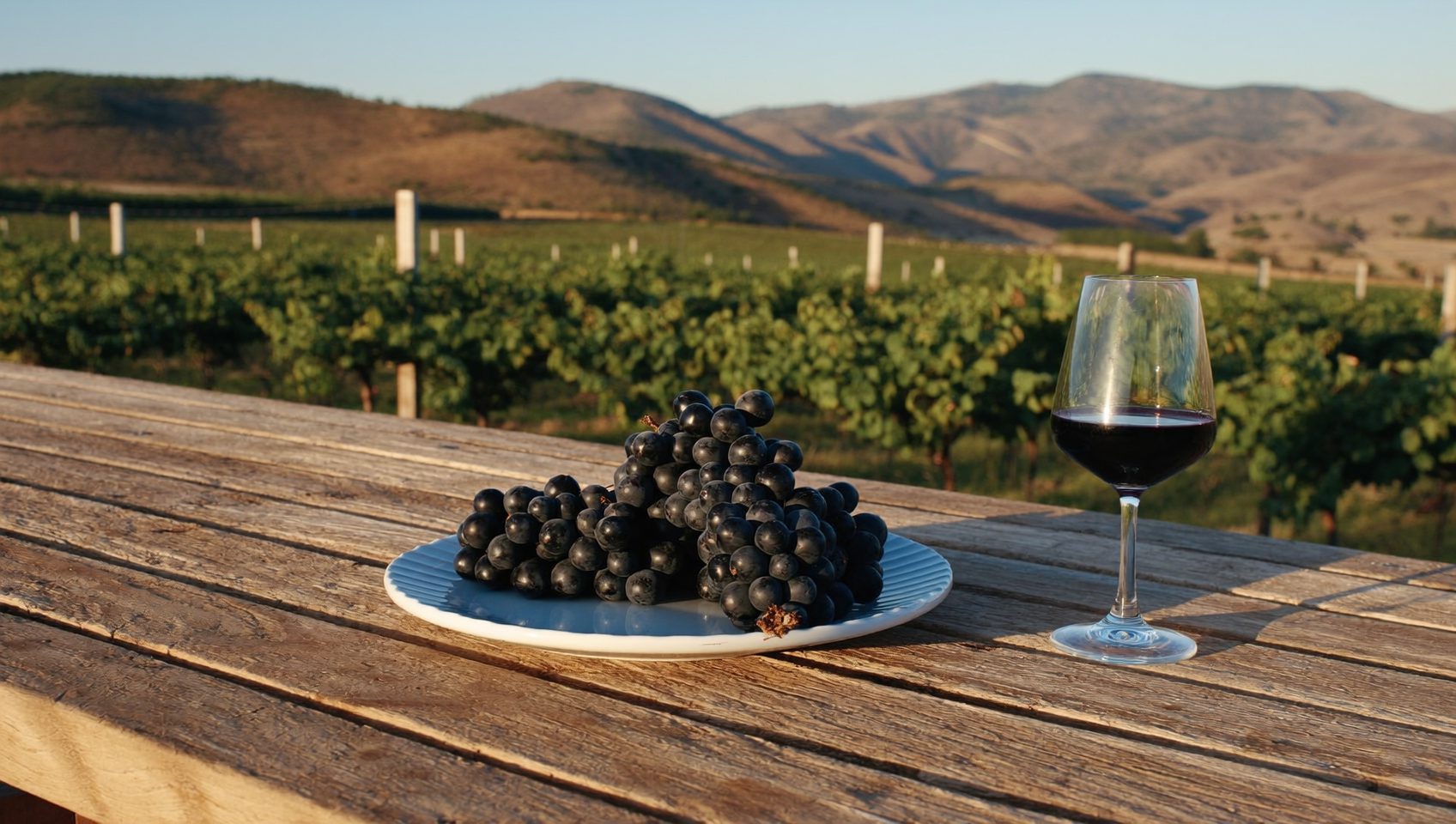
Cannonau is Sardinia's most widely planted red grape, and Cannonau di Sardegna DOC is the denomination that carries its name: the grapes may come from anywhere on the island and must be at least 85 percent Cannonau, 90 percent for the Classico specification, which is reserved for the provinces of Nuoro and Ogliastra (Cannonau di Sardegna DOC disciplinare, art. 1, 2 and 3). The DOC covers red, rosé, Riserva, passito, liquoroso and Classico, plus three subzones: Oliena or Nepente di Oliena, Capo Ferrato and Jerzu (art. 1). The red must reach at least 12.50 percent alcohol and may be released from 1 April of the year after the harvest; the Riserva ages at least two years, six months of them in wood, and the Classico two years with twelve months in wood (art. 5 and 6). The DOC was approved by presidential decree on 21 July 1972; the latest amendment listed in the Ministry's text is the decree of 7 March 2014.
This page is the full guide to the grape and the denomination, including what a buyer abroad should check. The village most often cited for mountain Cannonau is covered in Cannonau di Mamoiada: wineries and markets and Mamoiada wines; the provinces in exporting wine from Nuoro, from Ogliastra and from Cagliari; the island as a whole in Sardinian wines and their denominations and exporting Sardinian wine.
What Cannonau di Sardegna DOC is
It is a region-wide denomination built on a single grape. The disciplinare reserves the name for wines that meet its rules in six forms, red and rosé, red Riserva, passito, liquoroso and Classico, and adds three subzones for delimited areas (art. 1).
The text was approved by the presidential decree of 21 July 1972 (Gazzetta Ufficiale n. 248, 21 September 1972) and amended by the decrees of 29 June 1982, 5 November 1992, 4 and 30 November 2011 and 7 March 2014 (disciplinare, heading). In the EU eAmbrosia register the denomination is PDO file PDO-IT-A1099, protected since 18 September 1973, and on 12 November 2026 no amendment was listed as in progress. Annual compliance checks are carried out by the Chambers of Commerce of Nuoro and Oristano (art. 10).
In 2025 the trade press reported that a revision of the disciplinare was being prepared, partly to give more room to the island's different areas (Gambero Rosso, 18 June and 11 July 2025). Until a new decree is published, the rules below apply.
The Cannonau grape: names, history and Grenache
Italy's National Register of Vine Varieties lists the grape as Cannonau N., code 051, registered on 25 May 1970, with the synonyms Alicante, Tocai rosso, Garnacha tinta, Granaccia, Grenache and Cannonao; the synonym Gamay applies only to DO and IGT wines from the province of Perugia (National Register, export of 12 November 2026). For the Italian register, Cannonau, Grenache and Garnacha are the same variety. The register's historical description, written by B. Bruni in 1960, notes that the ampelographic bulletins considered it to match the Alicante of Spain and the Grenache of France and to be identical to the Granaxa of Aragon.
The disciplinare traces the Sardinian history: Martin Carrillo, a royal visitor, in 1612 and the Franciscan Giorgio Aleo in 1677 wrote of "Cañonates" wines of particular quality made all over the island; in the 19th century the botanist Moris classified the vine as Vitis praestans, and in the mid-1800s the parish-by-parish survey of Vittorio Angius found it to be the most widely grown grape on the island (art. 9). Local names include Cannonadu, Nannonatu, Canonao and Ratagliadu nieddu (art. 9).
| Feature | What the source says | Source |
|---|---|---|
| Bunch | medium, compact or semi-compact, conical | disciplinare, art. 9; National Register |
| Berry | medium, round, thin but firm skin, violet-black with heavy bloom | National Register |
| Ripening | third to fourth period; harvest from the second half of September to the second half of October | disciplinare, art. 9 |
| Traditional training | alberello (bush vine), with more open trained forms in newer vineyards | disciplinare, art. 9 |
| Requirements | no particular climate or soil needs; in dry calcareous soils it is prone to flower abortion | National Register |
| Share of plantings | 24 percent of the regional vineyard, 62 percent in the province of Nuoro | disciplinare, art. 9 |
The disciplinare states that the name of the Cannonau variety enjoys special protection as exclusive to and distinctive of the DOC, citing Regulation (EC) 1234/2007, Regulation 607/2009 and the ministerial decree of 23 December 2009 (art. 9).
The zone: all of Sardinia, Classico and three subzones
| Area | Where the grapes come from | Source |
|---|---|---|
| Cannonau di Sardegna | the whole territory of the Sardinia region | art. 3 |
| Classico | the municipalities of the provinces of Nuoro and Ogliastra | art. 3 |
| Oliena or Nepente di Oliena | all of Oliena and part of Orgosolo, province of Nuoro, inside a boundary described in the disciplinare | art. 3 |
| Capo Ferrato | Castiadas, Muravera, San Vito, Villaputzu and Villasimius, province of Cagliari | art. 3 |
| Jerzu | Jerzu and Cardedu, province of Ogliastra | art. 3 |
The disciplinare recalls Gabriele D'Annunzio's ode to the "nepente di Oliena" and La Marmora's description of the "vigour of the wines of Ogliastra" (art. 9). Mamoiada, the part of Orgosolo outside the subzone and the other villages of the Nuoro area can use Classico, not a subzone of their own: the disciplinare provides for no others (art. 1 and 3).
The disciplinare describes an island of 24,090 square kilometres where no point lies more than 53 kilometres from the sea, windy, dominated by the Mistral, with average rainfall of 775 millimetres a year, from 1,000 in the inland centre-north to 400 in the south; soils range from the granites of Gallura to schists, limestones, trachytes, basalts and the alluvial plain of the Campidano (art. 9).
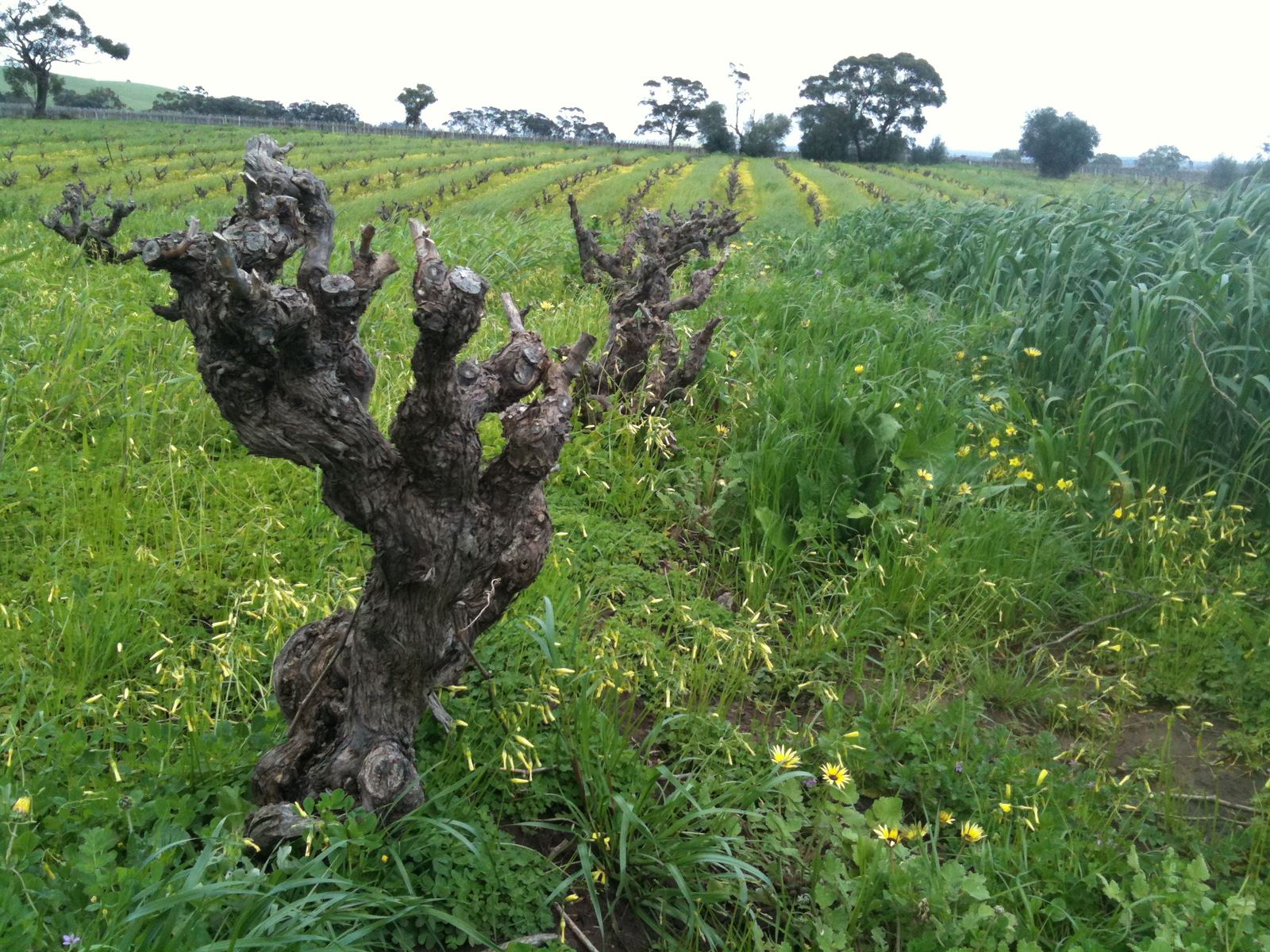
Grapes and percentages
| Wine | Cannonau | Other grapes allowed | Source |
|---|---|---|---|
| Cannonau di Sardegna, all types | at least 85 percent | up to 15 percent of non-aromatic black grapes suitable for Sardinia | art. 2 |
| Cannonau di Sardegna Classico | at least 90 percent | up to 10 percent of the same grapes | art. 2 |
The blend is calculated on the estate's vineyards (art. 2). One of the Sardinian reds that can sit alongside it is described in the Bovale grape.
The types: requirements from the disciplinare
| Type | Maximum grape yield | Minimum natural alcohol of the grapes | Minimum alcohol on release | Ageing | Release |
|---|---|---|---|---|---|
| Red | 11 t/ha | 12.5 percent | 12.50 percent | no minimum | from 1 April of the year after harvest |
| Rosé | 11 t/ha | 12.5 percent | 12.50 percent | no minimum | from 1 January of the year after harvest |
| Red Riserva | 11 t/ha | 13.0 percent | 13.00 percent | at least two years from 1 November of the harvest year, six months in wood | at the end of ageing |
| Classico | 9 t/ha | 13.0 percent | 13.50 percent | at least two years from 1 November of the harvest year, twelve months in wood | at the end of ageing |
| Passito | 11 t/ha | not set separately | 15.00 percent total, at least 13.00 actual; residual sugar at least 50 g/l | no minimum | from 1 November of the year after harvest |
| Liquoroso | 11 t/ha | not set separately | dry 18.00 percent actual, sugar up to 10 g/l; sweet 16.00 percent actual, sugar at least 50 g/l | at least six months in wood | from 1 November of the year after harvest |
Sources: disciplinare, art. 4, 5 and 6. The maximum grape-to-wine yield is 70 percent, 55 percent for the passito (art. 5): with 11 tonnes per hectare that is at most 77 hectolitres of wine, 63 for the Classico at 9 tonnes (calculated from the two limits above). Minimum total acidity is 4.5 g/l, 4.0 for passito and liquoroso; minimum non-reducing extract is 22.0 g/l for the red, 18.0 for the rosé, 24.0 for Riserva, Classico and liquoroso and 26.0 for the passito (art. 6).
In practice a 2025 red may be released from 1 April 2026, a 2025 rosé from 1 January 2026, and a 2025 Riserva or Classico not before 1 November 2027. The passito is made from grapes dried on the vine, on mats or racks or in suitable rooms, also with ventilated air or in temperature-controlled rooms (art. 5). How yields and limits are calculated is explained in wine yields and DOC limits.
Vineyard and winery rules
| Rule | What the disciplinare requires | Source |
|---|---|---|
| Density | at least 3,500 vines per hectare for new plantings and replantings | art. 4 |
| Training | tendone (overhead pergola) banned; any forcing banned; emergency irrigation allowed | art. 4 |
| Soils | damp soils excluded, especially where the water table is high | art. 4 |
| Grapes above the yield | up to 20 percent extra may become IGT Isola dei Nuraghi | art. 4 |
| Winemaking | inside the area of the grapes; for Classico inside the provinces of Nuoro and Ogliastra | art. 3 and 5 |
| Ageing and bottling | in Sardinia; for the subzones inside the subzone, with individual authorisations for those who already bottled outside | art. 5 |
| Poor vintages | by regional decree, up to one extra degree through cold vacuum concentration or reverse osmosis of the must | art. 5 |
Label, bottle and closures
| Rule | What the disciplinare requires | Source |
|---|---|---|
| Vintage | mandatory | art. 7 |
| Adjectives | "fine", "scelto", "selezionato" and similar banned | art. 7 |
| Bottles | glass suited to a quality wine up to 3 litres; Bordeaux, Burgundy and Rhine shapes up to 18 litres; cork stopper flush with the neck | art. 8 |
| Bag in box | multilayer plastic bag in a rigid outer case, at least 2 litres, not for subzones or the mentions classico, riserva, superiore and vigna | art. 8 |
| Screw cap | allowed up to 0.750 litres, not for subzones, classico, riserva and vigna; crown caps banned | art. 8 |
Article 8 also names "superiore" and "vigna" among the mentions excluded from bag in box, but the text does not define a Superiore type.
What it tastes like
The disciplinare describes the red as ruby, with ripe fruit aromas of small red and black fruit (cherry, myrtle, plum, blackberry), a spicy background of pepper and notes of aromatic herbs and Mediterranean scrub, savoury and lightly tannic. The rosé is bright pink, with rose, violet, cherry and small fruit, dry and savoury. The Riserva turns towards garnet, with ripe fruit, jam and dried plum, spices such as clove and cinnamon and a balsamic background; it is dry, full, very warm, with a slightly bitter finish. Passito and liquoroso are round and smooth, with ripe fruit or jam on the nose (art. 9).
In its tastings for the Vini d'Italia 2026 guide, Gambero Rosso observed that many producers have moved to slimmer, more elegant versions with silky tannins, working on the vineyard, maceration, picking time and vessels (steel, wood, concrete or terracotta), and suggests serving it at 16 degrees (Gambero Rosso, 11 July 2025).
Selling Cannonau di Sardegna abroad
No public export data by country are published for Cannonau di Sardegna alone. The figures available, each with its source:
| Data | Value | Source |
|---|---|---|
| Members of the Cannonau di Sardegna Consorzio | 88, on about 2,000 hectares, with more than 98,000 quintals of grapes and about 7.8 million bottles (2023 data, members only) | Gambero Rosso, 18 June 2025 |
| Ministerial recognition of the Consorzio | lost in earlier years, being recovered in 2025 | Gambero Rosso, 18 June 2025 |
| Sales in Italy in 2024 | Cannonau up 8.6 percent, Sardinia's second wine after Vermentino | Unione Sarda, 24 March 2025, on Circana data for Vinitaly |
For export channels: wine importers in the United States, Germany, the United Kingdom, Switzerland, Canada and the list of wine importers by country.
Before sending a technical sheet to an importer, check six points, all set out in the disciplinare:
- Share of Cannonau. At least 85 percent, 90 for Classico (art. 2).
- Classico. Grapes only from the provinces of Nuoro and Ogliastra, 13.50 percent alcohol and twelve months in wood (art. 3, 5 and 6).
- Subzone. Oliena or Nepente di Oliena, Capo Ferrato or Jerzu, with grapes, ageing and bottling inside the subzone (art. 3 and 5).
- Riserva. Two years from 1 November of the harvest year, six months in wood (art. 5).
- Release date. Red not before 1 April of the year after harvest, rosé from 1 January (art. 5).
- Closure and format. Screw cap only up to 0.750 litres and never on subzones, Classico or Riserva (art. 8).
Frequently asked questions
Is Cannonau the same grape as Grenache?
Yes. Italy's National Register of Vine Varieties lists Cannonau N. with the synonyms Grenache, Garnacha tinta, Alicante, Tocai rosso, Granaccia and Cannonao (National Register, code 051).
How much Cannonau must Cannonau di Sardegna contain?
At least 85 percent, with up to 15 percent of other non-aromatic black grapes suitable for Sardinia; the Classico at least 90 percent (Cannonau di Sardegna DOC disciplinare, art. 2).
What are the subzones of Cannonau di Sardegna?
Three: Oliena or Nepente di Oliena (Oliena and part of Orgosolo), Capo Ferrato (Castiadas, Muravera, San Vito, Villaputzu and Villasimius) and Jerzu (Jerzu and Cardedu) (disciplinare, art. 1 and 3).
What does Classico mean on Cannonau di Sardegna?
That the grapes come from the provinces of Nuoro and Ogliastra, with at least 90 percent Cannonau, 9 tonnes per hectare, 13.50 percent alcohol and two years of ageing, twelve months in wood (disciplinare, art. 2 to 6).
How long is Cannonau di Sardegna Riserva aged?
At least two years from 1 November of the harvest year, six months of them in wooden casks, with at least 13.00 percent alcohol (disciplinare, art. 5 and 6).
Is there a Mamoiada subzone?
No. The disciplinare in force provides only for Oliena or Nepente di Oliena, Capo Ferrato and Jerzu; Mamoiada, in the province of Nuoro, can use the Classico specification (disciplinare, art. 1 and 3).
Sources
- Cannonau di Sardegna DOC disciplinare, Ministry of Agriculture text (latest amendment DM 7 March 2014), list of PDO and PGI disciplinari
- eAmbrosia, EU register of geographical indications: Cannonau di Sardegna, PDO-IT-A1099
- National Register of Vine Varieties, ampelographic description of Cannonau and register of varieties, wine grape export
- Gambero Rosso, 18 June 2025, Vermentino and Cannonau di Sardegna join forces
- Gambero Rosso International, 11 July 2025, Cannonau revolution: from robust red to elegant wine
- Unione Sarda, 24 March 2025, Sardinian wines, sales growing
- Casavecchia Grape: Pontelatone DOC and Terre del Volturno
- Cagnina: Romagna's Terrano and the Romagna Cagnina DOC
- Cesanese: Register, Piglio, Affile, Olevano, Rules
- Bellone or Cacchione: Register, Nettuno, Cori and Roma DOC
- Chardonnay in Italy: Register, DOC, DOCG and sparkling
- Bovale grape and wine: Bovale sardo, Bovale grande, DOCs