Cacchione: An Authentic Grape Variety Between History, Cultivation, and the Global Market
The world of wine is a continuously expanding universe, where the discovery of indigenous grape varieties and the valorization of lesser-known ones represent a strategic opportunity for wineries looking towards international markets. Among these, Cacchione emerges as a grape variety with an interesting history and characteristics that deserve attention, especially for those involved in wine export. This article explores the origins, ampelographic peculiarities, cultivation needs, and market potential of Cacchione, providing a useful overview for wineries and importers. In-depth look: MASAF — National Register of Vine Varieties.
Origins and Historical Notes of Cacchione
The origins of the Cacchione grape variety are closely linked to Crimea and southern Ukraine. Currently, its cultivation is concentrated primarily in the Sudak regions, an area that maintains a historical connection with viticulture. Although detailed historical information is limited, its presence in these regions suggests ancient roots and specific adaptation to the local terroir. Knowledge of its geographical roots is fundamental to understanding its potential evolution and its uniqueness in the global wine landscape.
Ampelographic Characteristics of Cacchione
The analysis of ampelographic traits provides a scientific basis for understanding the nature of the grape variety.
Shoot Tip and Leaves
The shoot tip of Cacchione is woolly, with a bronze-yellow color, and pink margins. This description indicates a vigorous initial development phase with a distinctive coloration.
The adult leaf is medium to large in size, with an orbicular blade shape. It has three or five lobes, and a leaf blade that slightly curls on itself. The petiole sinus is described as open or rarely closed, with a V-shape base. The upper lateral sinuses are open with parallel edges, while the base of these sinuses is V-shaped. The lower lateral sinuses are less open than the upper ones. These morphological characteristics are crucial for identifying the grape variety and understanding its interaction with the surrounding environment.
Bunch and Berry
Regarding the berry, available information is limited. However, its ability to produce medium-alcohol, full-bodied wine suggests a berry composition that favors the extraction of color and phenolic substances.
Environmental and Cultivation Needs
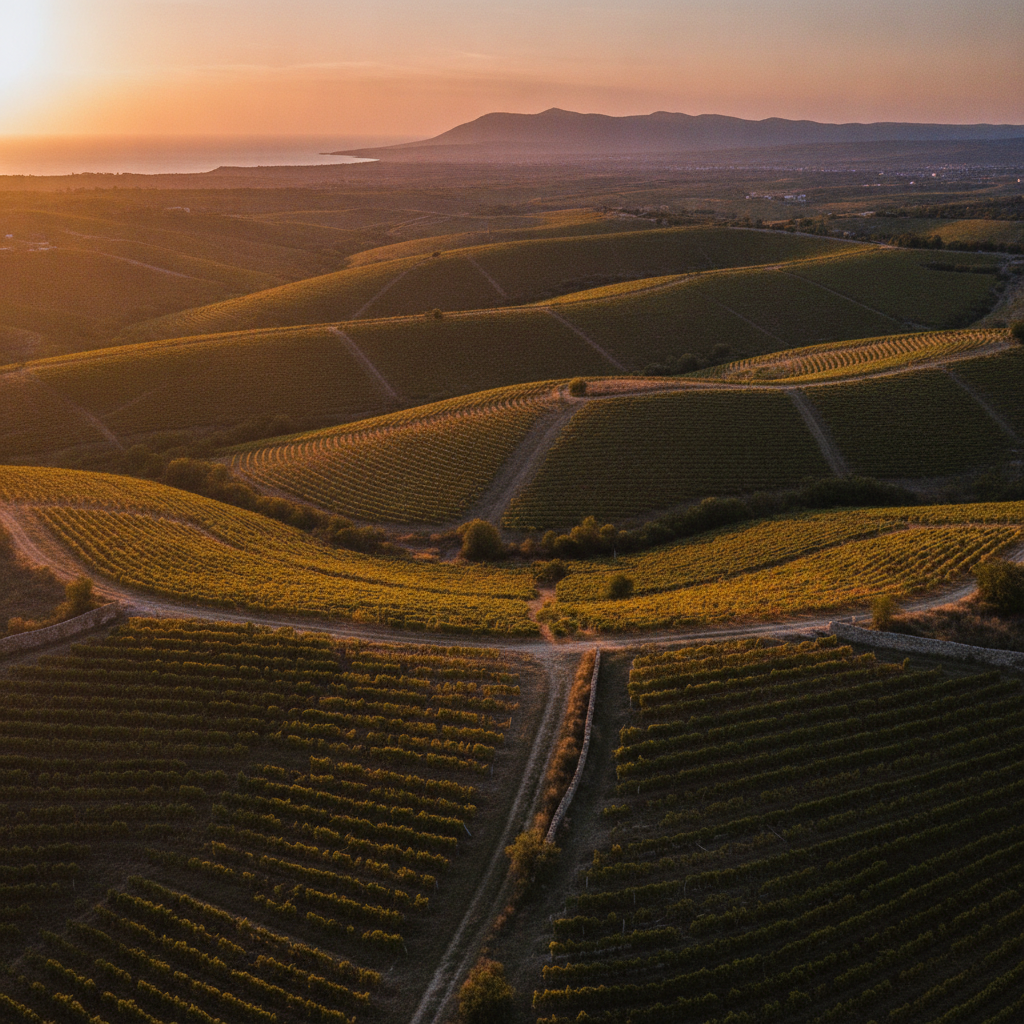
Cacchione demonstrates remarkable adaptability to various soil types, preferring cool, fertile, and deep soils. This agronomic versatility makes it an interesting candidate for export to different geographical areas, provided its pedoclimatic preferences are respected.
Training Systems and Pruning
The grape variety adapts well to expanded training systems with long pruning. This type of vineyard management aims to maximize the leaf surface exposed to sunlight and promote balanced production.
Irrigation
Irrigation can allow for increased production, but it is important to note that this may occur at the expense of wine quality. Therefore, careful water management is fundamental for those aiming to produce high-quality wines for export.
Sensitivity to Diseases and Adversities
Cacchione exhibits susceptibility to specific vine diseases:
- Downy Mildew (Peronospora): One of the most feared fungal diseases in viticulture, it requires careful preventive practices and targeted treatments.
- Powdery Mildew (Oidio): Another common fungal disease that can compromise the quality of grapes and wine.
- Phylloxera: Phylloxera infestation, a vine aphid, is one of the main historical threats to global viticulture. The use of resistant rootstocks is the standard practice to combat it.
Knowledge of these sensitivities is essential for planning phytosanitary defense strategies, especially in climates and contexts where these diseases are endemic.
Must and Wine Characteristics
The characteristics of the must and wine derived from Cacchione define its enological profile.
Must Composition
- Acidity: Ranges between 7.0 and 10.0 g/L. An acidity level that contributes to the wine's freshness and longevity.
- Sugar: Fluctuates between 17.0 and 20.0%. These values indicate a moderate alcohol potential, but sufficient for wines of good structure.
Wine Characteristics
The wine obtained from Cacchione is described as:
- Medium-bodied alcoholic: An alcohol profile that adapts well to international tastes.
- Full-bodied: Indicates good structure and presence in the mouth.
- Harmonious: A sign of balance among its components (alcohol, acidity, tannins).
- Slightly acidic: Contributes to the wine's liveliness and drinkability.
- Fresh and neutral in flavor: A clean taste profile that can be appreciated by a wide range of consumers and lends itself well to various enological interpretations.
Enological Use
Cacchione is primarily used in the production of:
- Common table wine: Its versatility makes it suitable for everyday wines.
- Base for sparkling wines: Its characteristics of freshness and acidity make it a good candidate for producing sparkling wines.
- Distillation: Although less common, the grape variety can also be used for the production of spirits.
Its ability to be vinified as a single varietal or in blends offers producers flexibility.
Export Potential of Cacchione
The Cacchione grape variety, while not among the most recognized globally, possesses characteristics that can attract foreign markets:
- Uniqueness and Geographical Origin: Its provenance from Crimea and southern Ukraine offers a distinctive story and an element of novelty for consumers seeking wines "outside the usual". This can be a strong marketing point, especially for markets like Eastern Europe, Russia, and countries with an interest in less conventional appellations.
- Wine Profile: A medium-alcohol, full-bodied, harmonious, fresh, and neutral wine is generally well-received by international markets. The neutrality of its flavor makes it versatile for pairing with different cuisines and for interpretation in various enological nuances.
- Agronomic Adaptability: The ability to adapt to different soils, while preferring cool and fertile ones, suggests it can be successfully cultivated in various regions, expanding potential production areas for export.
- Potential for Sparkling Wines: The sparkling wine market is experiencing constant global growth. Cacchione, used as a base, could enter this market segment with a distinctive product.
Challenges for Export:
- Market Awareness: The grape variety's low recognition requires significant investment in marketing and communication to educate importers and consumers.
- Competition: Cacchione will compete with indigenous grape varieties from other regions and well-established international varietals.
- Regulations and Certifications: Exporting requires compliance with specific regulations in destination countries, which can vary considerably.
Market Strategies:
- Focus on Niche Markets: Start with markets that appreciate diversity and unique wine stories.
- Create a Brand Story: Emphasize the historical and geographical origins of Cacchione to create a compelling narrative.
- Collaborate with Specialized Importers: Identify partners experienced in promoting indigenous and lesser-known wines.
- Participate in Industry Trade Shows: Present Cacchione at international events to increase visibility.
The Cacchione grape variety, with its deep-rooted history and balanced enological characteristics, represents an interesting opportunity for Italian wineries wishing to diversify their offerings and conquer new markets. A well-defined export strategy, which leverages its uniqueness and effectively communicates its potential, can lead to significant results.
Frequently Asked Questions
What are the geographical origins of the Cacchione grape variety, and where is it primarily cultivated today?
The Cacchione grape variety has origins closely linked to Crimea and southern Ukraine, with its cultivation primarily concentrated in the Sudak regions.
What are the main sensitivities of the Cacchione grape variety to diseases and adversities?
Cacchione exhibits susceptibility to Downy Mildew, Powdery Mildew, and Phylloxera, therefore requiring careful preventive practices and the use of resistant rootstocks.
What are the characteristics of the wine obtained from Cacchione, and what enological uses are possible?
Cacchione wine is medium-bodied alcoholic, full-bodied, harmonious, slightly acidic, and fresh and neutral in flavor. It can be used for table wines, as a base for sparkling wines, or, less commonly, for distillates.