Cilie
Ciliegiolo, an indigenous Italian grape variety, offers a distinctive character and significant export potential for wineries seeking to diversify their international offerings. Its ancient origins, ampelographic peculiarities, and enological characteristics make it a promising candidate for foreign markets. This article explores the Ciliegiolo grape variety in detail, analyzing its history, agronomic characteristics, and export prospects, providing essential information for international buyers. In-depth look: MASAF — National Register of Vine Varieties.
What are the origins and history of the Ciliegiolo grape variety?
The origins of Ciliegiolo are ancient, with evidence suggesting cultivation as early as the 14th-15th century, possibly originating from Crimea or southern Ukraine, where it was a widespread variety destined for export. Other ampelographic research connects it to the Mediterranean basin, with possible roots in Tuscany or other Italian regions. Its diffusion has been influenced by historical dynamics and market preferences over the centuries.
What are the ampelographic characteristics of Ciliegiolo?
Ciliegiolo stands out for its specific traits. The tip of the shoot is woolly, with colorations ranging from bronze-yellow to yellow-green, often with pink margins. Adult leaves are medium to large, orbicular or reniform, with three or five lobes and open or closed petiolar sinuses. The upper surface may show undulations, while the lower surface is woolly or downy, gray in color.
What are the characteristics of the Ciliegiolo bunch and berry?
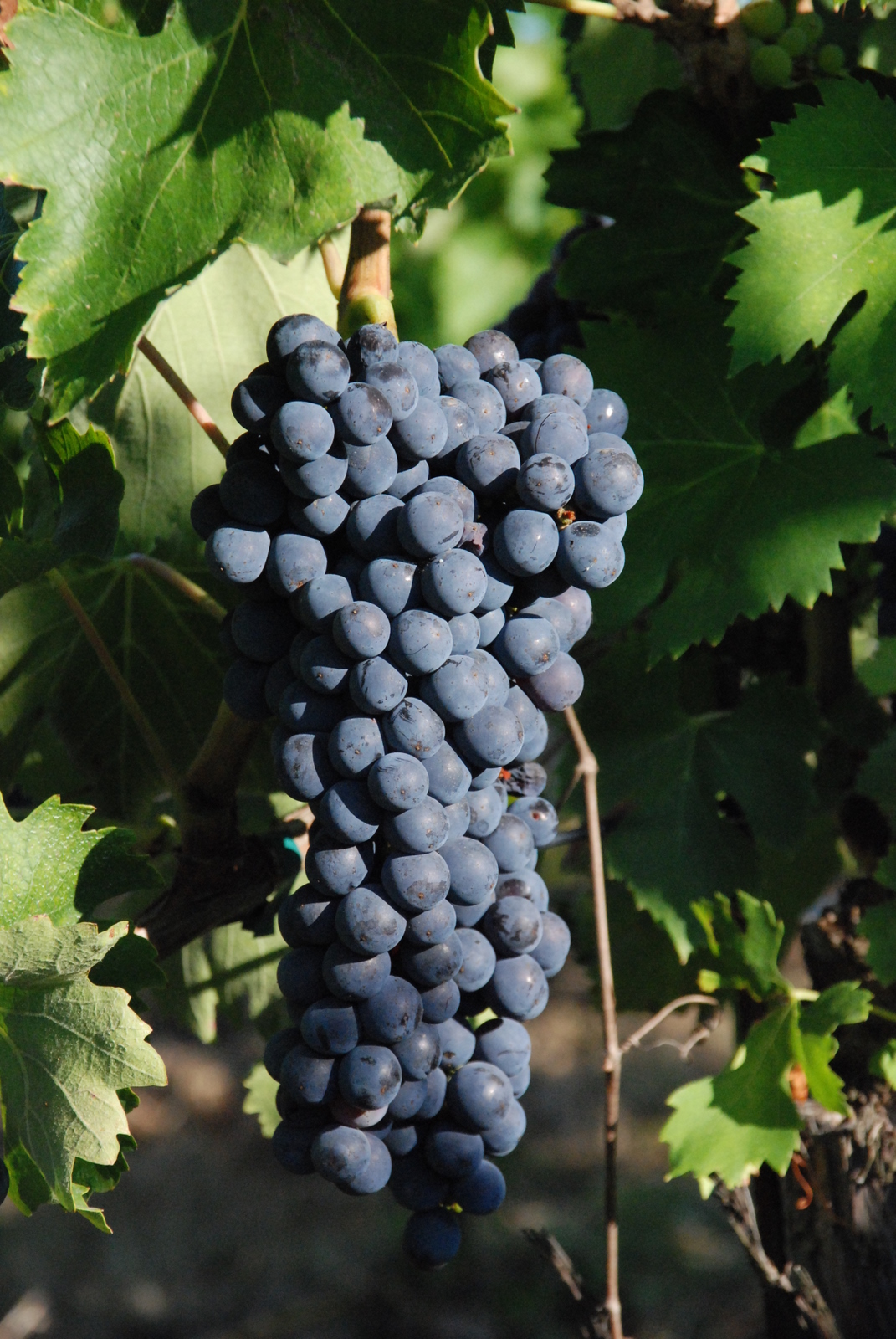
Ciliegiolo bunches are medium in size, compact or sparse, conical or cylindrical, and may have a wing. The berries are medium to large, oval or circular, with a blue-black or blue-violet epidermis, often with a bloom. The skin is thin and can feel rough to the touch. The pulp is juicy, soft, and non-coloring.
What are the environmental and cultivation requirements for Ciliegiolo?
Ciliegiolo adapts to various soils, preferring cool, fertile, and deep ones, and also thrives in humid climates. Expanded training systems with long pruning are preferred. Irrigation can increase production, but potentially at the expense of wine quality. The shoots are robust and not very susceptible to winter frost.
Is Ciliegiolo susceptible to diseases and adversities?
The Ciliegiolo grape variety is susceptible to various vine diseases, particularly downy mildew, powdery mildew, and phylloxera. However, some sources indicate lower susceptibility to major fungal diseases. Careful agronomic management is therefore essential for vine health and grape quality.
What are the characteristics of Ciliegiolo must?
Ciliegiolo must generally has an acidity between 6.0 and 10.0 g/l, while the sugar content ranges from 17.0% to 23.0%. Bud fertility is around 1.4-1.5, indicating good productive capacity.
What type of wine is produced from Ciliegiolo?
Wine produced from Ciliegiolo is medium-bodied, full-bodied, harmonious, and slightly acidic, with a fresh and neutral taste. It has a light ruby red color, is smooth, and low in tannins. Some wines can have aging potential, offering various interpretative possibilities.
How is Ciliegiolo used in enology?
Ciliegiolo is a versatile grape variety, primarily used for winemaking. It can be vinified in purity for wines with a distinctive character, or used in blends with other indigenous or international grape varieties. Historically, it has also been used for sparkling wines and in some local appellations. Its ability to produce balanced wines makes it suitable for various enological interpretations.
What is the export potential of the Ciliegiolo grape variety?
Ciliegiolo represents an interesting export opportunity, especially for wineries focused on authenticity and the valorization of indigenous Italian grape varieties. Its history and unique characteristics can be a strong marketing element to attract importers and consumers seeking novelty.
Which foreign markets are interested in Ciliegiolo?
Markets showing increasing openness to lesser-known but high-quality grape varieties include European markets (Germany, Switzerland, Scandinavia) and North American markets (United States, Canada). Emerging markets such as Australia and New Zealand could also appreciate Ciliegiolo's typicality.
What positioning strategies are effective for Ciliegiolo abroad?
To promote Ciliegiolo in foreign markets, it is essential to focus on narrating its history, origins, and peculiarities. Communication should emphasize authenticity and territoriality, enological versatility, its distinctive organoleptic profile, and its potential for food pairing.
How does Wines Export support the export of grape varieties like Ciliegiolo?
Wines Export has a pool of wineries interested in exploring or expanding the production and export of indigenous grape varieties like Ciliegiolo. We offer foreign buyers a diverse and high-quality selection, supported by producers with deep knowledge of the territory and specific viticultural expertise.
Frequently Asked Questions
Is Ciliegiolo a grape variety suitable for all climates?
Ciliegiolo adapts well to various soil types, preferring cool, fertile, and deep ones, and also thrives in humid climates.
What are the main diseases to which Ciliegiolo is susceptible?
Ciliegiolo is susceptible to various vine diseases, particularly downy mildew, powdery mildew, and phylloxera.
Does Ciliegiolo wine have aging potential?
Some wines produced from Ciliegiolo can have aging potential, offering various interpretative possibilities.
Ciliegiolo is a grape variety with a rich past and a promising future in the wine export landscape. Its unique characteristics, enological versatility, and connection to Italian tradition make it an excellent choice for wineries looking to stand out in international markets.