Cesanese: From Lazio to the World, an Italian Wine to Discover
Cesanese, an indigenous grape variety from Lazio, presents a unique opportunity for Italian wineries aiming to expand their presence in international markets. Its distinctive characteristics, deep-rooted history, and the growing global demand for authentic wines make it an ideal candidate for export. This article explores the potential of this precious grape variety, analyzing its peculiarities and how to leverage them to conquer new markets. Further reading: MASAF — National Register of Vine Varieties.
Where Does the Cesanese Grape Variety Originate From and What is its History?
The origins of Cesanese are deeply tied to the Lazio region, with a history documented for centuries. The earliest written evidence attesting to its cultivation dates back to the 19th century, defining it as "the prince of red-berried grape varieties of the Castelli," highlighting its importance and quality from that era.
Historically cultivated on the volcanic hills of the Castelli Romani, Cesanese thrives in a terroir that enhances its characteristics. Despite its strong regional identity, it has demonstrated good adaptability, favoring temperate climates and soils that promote optimal ripening.
What are the Ampelographic Characteristics of Cesanese?
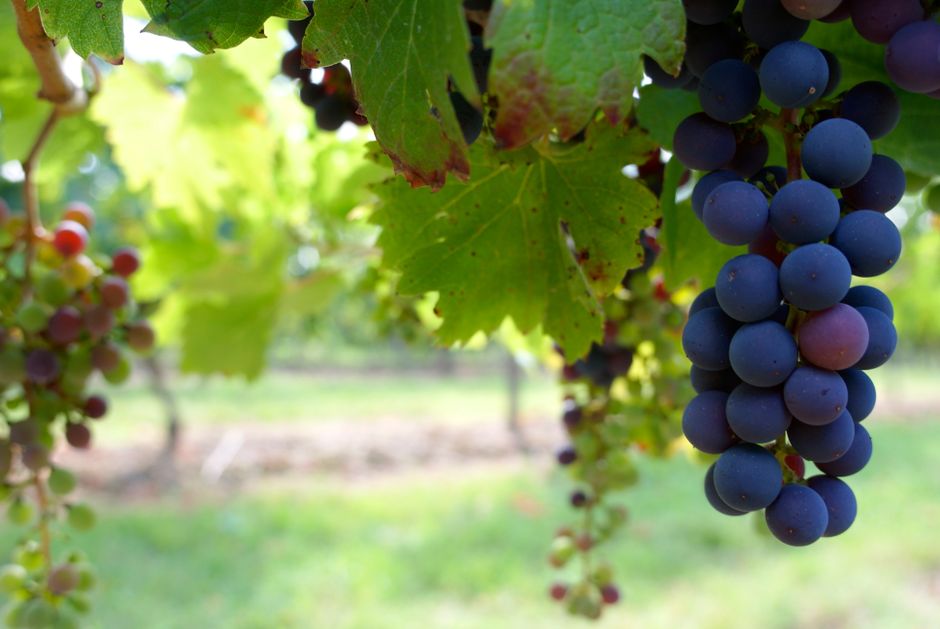
Cesanese is distinguished by its medium vigor and adaptable growth habit, cultivable both as a spurred cordon and a low bush. The leaves are generally medium to large, pentalobed with deep sinuses, and feature long, acuminate teeth on the margins.
The bunches are typically large or very large, conical or cylindrical, well-filled, and sometimes winged, favoring good sugar concentration. The berries are medium-large, with thick yet tender skin, turning red-black when ripe. The pulp is pleasant, juicy, firm, with a sweet flavor and a peculiar varietal aroma.

How Does Cesanese Perform in the Vineyard and What are its Agronomic Peculiarities?
The Cesanese grape variety shows good resistance to various adversities, such as coulure and shot berries, factors that facilitate its agronomic management. It tends to ripen late, allowing for extended harvesting until late autumn.
This late ripening allows for grapes with varying sugar levels and aromatic profiles to be obtained, depending on the harvest timing. Pruning can be managed generously to ensure consistent and abundant production.
What are the Oenological Characteristics and Aromatic Profile of Cesanese Wines?
Cesanese wines typically present a ruby red color, with an aromatic profile characterized by fruity notes of cherry and plum, sometimes with spicy hints. On the palate, the wines are generally smooth, with well-integrated tannins and good structure, supported by a balanced acidity that provides freshness.
Cesanese wines, especially those from riper grapes or vinified with specific techniques, show good aging potential, developing complexity and aromatic nuances over time. The versatility in harvesting allows for the production of both fresh and fruity wines for early consumption, as well as more structured and complex versions suitable for aging.
What is the Export Potential of the Cesanese Grape Variety?
Cesanese offers a strategic opportunity for Italian wineries in the global market, which is increasingly seeking authenticity and diversity. Its uniqueness and connection to the Lazio territory represent a strong element of attraction for foreign consumers eager to discover new enological expressions.
There is a growing global trend towards the rediscovery of indigenous grape varieties, with markets like the United States, Canada, and Australia showing particular interest in wines that tell a story. Cesanese can position itself as a high-quality wine, ideal for market segments willing to pay a premium for uniqueness and excellence. Wines Export works to connect Italian wineries with international importers and buyers interested in indigenous grape varieties, actively exploring new market opportunities for this grape.
What Do Foreign Buyers Look For When Evaluating Cesanese?
International buyers seek the narrative of the grape variety in Cesanese, its origins in Lazio, and the traditions linked to its cultivation and winemaking – fundamental elements to tell a compelling story to their customers. The assurance of consistent quality, year after year, is essential, implying impeccable agronomic management and winemaking.
They appreciate the gastronomic pairing potential, as Cesanese pairs well with various cuisines, and its ability to differentiate itself in a crowded market. Finally, it is crucial for importers that the wine has interesting profit potential, justified by its quality, uniqueness, and market positioning.
Frequently Asked Questions
What are the main characteristics of Cesanese wine?
Cesanese wines are typically ruby red, with fruity notes of cherry and plum, sometimes spicy. On the palate, they are smooth, with integrated tannins, good structure, and balanced acidity.
Is Cesanese a suitable grape variety for export?
Yes, Cesanese has good export potential thanks to its uniqueness, authenticity, and the growing global demand for indigenous grape varieties.
Which markets show interest in wines like Cesanese?
Markets such as the United States, Canada, and Australia show particular interest in wines that tell a story and a territory, making them promising destinations for Cesanese.
The Cesanese grape variety represents an excellent opportunity for Italian wineries wishing to expand their international presence with a distinctive, high-quality product. Its history, its characteristics, and the growing global interest in indigenous grape varieties make it an ideal candidate for export.
Request a personalized demo to discover how Wines Export can help you export your indigenous wines.