Franconia, Italy's Blaufränkisch: the National Registry name, Friuli Isonzo, Friuli Latisana, Terre del Colleoni, the mix-up with Germany's Franken region, and export
Wines Export Editorial · Last updated:
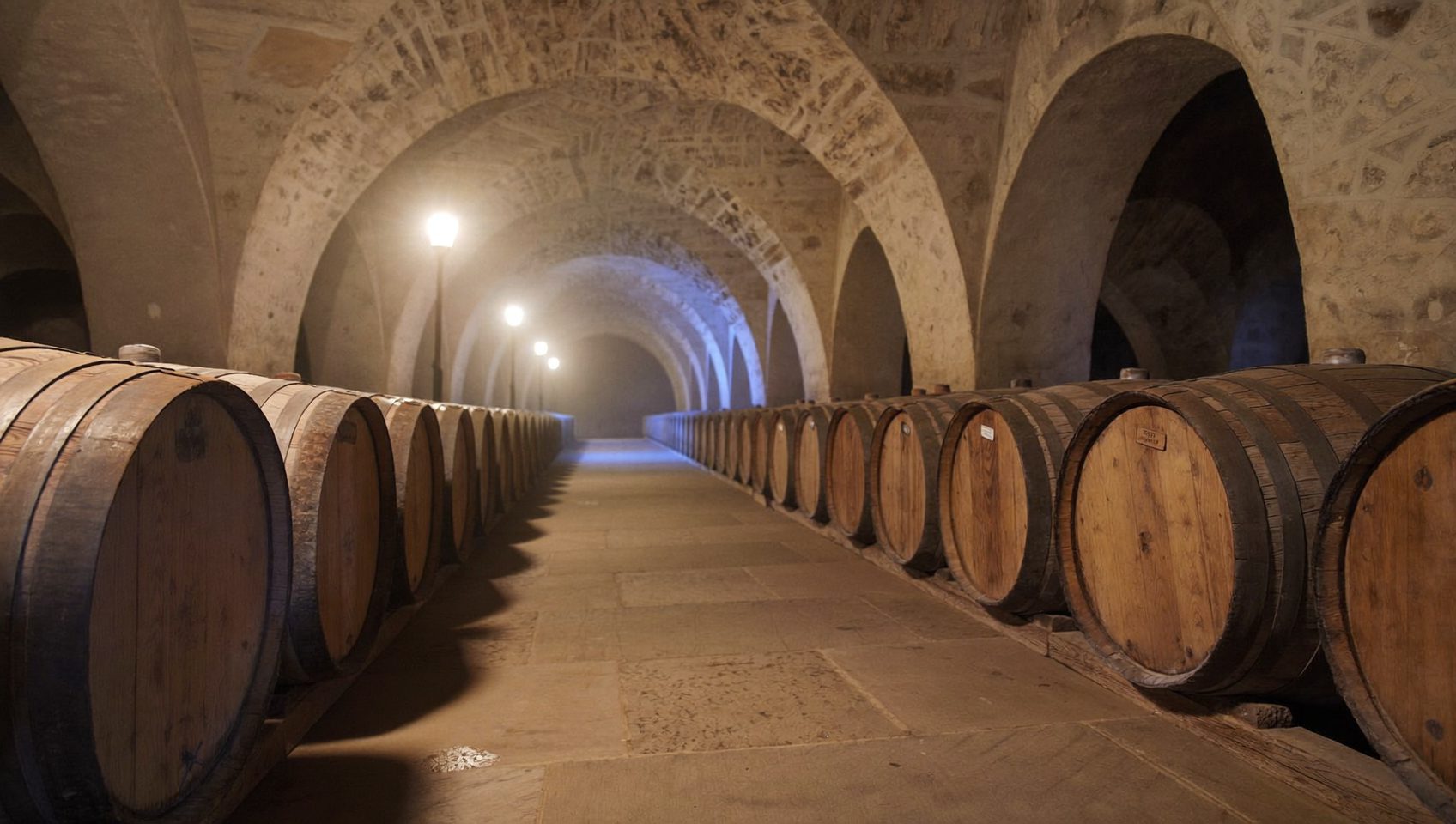
Franconia is the Italian name of the grape called Blaufränkisch in Austria, Kékfrankos in Hungary and Lemberger in Germany. Italy's National Registry of Grapevine Varieties lists it as Franconia N., code 086, admitted on 22 March 1971 at the proposal of the Friuli Venezia Giulia Region, with no official synonyms (National Registry, entry 086). The name appears on the label in three DOCs: Friuli Isonzo in the province of Gorizia, Friuli Latisana in the province of Udine, with at least 85 percent Franconia, and Terre del Colleoni in the province of Bergamo, also with at least 85 percent (production rules, art. 1 and 2). Since 2025 it can also go into Valcalepio Rosso, up to 15 percent together with other complementary varieties (Ministerial Decree of 24 June 2025, Official Gazette no. 158 of 10 July 2025). It is a rare grape in Italy: according to the ISTAT figures published by the Registry it covered 59 hectares in 2010, against 355 in 1982. The name has nothing to do with Franconia in Germany, the Franken wine region: it is the first misunderstanding to clear up with a German-speaking buyer.
This page is the complete guide to the grape in Italy and includes the section for those who sell it abroad. The areas of the three DOCs are covered in wine from Friuli Venezia Giulia, wine from Gorizia, wine from Udine and wine from Bergamo.
Are Franconia, Blaufränkisch and Lemberger the same grape?
Yes: they are different names for the same variety, used in the different countries where it grows. In Italy the legal name is Franconia, and it is the only one used by the National Registry and the production rules.
The Registry's ampelographic profile, taken from the description by S. Cancellier, A. Lavezzi, M. Marengoni and G. Moretti published by the Experimental Institute for Viticulture in Conegliano in 1989, lists the names used in the countries of cultivation. They are names in use, not official synonyms: the Registry's general entry for Franconia N. lists none.
| Country or area | Name reported | Source |
|---|---|---|
| Austria, given as the country of origin | Blaufränkische, Limberg | Registry, ampelographic profile 086 |
| Czechoslovakia | Frankovka modrà | Registry, profile 086 |
| Hungary | Kek-frankos | Registry, profile 086 |
| Yugoslavia | Moravka, Crna Frankovka | Registry, profile 086 |
| France (Alsace) | Limberger, Limberger noir, Noir de Franconie | Registry, profile 086 |
| Province of Bergamo | Imbergher | Registry, profile 086 |
| Province of Bergamo | Imberghem | Valcalepio DOC rules, art. 9; Terre del Colleoni DOC rules, art. 9 |
| Friuli | Borgogna, an incorrect name | Registry, profile 086 |
| Germany (Württemberg) | Lemberger or Limberger | Austrian Ministry of Agriculture, Blaufränkisch fact sheet |
The Austrian Ministry of Agriculture explains that the name Limberger refers to the village of Limberg near Maissau, in Lower Austria, and that in Hungary the variety is grown as Kékfrankos (BMLUK Blaufränkisch fact sheet).
Does Franconia come from Franconia in Germany?
No. Franconia is the Italian (and English) name for Franken, the German region along the Main river east of Frankfurt, but the grape does not come from there. The Austrian Ministry writes that the name Blaufränkisch would suggest an origin in Franconia, in the north-west of today's Bavaria, and considers it unlikely: "fränkisch" was the adjective used from the time of Charlemagne for varieties regarded as valuable, likened to French ones (BMLUK Blaufränkisch fact sheet).
Franken today is a German wine region of 6,040 hectares (2025 figure) dominated by white wines: in 2022 Silvaner was the leading grape at 25.3 percent, followed by Müller-Thurgau and Bacchus, and red varieties made up 17 percent; the typical bottle is the flattened, rounded Bocksbeutel (German Wine Institute, Franken profile). Among Franken's red grapes the profile names Portugieser, Regent, Spätburgunder and Domina, not Lemberger.
For anyone selling the wine abroad the mix-up is real: a German or Austrian buyer who reads "Franconia" on a price list may think of a wine from Franken. The technical sheet should give the legal name, Franconia, followed by the name the market knows: Blaufränkisch, Lemberger or Kékfrankos.
Franconia in the National Registry of Grapevine Varieties
The Registry's general entry states what the law recognises for the grape: name, date of listing, clones and the designations that allow it.
| Item | Franconia N. | Source |
|---|---|---|
| Code | 086 | Registry, entry 086 |
| Admitted to the Registry | 22 March 1971 (Official Gazette no. 98 of 24 April 1971) | Registry, entry 086 |
| Proposed by | Friuli Venezia Giulia Region | Registry, entry 086 |
| Official synonyms | none listed | Registry, entry 086 |
| Registered clones | 1: I-VCR180 (Official Gazette no. 151 of 26 June 2021) | Registry, entry 086 |
| DOCs where it is allowed | Friuli Isonzo or Isonzo del Friuli, Friuli Latisana, Terre del Colleoni or Colleoni | Registry, entry 086 |
| IGTs where it is allowed | 20: Alto Livenza, Alto Mincio, Bergamasca, Colli Trevigiani, Collina del Milanese, Trevenezie, Marca Trevigiana, Provincia di Mantova, Provincia di Pavia, Quistello, Ronchi Varesini, Sabbioneta, Sebino, Alpi Retiche, Terre Lariane, Vallagarina, Veneto, Veneto Orientale, Venezia Giulia, Vigneti delle Dolomiti | Registry, entry 086 |
Source: National Registry of Grapevine Varieties, entry 086, consulted on 13 November 2026. The Registry's list does not yet include Valcalepio, which added Franconia as a complementary variety with its 2025 amendment.
Area planted in Italy according to ISTAT, as published by the Registry:
| Year | Area |
|---|---|
| 1982 | 355 hectares |
| 1990 | 210 hectares |
| 2000 | 118 hectares |
| 2010 | 59 hectares |
Source: National Registry, entry 086, ISTAT data (the Registry gives no value for 1970).
The 2025 version of the Valcalepio production rules describes Franconia as a grape of Austrian origin grown in Italy on a few hectares in the province of Bergamo, where about twenty are recorded, and in even smaller amounts in the provinces of Udine and Treviso (Valcalepio DOC rules, art. 9).
Where it grows in Italy and which designations use it
Franconia grows in three areas: the Friulian plain of the Isonzo and the lower Friuli, the Treviso area and the hills around Bergamo. The Registry's profile confirms this, describing it from vineyards at Spresiano and Motta di Livenza (Treviso), Cormons (Gorizia), Rauscedo (Pordenone) and Torre de' Roveri (Bergamo).
| Designation | Minimum share of Franconia | What other grapes may add | Source |
|---|---|---|---|
| Friuli Isonzo or Isonzo del Friuli DOC Franconia | vineyards planted with Franconia | blending up to 15 percent of the volume with musts and wines of the same colour from the DOC | rules, art. 2 and 5.2 |
| Friuli Latisana DOC Franconia | 85 percent | up to 15 percent of non-aromatic grapes of the same colour suitable in the province of Udine | rules, art. 2 |
| Terre del Colleoni or Colleoni DOC Franconia | 85 percent | up to 15 percent of other red grapes suitable in Lombardy | rules, art. 2 |
| Valcalepio DOC Rosso | complementary grape | Franconia, Incrocio Terzi N.1, Merera, Rebo and Petit Verdot together up to 15 percent; base of Merlot 40 to 90 and Cabernet Sauvignon 10 to 60 percent | rules, art. 2 (Decree of 24 June 2025) |
| Venezia DOC Rosso | complementary grape, on the list of varieties suitable for Treviso and Venice | Merlot at least 50 percent | rules, art. 2 and annex 1 |
| Riviera del Garda Classico DOC Rosso, Rosso Superiore, Chiaretto | complementary grape, on the list of varieties suitable in Lombardy | up to 25 percent of non-aromatic black grapes suitable in Lombardy | rules, art. 2 and annex 2 |
| Trevenezie IGT Franconia | 85 percent | in the provinces of Veneto and in those of Udine, Pordenone and Gorizia | rules, art. 2 |
| Venezia Giulia IGT Franconia | 85 percent | province of Udine only | rules, art. 2 |
Two absences are worth noting. In the regional Friuli DOC and in Friuli Grave, Franconia is not among the varieties that may appear on the label: the Friuli DOC rules mention it only in the historical section, among the red grapes of the experimental vineyards planted in the province of Gorizia between 1925 and 1932 by the Conegliano Experimental Station (Friuli DOC rules, art. 9). The Trentino DOC does not include Franconia; in the province of Trento it is allowed only in the Vallagarina and Vigneti delle Dolomiti IGTs, where it is classified as suitable for cultivation.
The rules of the three DOCs with Franconia on the label
The three DOCs have similar yields and low alcohol thresholds; only Friuli Latisana provides Superiore and Riserva for Franconia, and only Colleoni a sparkling (frizzante) version.
| Requirement | Friuli Isonzo Franconia | Friuli Latisana Franconia | Terre del Colleoni Franconia |
|---|---|---|---|
| Area | the Isonzo plain in the province of Gorizia, from Romans and Gradisca d'Isonzo to Monfalcone and Staranzano (art. 3) | the lower plain in the province of Udine: Latisana, Lignano Sabbiadoro, Varmo, Rivignano, Ronchis, Precenicco, Palazzolo dello Stella, Pocenia, Teor and part of three other municipalities (art. 3) | hills and foothills of the province of Bergamo up to 600 metres (art. 3 and 4) |
| Maximum grape yield | 12 t/ha, 3.70 kg per vine (art. 4.6) | 12 t/ha; 10 t/ha for Superiore and Riserva (art. 4.6) | 13 t/ha (art. 4) |
| Minimum natural alcohol of the grapes | 9.5 percent (art. 4.6) | 10 percent; 11 percent for Superiore and Riserva (art. 4.6) | 10 percent (art. 4) |
| Grape-to-wine yield | 70 percent (art. 5.4) | 70 percent (art. 5.5) | 70 percent (art. 5) |
| Minimum alcohol on release | 11.00 percent (art. 6) | 10.50 percent; 11.00 for Novello; Superiore and Riserva at least one point higher (art. 6) | 11.00 percent, Frizzante included (art. 6) |
| Minimum total acidity | 4.5 g/l | 4.0 g/l | 4.50 g/l |
| Minimum non-reducing extract | 18.0 g/l | 18.0 g/l | 16.00 g/l |
| Types | Franconia | Franconia, Novello, Superiore, Riserva | Franconia, Frizzante, Novello by carbonic maceration only |
| Ageing | no minimum | Riserva: at least 24 months in wood or other containers from 11 November of the harvest year (art. 5.6) | no minimum |
| Where it is made | production area, province of Gorizia and bordering municipalities, Cervignano del Friuli; exemptions within Friuli Venezia Giulia (art. 5.1) | production area or anywhere in Friuli Venezia Giulia (art. 5.1) | province of Bergamo (art. 5) |
| Vintage on the label | compulsory (art. 7.5) | compulsory, except frizzante and sparkling wines (art. 7.6) | compulsory, except sparkling wines (art. 7) |
| DOC approved by | Presidential Decree of 30 October 1974 | Presidential Decree of 19 May 1975 | Ministerial Decree of 21 February 2011 |
Sources: production rules of Friuli Isonzo or Isonzo del Friuli DOC (last amended by Decree of 7 March 2014), Friuli Latisana DOC (last amended by Decree of 7 March 2014) and Terre del Colleoni or Colleoni DOC (last amended by Decree of 11 June 2014).
Other useful rules. In Friuli Isonzo new vineyards must have at least 3,300 vines per hectare and the permitted training systems are Guyot, double Guyot, Cappuccina and spurred cordon (art. 4.2 and 4.3); bottles up to three litres are closed with a flush cork stopper, a screw cap or another inert material (art. 8). In Friuli Latisana the Riserva goes into bottles of 0.75 to 3 litres (art. 7).
How to recognise Franconia in the vineyard
The Registry profile describes a vigorous, productive vine that buds early and ripens in mid-season. Early budding is its weak point: it withstands winter frost well but suffers from spring frost.
| Trait | Description | Source |
|---|---|---|
| Vigour and yield | good vigour, high grape yield per hectare, good bud fertility | Registry, entry 086 |
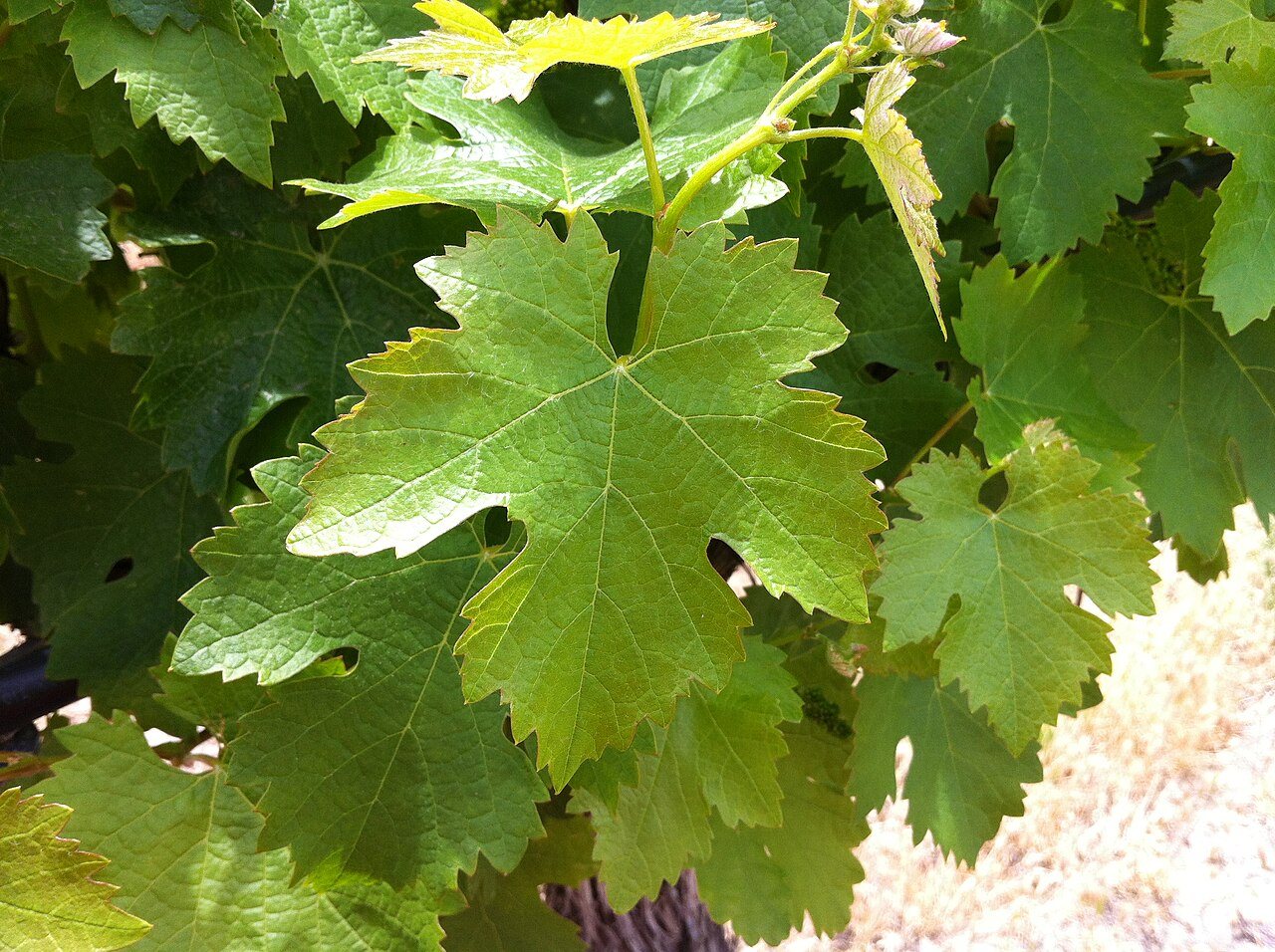
| Leaf | large, orbicular, three-lobed; dark green upper side, light green underside; red-violet in autumn | Registry, entry 086 |
| Bunch | large, long, pyramidal, winged, of medium compactness | Registry, entry 086 |
| Berry | round, thick and firm blue-black skin, medium bloom, uncoloured juicy pulp | Registry, entry 086 |
| Flower | hermaphrodite, self-fertile | Registry, entry 086; VIVC |
| Phenology | early budburst; medium flowering, veraison and ripening | Registry, entry 086 |
| Must | sugars between 17 and 19 percent, total acidity between 5 and 9 g/l depending on the area | Registry, entry 086 |
| Resistance | fairly hardy, not very sensitive to downy mildew and botrytis; sometimes poor fruit set in cold, damp sites | Registry, entry 086 |
The Valcalepio rules add that in the province of Bergamo Franconia was valued, at its peak in the 1950s, because it was very productive and resistant to the main diseases and to winter cold (Valcalepio DOC rules, art. 9).
What wine Franconia makes
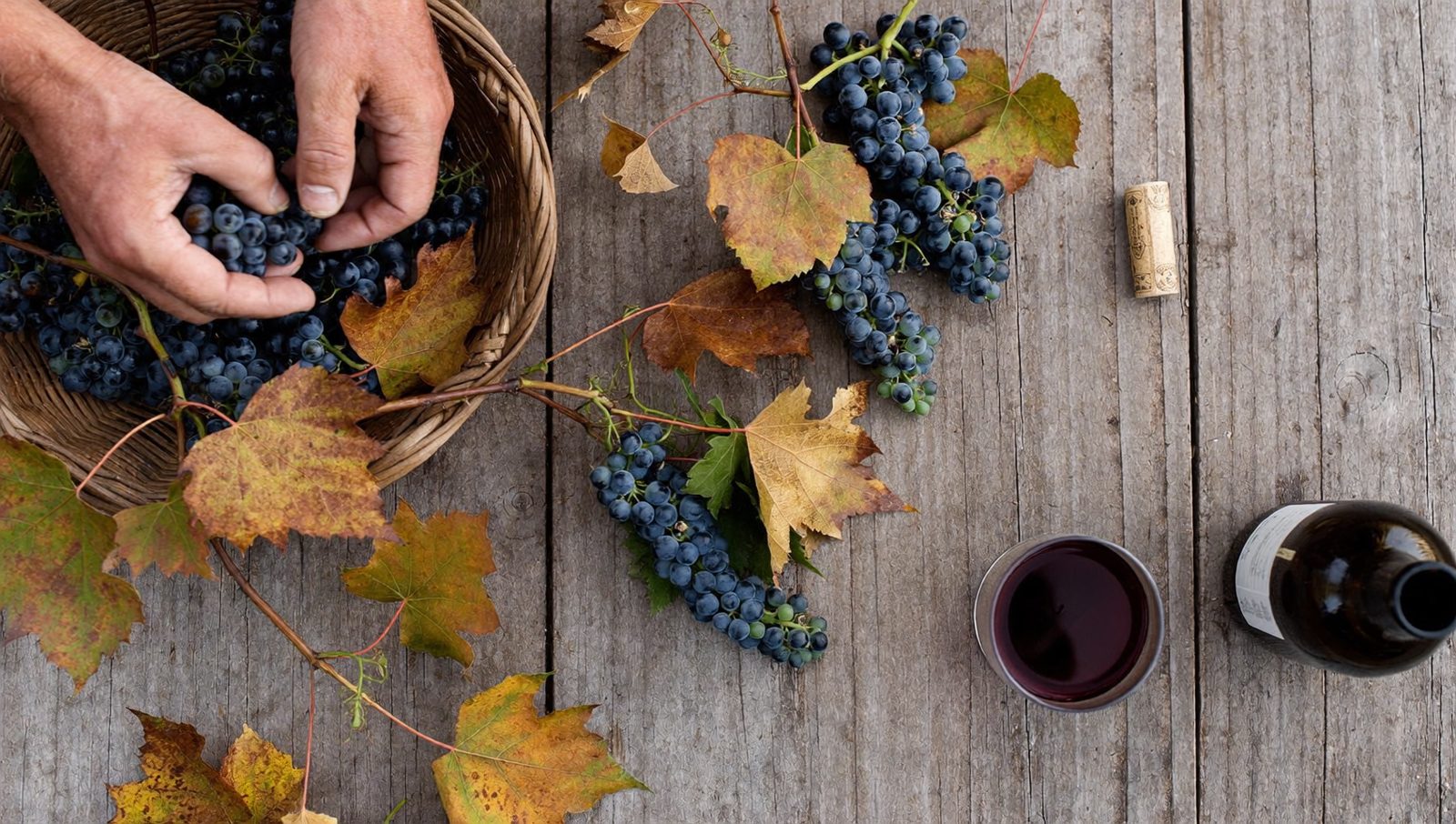
Franconia is almost always made as a single varietal and gives a vinous, fruity ruby red of medium body, suited to moderate ageing. The Registry profile describes a bright ruby red wine with a vinous-fruity nose, medium to good body, glyceric, with good alcohol and balanced acidity, suitable both for table wines and for better wines capable of light ageing; it is sometimes used to correct other wines (Registry, entry 086).
The production rules describe it as follows:
| Designation | Colour | Nose | Palate | Source |
|---|---|---|---|---|
| Friuli Isonzo Franconia | ruby red | vinous and harmonious | dry, slightly fruity and herbaceous | art. 6 |
| Friuli Latisana Franconia | intense ruby red | vinous, harmonious | dry, slightly fruity | art. 6 |
| Terre del Colleoni Franconia | ruby red | vinous and fruity | dry and characteristic | art. 6 |
The section of the Friuli Latisana rules on the link with the area adds a herbaceous yet vinous aroma with notes of berries, a wine generally full-bodied and moderately tannic, also suited to moderate ageing (Friuli Latisana rules, art. 9). In Austria the Ministry describes Blaufränkisch as a fresh wine with fine acidity and marked tannin, intense ruby red with violet tints (BMLUK fact sheet); Wines of Hungary describes Kékfrankos with strawberry, raspberry and violet, pronounced acidity and moderately intense tannins (Wines of Hungary, Kékfrankos profile).
Where does Franconia come from?
DNA analysis identifies Blaufränkisch as a natural cross of Blaue Zimmettraube and Weisser Heunisch (Gouais Blanc). The authors of the study, E. Maul, F. Röckel and R. Töpfer, consider it likely that it originated in Lower Styria, now in Slovenia, because Blaue Zimmettraube was grown there in the 19th century while it was absent from Austria, and they present this as a hypothesis, not as proof (Vitis, 2016, vol. 55, pp. 135-143). The international catalogue VIVC records the same parentage and gives Slovenia as the country of origin.
The written history is Austrian. The Austrian Ministry cites Sebastian Helbling's description of 1777, which calls it "Schwarze Fränkische", and its presence in the Vöslau area, in Lower Austria, in the last third of the 18th century; the name Blaufränkisch was officially adopted in 1875 at the second German Viticulture Congress in Colmar (BMLUK fact sheet).
In Italy the first documented traces date from the 20th century. The 1929 agricultural land register lists "Imberghem or Franconia" among the most common grapes on the hills and mountains of the province of Bergamo (Terre del Colleoni rules, art. 9), and the Valcalepio rules place its greatest spread in the Bergamo area in the 1950s, in old mixed-grape vineyards along the hills (art. 9). In Friuli the grape appears among the varieties of the experimental vineyards of the province of Gorizia in 1925-1932 (Friuli DOC rules, art. 9).
Selling Franconia abroad
We found no public data on exports of Italian Franconia: with 59 hectares in 2010 the grape is not tracked separately by ISTAT or by any Consortium. What is known is where the grape is already familiar under another name.
| Country | Name the buyer knows | What the sources say | Source |
|---|---|---|---|
| Austria | Blaufränkisch | about 6 percent of the country's vineyard area; Mittelburgenland is the main area; lead grape of the Mittelburgenland, Eisenberg, Leithaberg, Carnuntum and Rosalia DACs | BMLUK fact sheet |
| Hungary | Kékfrankos | the most widely planted grape in the country, on almost 8,000 hectares (the page gives no year); Sopron, Szekszárd, Kunság and Eger among the main areas; also the base of Bikavér | Wines of Hungary |
| Germany | Lemberger or Limberger | grown in Württemberg; in Franken, the region that shares the grape's Italian name, it is not among the red varieties | BMLUK fact sheet; German Wine Institute |
Three practical consequences follow. In Austria, Hungary and Germany Italian Franconia lands in a market that already has its own Blaufränkisch, and a buyer will judge it against the local wines: explaining the area, whether Isonzo, Latisana or the Bergamo hills, matters more than explaining the grape. Outside these countries Blaufränkisch is the name sommeliers recognise, and the technical sheet should say at once that Franconia and Blaufränkisch are the same variety. Finally, anyone writing to a German-speaking importer should head off the confusion with Franken, the region of white wines in Bocksbeutel bottles.
To choose whom to approach: wine importers in Germany, wine buyers and importers in Hungary and, for that market's rules, exporting wine to Hungary. The other Friulian reds that travel on the same price list as Franconia are covered in Refosco dal Peduncolo Rosso and Malbech; in the Bergamo area, the Colleoni DOC also includes Marzemino.
Before sending the technical sheet, check four points: the right DOC on the label (Friuli Isonzo, Friuli Latisana or Terre del Colleoni, not Friuli DOC or Friuli Grave, which do not provide for Franconia); the share of Franconia, at least 85 percent in Latisana and Colleoni; alcohol on release, at least 11 percent in Isonzo and Colleoni and at least 10.50 in Latisana; for a Latisana Riserva, 24 months from 11 November of the harvest year.
Frequently Asked Questions
Are Franconia and Blaufränkisch the same grape?
Yes. Franconia is the name under which the variety is listed in Italy's National Registry of Grapevine Varieties (Franconia N., code 086); Blaufränkisch is the Austrian name, Kékfrankos the Hungarian one, Lemberger the one used in Germany (Registry, ampelographic profile 086; BMLUK fact sheet).
Does Franconia wine come from the German region of Franconia?
No. Franconia is also the Italian and English name for Franken, a German wine region along the Main dominated by Silvaner and Müller-Thurgau, but the grape does not come from there: the Austrian Ministry considers an origin in Franken unlikely, and the study published in Vitis in 2016 places its likely birthplace in Lower Styria, now in Slovenia.
Which DOCs put Franconia on the label?
Three: Friuli Isonzo or Isonzo del Friuli, Friuli Latisana and Terre del Colleoni or Colleoni (Registry, entry 086; production rules, art. 1). In Valcalepio Rosso it may make up to 15 percent together with other complementary grapes, without appearing on the label. The Friuli DOC and Friuli Grave have no Franconia type.
Can an Italian wine say Blaufränkisch on the label?
The rules of the three DOCs use only the name Franconia, and the National Registry lists no official synonyms for Franconia N. The name Blaufränkisch can be used in the technical sheet and in communication; before putting it on the label, check with the designation's control body.
How much Franconia is grown in Italy?
Very little: 59 hectares in 2010 according to the ISTAT figures published by the Registry, against 355 in 1982. The Valcalepio rules report about twenty hectares recorded in the province of Bergamo and even smaller amounts in the provinces of Udine and Treviso (art. 9).
What kind of wine does Franconia make?
A ruby red, vinous and fruity, of medium to good body, with good alcohol and balanced acidity, suited to light ageing (Registry, entry 086). The Friuli Latisana rules describe it with notes of berries, full-bodied and moderately tannic (art. 9).
Sources
- National Registry of Grapevine Varieties, Franconia N., code 086: admission, clones, DOCs and IGTs, ISTAT area and ampelographic profile by S. Cancellier, A. Lavezzi, M. Marengoni and G. Moretti (1989)
- Friuli Isonzo or Isonzo del Friuli DOC production rules (copy hosted by AIS)
- Friuli Latisana DOC production rules (copy hosted by AIS)
- Terre del Colleoni or Colleoni DOC production rules (copy hosted by AIS)
- Official Gazette no. 158 of 10 July 2025, Decree of 24 June 2025 amending the Valcalepio DOC rules
- Friuli or Friuli Venezia Giulia DOC rules, Venezia DOC rules and Riviera del Garda Classico DOC rules (copies hosted by AIS)
- Italian Ministry of Agriculture, lists and production rules of PDO and PGI wines: Friuli Grave DOC, Trentino DOC, Trevenezie, Venezia Giulia, Vallagarina and Vigneti delle Dolomiti IGT rules
- E. Maul, F. Röckel, R. Töpfer, "The 'missing link' 'Blaue Zimmettraube' reveals that 'Blauer Portugieser' and 'Blaufränkisch' originated in Lower Styria", Vitis 55 (2016), pp. 135-143
- VIVC, Vitis International Variety Catalogue: Blaufraenkisch entry
- Austrian Ministry of Agriculture (BMLUK), Blaufränkisch fact sheet
- Wines of Hungary, Kékfrankos profile
- German Wine Institute, the Franken wine region
- Freisa Grape: Freisa d'Asti, Freisa di Chieri, DOCs, Export
- Falanghina: grape, Falanghina del Sannio DOC, Campi Flegrei
- Friulano, formerly Tocai: Grape, Name and DOCs
- Lessini Durello DOC and Durella Grape: Zone and Rules
- Friularo Grape: Raboso Piave of Bagnoli and its DOCG
- Croatina Grape: Bonarda, DOC Rules and Where It Grows