Lessini Durello DOC and the Durella grape: disciplinare, Charmat and Monti Lessini metodo classico, zone, requirements and export
Wines Export Editorial · Last updated:
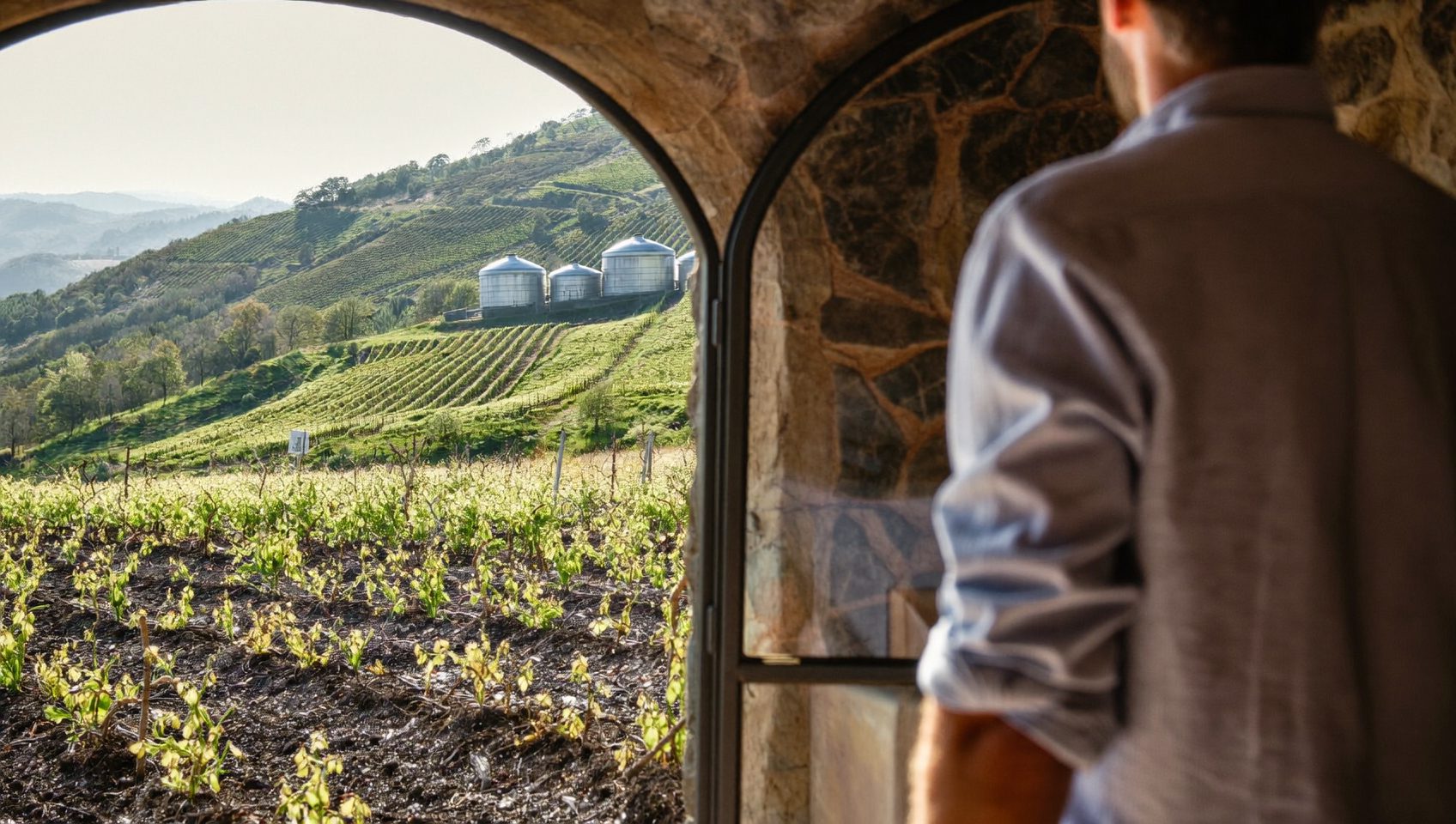
Lessini Durello DOC, which may also be labelled Durello Lessini, is a sparkling wine made only by the Martinotti or Charmat method, that is with the second fermentation in a pressurised tank, from at least 85 percent Durella grapes; up to 15 percent may come from Garganega, Pinot bianco, Chardonnay and Pinot nero (Lessini Durello DOC disciplinare, art. 1, 2 and 5). The grapes come from the hills of the eastern Lessini mountains, straddling the provinces of Verona and Vicenza, an area of over 30,000 hectares with mostly volcanic soils (art. 3 and 9). Metodo classico sparkling wine from Durella, from the same grape and the same zone, carries the name of another DOC, Monti Lessini: at least 18 months on the lees, 36 for the Riserva (Monti Lessini DOC disciplinare, art. 5). The split is recent: metodo classico moved into Monti Lessini with EU Implementing Regulation 2023/896, and Lessini Durello became Charmat only with the decree of 26 August 2024 (Gazzetta Ufficiale n. 205, 2 September 2024). At the end of 2025 the denomination passed one million bottles across both methods, with metodo classico rising from 6 percent of output in 2019 to 35 percent in 2024 (Il Sole 24 Ore, 21 November 2025).
This page is the full guide to the denomination, to the Durella grape and to what matters when selling abroad. The other wines of the two provinces are in exporting wine from Verona and exporting wine from Vicenza; the Garganega white from the neighbouring hills in Soave DOC. A comparison between Durella and Müller Thurgau is in Müller Thurgau and Durella.
What Lessini Durello is and why there are two DOCs
Durello is one base wine split into two denominations by sparkling method. The Consorzio sums it up as «one soul, two denominations»: Lessini Durello for Charmat, Monti Lessini for metodo classico (website of the Consorzio Tutela Vini Lessini Durello).
History explains the double label. The first DOC of the area was created by the decree of 25 June 1987 (Gazzetta Ufficiale n. 6, 9 January 1988). In 2011 Lessini Durello became a DOC of its own (decree of 8 November 2011) and the older denomination was renamed Monti Lessini (Monti Lessini disciplinare, heading and art. 9). From then on the sparkling wine, metodo classico included, sat within Lessini Durello. On 23 September 2021 the Consorzio applied to bring «quality sparkling wine» back into Monti Lessini, including Riserva and Crémant versions, to give it a stronger territorial identity (amendment application PDO-IT-A0462-AM02, Official Journal of the EU 2023/C 36/05). The Commission approved it with Implementing Regulation 2023/896 of 26 April 2023, and the decree of 26 August 2024 cut Lessini Durello down to the single Martinotti or Charmat sparkling type (Lessini Durello disciplinare, art. 1).
For a buyer the consequence is practical: a Durello metodo classico made under today's rules is called Monti Lessini, a Charmat is called Lessini Durello. Older bottles may still read «Lessini Durello metodo classico», because until the amendment that type belonged to Lessini Durello.
The Consorzio was recognised by the Ministry in November 2000 (Lessini Durello disciplinare, art. 9). Annual checks on both DOCs are carried out by the control body Siquria, based in Soave (art. 10 of both disciplinari).
The Durella grape: official name, synonyms and traits
The official name in Italy's National Register of Grapevine Varieties is Durella B. (white berry), code 077, with Durello as its official synonym; the variety has been registered since 25 May 1970 (Gazzetta Ufficiale n. 149, 17 June 1970). The Register admits it in the Lessini Durello and Monti Lessini DOCs and in several IGTs, including Veneto, Trevenezie and Verona (National Register, Durella B. entry).
The Register's ampelographic sheet, taken from the 1960 ministerial monograph, describes a medium or small, stocky bunch, often with one wing, and a medium berry with a «thick, leathery, tannic» skin and a tart-tasting pulp. Budbreak is late, ripening falls in the third to fourth period, vigour is high and yields are steady and abundant; disease resistance is normal, with some poor fruit set in years with a rainy spring. Among local synonyms the sheet records «Rabiosa» in the Asolo hills and «Cagnina» above Schio, unrelated to the black-berried Cagnina of Romagna.
The disciplinare links the name to the hardness of the skin and to the high total acidity of the wine, which gives it longevity and suits it to sparkling production, and traces Durella back to the «Durasena» mentioned in the Statutes of Costozza of 1290 (Lessini Durello disciplinare, art. 9). The Consorzio has studied the biotypes found in the vineyards; one of them, «Festugati» from Montebello Vicentino, is today clone R 240 (Consorzio, «Autoctona Durella» page).
The zone: the eastern Lessini between Verona and Vicenza
The two DOCs share the same boundary (art. 3 of both disciplinari).
| Province | Whole municipalities | Part of the municipality |
|---|---|---|
| Verona | Vestenanova, San Giovanni Ilarione | Montecchia di Crosara, Roncà, Cazzano di Tramigna, Tregnago, Badia Calavena |
| Vicenza | Arzignano, Castelgomberto, Chiampo, Brogliano, Gambugliano, Trissino | Cornedo, Costabissara, Gambellara, Isola Vicentina, Malo, Marano Vicentino, Monte di Malo, Montebello Vicentino, Montecchio Maggiore, Montorso Vicentino, Nogarole Vicentino, San Vito di Leguzzano, Schio, Zermeghedo |
Source: Lessini Durello and Monti Lessini disciplinari, art. 3.
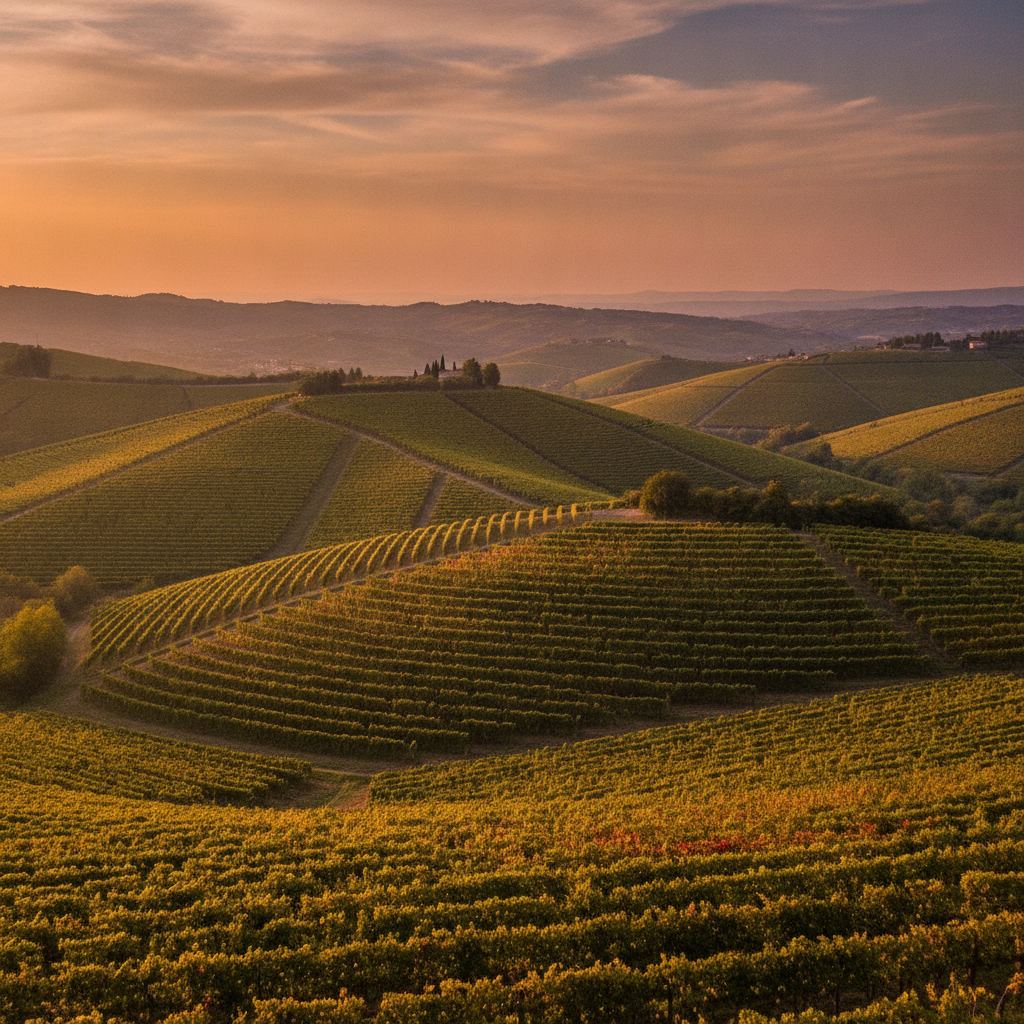
The disciplinare describes narrow valleys fanning out from north-north-west to south-south-east, separated by ridges that run down to the plain, with about 800 metres of difference in altitude. Annual rainfall is about 1,063 mm and the mean temperature about 13.7 °C. On the slopes of the Val d'Alpone, the Val di Chiampo and as far as the Agno valley, basic volcanic and volcanic-detrital rocks prevail, giving moderately deep soils with a basalt skeleton (Lessini Durello disciplinare, art. 9).
Lessini Durello vineyards must be on slopes; overly damp and fertile land is excluded. Spalliera (vertical trellis), GDC and pergola are allowed with at most 50,000 buds per hectare; new vineyards need at least 2,500 vines per hectare for Durella and Garganega and 3,000 for Pinot nero, Chardonnay and Pinot bianco (art. 4). Winemaking takes place in the municipalities of the zone or in a list of neighbouring municipalities in the two provinces; the sparkling stage of Lessini Durello must happen in Veneto, that of Monti Lessini only in the provinces of Verona and Vicenza (art. 5 of both disciplinari).
The Consorzio divides the denomination into 15 sub-zones that it calls «cru» (Consorzio website): they are a Consorzio subdivision, not geographical mentions provided for by the disciplinare, which bans any label qualifications it does not provide for. The label may carry «vigna» followed by the vineyard name, if the plot is registered separately and the wine is vinified apart (art. 7 of both disciplinari).
Types and requirements: Lessini Durello and Monti Lessini
The table compares the Lessini Durello Charmat sparkling wine with the three Monti Lessini metodo classico sparkling wines. All require at least 85 percent Durella, with Garganega, Pinot bianco, Chardonnay and Pinot nero up to 15 percent (art. 2 of both disciplinari).
| Requirement | Lessini Durello spumante | Monti Lessini spumante | Monti Lessini spumante Riserva | Monti Lessini spumante Crémant |
|---|---|---|---|---|
| Method | Martinotti or Charmat, in tank only | metodo classico, second fermentation in bottle | metodo classico | metodo classico, whole or destemmed bunches picked by hand |
| Maximum grape yield | 16 t/ha | 16 t/ha | 16 t/ha | 16 t/ha |
| Minimum natural alcohol of the grapes | 9.00 percent | 9 percent | 9 percent | 9 percent |
| Maximum grape-to-wine yield | 70 percent | 70 percent | 70 percent | no more than 100 litres of must per 150 kg of grapes |
| Time on the lees | no minimum set | at least 18 months | at least 36 months | at least 18 months |
| Minimum alcohol | 11.00 percent total | 11.5 percent total | 11.5 percent actual | 11.5 percent actual |
| Minimum total acidity | 6.5 g/l | 5.5 g/l | 5.5 g/l | 5.5 g/l |
| Minimum non-reducing extract | 14 g/l | 15 g/l | 15 g/l | 15 g/l |
| Permitted dosage terms | from dosaggio zero (pas dosé) to demi-sec | from dosaggio zero to demi-sec | from dosaggio zero to demi-sec | from dosaggio zero to demi-sec; sugar below 50 g/l, sulphur dioxide no more than 150 mg/l |
| Bottles and closures | up to 15 litres; cork mushroom stopper from 0.5 to 3 litres, screw cap allowed up to 0.375 | glass up to 15 litres, cork mushroom stopper | as for the standard version | as for the standard version |
Sources: Lessini Durello disciplinare, art. 4, 5, 6 and 8; Monti Lessini disciplinare, art. 4, 5, 6 and 8.
With 16 tonnes per hectare and a 70 percent yield, one hectare of Lessini Durello can give at most about 112 hectolitres of wine. In generous years the grape limit may be exceeded by up to 20 percent only if the surplus is brought back within limits by sorting; at the Consorzio's request the Veneto Region can lower yields each year (art. 4 of both disciplinari).
Neither disciplinare sets a minimum release date: for Monti Lessini the constraint is the time on the lees, for Lessini Durello there is no minimum period. The Consorzio website says metodo classico requires «at least 24 months» on the lees and the Riserva 36 («I Metodi Durello» page); the disciplinare in force says 18 months. If a technical sheet states 24 months, that is the producer's choice, not the legal minimum.
Label qualifiers such as «extra», «fine», «scelto» or «selezionato» are banned. For Lessini Durello, the word «millesimato» must always be accompanied by the harvest year; for Monti Lessini sparkling wines the vintage is compulsory only on millesimati (art. 7 of both disciplinari).
Still Monti Lessini: Durello, passito, Bianco and Pinot nero
The Monti Lessini DOC also covers still wines, which a buyer may find on the same price list (Monti Lessini disciplinare, art. 1, 2, 4, 5 and 6).
| Type | Grapes | Maximum grape yield | Minimum alcohol of the wine | Other rules |
|---|---|---|---|---|
| Monti Lessini Durello | Durella at least 85 percent | 16 t/ha | 10.50 percent | still white, may be lightly sparkling («vivace») as by tradition |
| Monti Lessini Durello passito | Durella at least 85 percent | 16 t/ha | 14.50 percent, of which at least 11.50 actual | natural drying for at least 2 months; maximum grape-to-wine yield 40 percent; medium-sweet or sweet |
| Monti Lessini Bianco | Chardonnay at least 50 percent, with Durella, Garganega, Pinot bianco, Pinot nero, Pinot grigio and Sauvignon | 12 t/ha | 11.50 percent | |
| Monti Lessini Pinot nero | Pinot nero at least 85 percent | 12 t/ha | 12.5 percent |
For still Monti Lessini wines the vintage on the label is compulsory; bottles go up to 9 litres with a standard cork, and up to 1.5 litres a long-skirt screw cap is allowed, except for the passito (art. 7 and 8).
What it tastes like and what to pair it with
The legal description of Lessini Durello spumante: fine, persistent mousse, pale straw yellow with greenish hints, a delicate and slightly fruity nose (Lessini Durello disciplinare, art. 6). The section on the link with the territory adds marine notes of chalk and iodine, floral notes of elderflower and hawthorn, more or less green apple and flint, which the text treats almost as a marker of the volcanic soils; the body is never heavy and the finish is savoury, mineral and slightly bitter (art. 9). The disciplinare recommends it both as an aperitif and with rich, savoury dishes.
Monti Lessini Riserva must show a fine, intense mousse, colour up to golden yellow and «complex and evolved notes» from long bottle ageing (Monti Lessini disciplinare, art. 6). For the Consorzio, Charmat is «fruitier and more fragrant», metodo classico more structured and complex («I Metodi Durello» page). The passito, according to the disciplinare, combines sweetness and acidity and goes with soft, savoury cheeses and very rich dishes (art. 9).
Durello and other Italian sparkling wines
Durello sits between two families a buyer already knows. As a Charmat wine, Lessini Durello is compared with Prosecco: the rules of that denomination are in Prosecco DOC. As metodo classico, Monti Lessini is compared with Trento DOC, Franciacorta and Alta Langa, which are based on Chardonnay and Pinot nero, whereas here the base is a local variety.
The process differences are explained in metodo classico vs Charmat and in the Charmat method in the winery; EU categories and dosage terms in EU rules for sparkling wine.
Selling Durello abroad
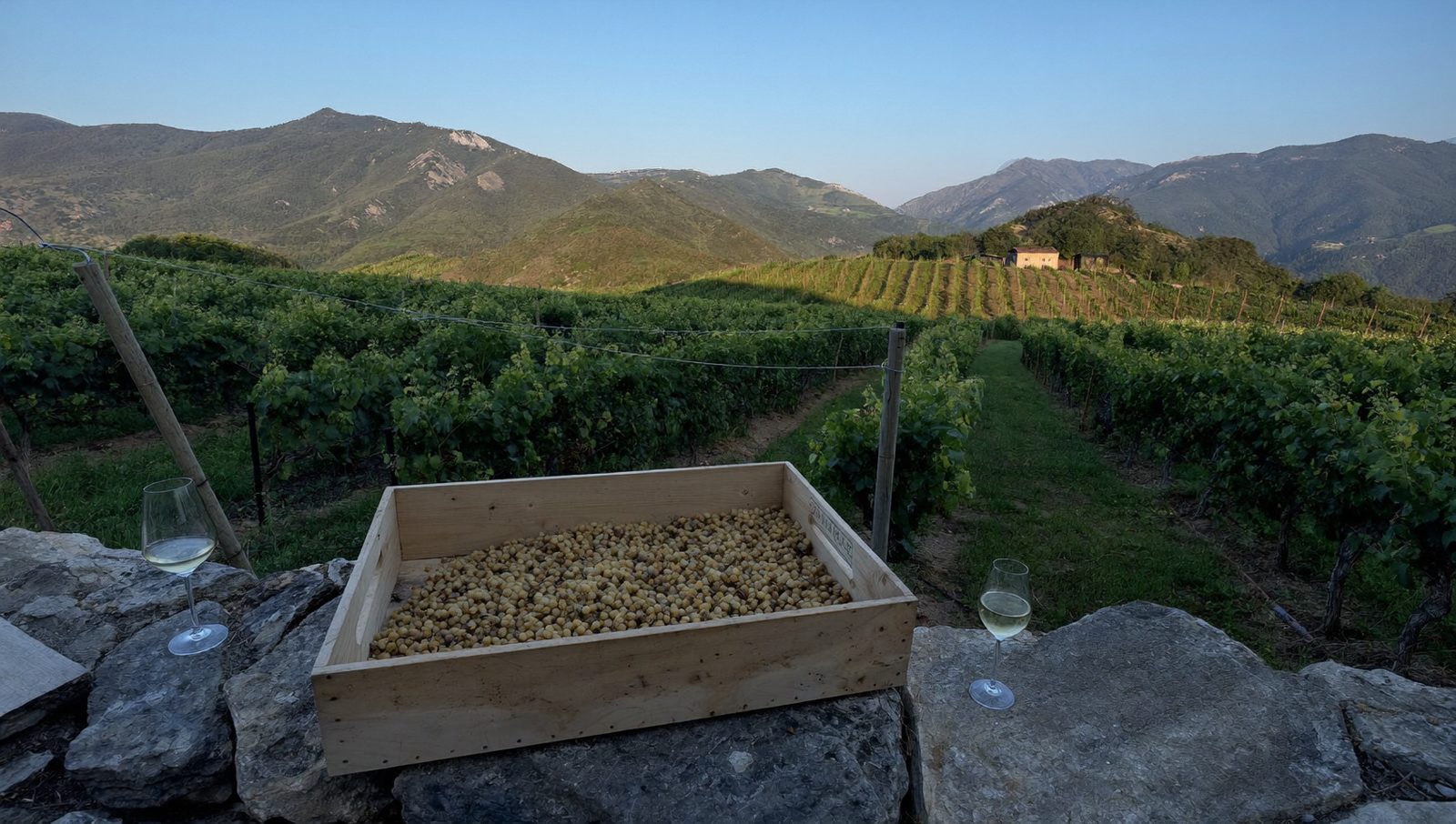
Durello is a small denomination, growing mainly in metodo classico. According to Il Sole 24 Ore (21 November 2025) the DOC produces over one million bottles, 37 percent more than five years earlier: about 400,000 of metodo classico and over 700,000 of Charmat. About 70 percent is sold in restaurants and 20 percent in winery shops. The Consorzio's president, Gianni Tessari, cited 34 member wineries and 600 hectares of Durella, with a potential of about six million bottles. Speaking to WineNews on 25 November 2025, Tessari confirmed one million bottles, with metodo classico above 30 percent of the total.
The Consorzio does not publish export data by country, and none of the sources listed below gives an export share for the denomination. The same sources describe a wine sold largely in Italy, in restaurants: abroad the job is to make it known from scratch, not to replace an existing supplier. A Nomisma study presented at Durello & Friends in 2025 found that for 17 percent of sparkling-wine consumers being a native variety is a decisive advantage, while long ageing on the lees matters to 4 percent (Il Sole 24 Ore, 21 November 2025): the selling point is the grape, before the months in the cellar.
To choose markets: who buys Italian sparkling wine abroad, and how, is in importers of Italian sparkling wine; the pages on the two provinces, Verona and Vicenza, list the other wines Durello can share a container with; the list of markets is in wine importers by country, and the full route in how to export wine.
Before sending the technical sheet to an importer, check five points: the right DOC for the method (Lessini Durello for Charmat, Monti Lessini for metodo classico); the months on the lees, at least 18 or 36 for the Riserva; a dosage term among those allowed; the cork mushroom stopper where it is compulsory; the harvest year next to «millesimato».
Frequently asked questions
What is the difference between Durello and Durella?
Durella is the grape's official name in the National Register of Grapevine Varieties (Durella B., code 077); Durello is its official synonym and the name used for the wine, as in the Lessini Durello DOC and the Monti Lessini Durello type (National Register; disciplinari, art. 1).
Which grapes is Lessini Durello made from?
At least 85 percent Durella; Garganega, Pinot bianco, Chardonnay and Pinot nero may make up to 15 percent, alone or together (Lessini Durello DOC disciplinare, art. 2).
Is Lessini Durello metodo classico or Charmat?
Since the decree of 26 August 2024 Lessini Durello is Charmat only, with the second fermentation in tank. Durello metodo classico is called Monti Lessini DOC and spends at least 18 months on the lees, 36 for the Riserva (Lessini Durello disciplinare, art. 1 and 5; Monti Lessini disciplinare, art. 5).
Where is Durello made?
In the hills of the eastern Lessini between the provinces of Verona and Vicenza: the whole of Vestenanova and San Giovanni Ilarione (Verona) and of Arzignano, Castelgomberto, Chiampo, Brogliano, Gambugliano and Trissino (Vicenza), and parts of 19 other municipalities (disciplinari, art. 3).
Is there a still or sweet Durello?
Yes, within the Monti Lessini DOC: Monti Lessini Durello is a still white, possibly lightly sparkling, with at least 10.50 percent alcohol; the passito is made from grapes dried for at least two months and must reach at least 14.50 percent total alcohol (Monti Lessini disciplinare, art. 5 and 6).
How many bottles of Durello are produced?
Over one million in 2025 across Charmat and metodo classico, with metodo classico at 35 percent in 2024 (Il Sole 24 Ore, 21 November 2025; WineNews, 25 November 2025). Export data by country are not published.
Sources
- Lessini Durello or Durello Lessini DOC disciplinare, as amended by ministerial decree of 26 August 2024, G.U. n. 205, 2 September 2024 (Italian Ministry of Agriculture, copy hosted by AIS)
- Monti Lessini DOC disciplinare, as amended by EU Implementing Regulation 2023/896 (Italian Ministry of Agriculture, copy hosted by AIS)
- Commission Implementing Regulation (EU) 2023/896 of 26 April 2023, Union amendment to the «Monti Lessini» specification
- Union amendment application «Monti Lessini» PDO-IT-A0462-AM02, Official Journal of the EU 2023/C 36/05 (copy on disciplinare.it)
- National Register of Grapevine Varieties, Durella B. (code 077) and ampelographic sheet
- Consorzio Tutela Vini Lessini Durello, «I Metodi Durello» and «Autoctona Durella»
- Il Sole 24 Ore, 21 November 2025, Monti Lessini bubbles bet on native grape strength
- WineNews, 25 November 2025, Nomisma research at Durello & Friends
- Falanghina: grape, Falanghina del Sannio DOC, Campi Flegrei
- Croatina Grape: Bonarda, DOC Rules and Where It Grows
- Franconia (Blaufränkisch) in Italy: Isonzo and Latisana
- Ciliegiolo grape: Maremma Toscana, Amelia and Sovana DOC
- Freisa Grape: Freisa d'Asti, Freisa di Chieri, DOCs, Export
- Chardonnay in Italy: Register, DOC, DOCG and sparkling