Ansonica or Inzolia (Insolia): the grape, the wine, the DOCs of Sicily and Tuscany, and what export buyers check
Wines Export Editorial · Last updated:
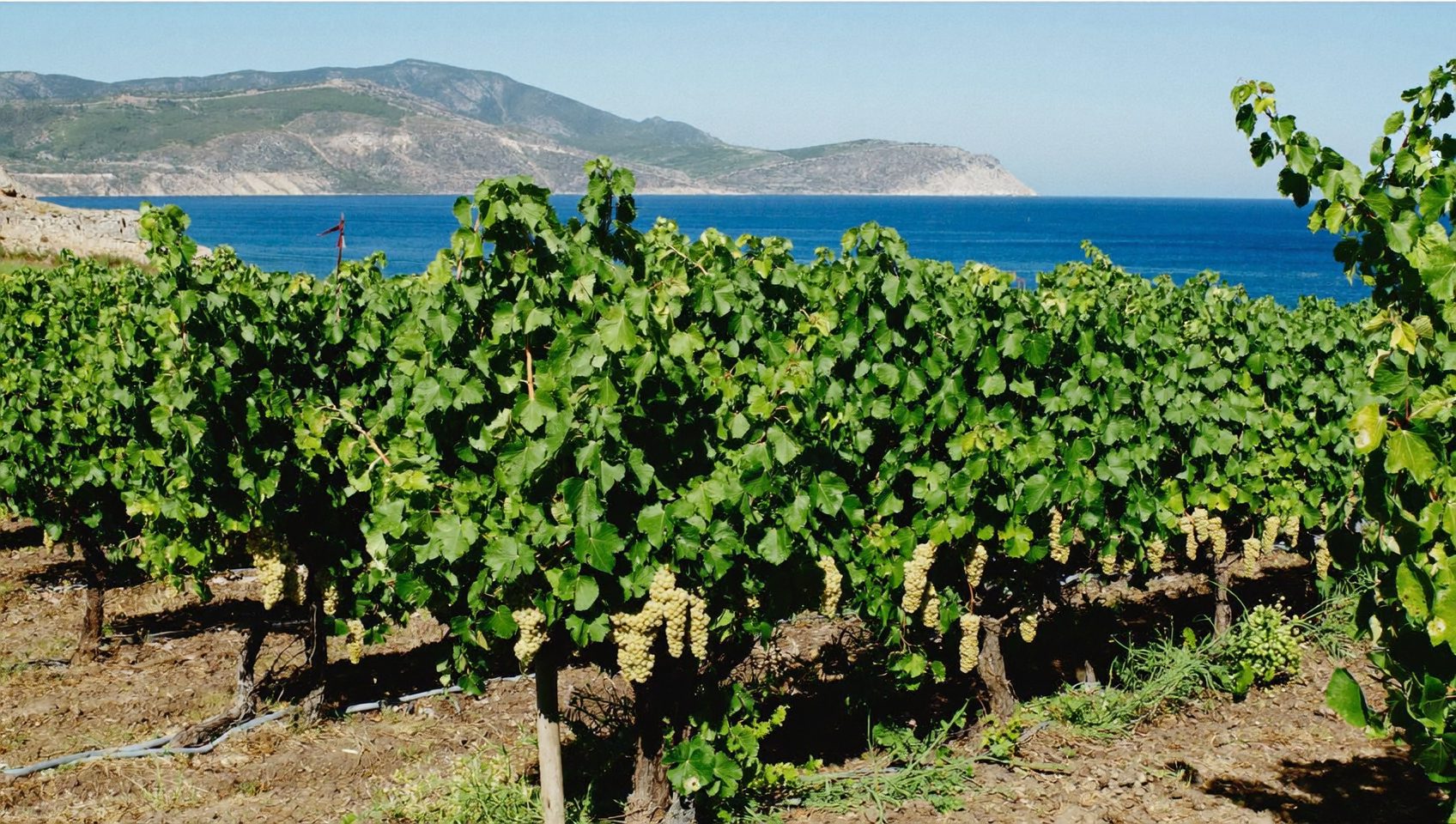
Ansonica and Inzolia are the same white grape variety: in Italy's National Register of Grapevine Varieties the official name is Ansonica B. (code 013), and Inzolia and Insolia are its official synonyms, registered on 25 May 1970 (National Register, Ansonica B. entry). In Sicily it is almost always called Inzolia or Insolia; on the Tuscan coast, on Elba, Giglio and the Argentario promontory, it is called Ansonica. The Register admits it in 22 DOCs and 38 IGTs, from the Sicilia DOC, which covers the whole island, to the Ansonica Costa dell'Argentario DOC, the only one named after the grape. Where the variety appears on the label, the rules almost always require at least 85 percent Ansonica in the vineyard and between 10.50 and 11.50 percent alcohol in the dry wine (Sicilia, Sciacca, Elba and Ansonica Costa dell'Argentario disciplinari, art. 2 and 6). The wine is white, straw yellow, with a delicate, lightly fruity nose, dry and soft, with moderate acidity. The same grape is also made into passito and late-harvest wines, and it goes into Marsala oro and ambra.
This page is the full guide to the variety, including what a buyer abroad checks. The closest Sicilian white in use and area is Grillo; the fortified wine in which Inzolia is a blending grape is covered in Marsala DOC: types, ageing and export; bottles released as IGP are explained in Terre Siciliane IGP, and the island as a whole in exporting Sicilian wine.
Are Ansonica, Inzolia and Insolia the same grape?
Yes, under Italian law and in international catalogues. The National Register lists the variety as "Ansonica B." with the official synonyms "Inzolia" and "Insolia"; it was registered on 25 May 1970, Gazzetta Ufficiale no. 149 of 17 June 1970 (National Register of Grapevine Varieties, variety 013).
The 1964 ampelographic description published in the same Register adds the names in local use, including Anzonica, Insora, Insolia di Palermo, 'Nzolia and Zolia bianca, and describes the vine from two clones: a Tuscan one from the Orbetello area and a Sicilian one from the government nursery in Palermo. VIVC, the international grapevine catalogue kept by the Julius Kühn-Institut, lists 32 synonyms, including Uva del Giglio and Nzolia di Lipari (VIVC, variety 492).
The name on the label is set by each disciplinare. The Tuscan DOCs write Ansonica, as do Contessa Entellina and Santa Margherita di Belice in Sicily; the Sicilia, Menfi, Sciacca, Salaparuta and Delia Nivolelli DOCs write Inzolia; Sambuca di Sicilia and Vittoria allow "Ansonica or Inzolia or Insolia", Alcamo "Ansonica or Inzolia", Riesi "Insolia", while Erice uses both "Ansonica or Inzolia" and "Ansonica or Insolia" (disciplinari, art. 1, 2 and 6). The Sicilia DOC allows the varieties "or their respective synonyms" on the label (Sicilia disciplinare, art. 1).
Do not confuse it with Inzolia Nera, a separate black-skinned variety that the Terre Siciliane IGP lists on its own among the permitted varieties (Terre Siciliane IGP disciplinare, annex 1).
Where does Ansonica come from?
VIVC gives Mantonico bianco, a Calabrian variety, as the parent confirmed by genetic markers; the second parent is unknown (VIVC, variety 492). A 1999 University of Milan study of three Ansonica vines from the oldest vineyards on Giglio found them indistinguishable from one another and similar to Ansonica from mainland Tuscany and to Sicilian Inzolia; among 40 Greek varieties the closest were Sideritis and Roditis, and the authors concluded that the island's Ansonica is of Greek origin (Labra et al., Vitis 38, 1999).
The disciplinari tell the story from the side of the land. The Elba rules state that Ansonica and Moscato reached the island from Sicily (Elba disciplinare, art. 9). The Costa dell'Argentario rules place the rise of "Ansonaco" among Giglio's vines in the second half of the eighteenth century, at the time of the 1766 report by the grand-ducal official Miller, and recall the "famous Anzonica grape, very well known throughout the Maremma" quoted by Ottorino Brandaglia in the national press; the DOC came with the ministerial decree of 28 April 1995 (Ansonica Costa dell'Argentario disciplinare, art. 9).
What is the grape like and how is it grown?
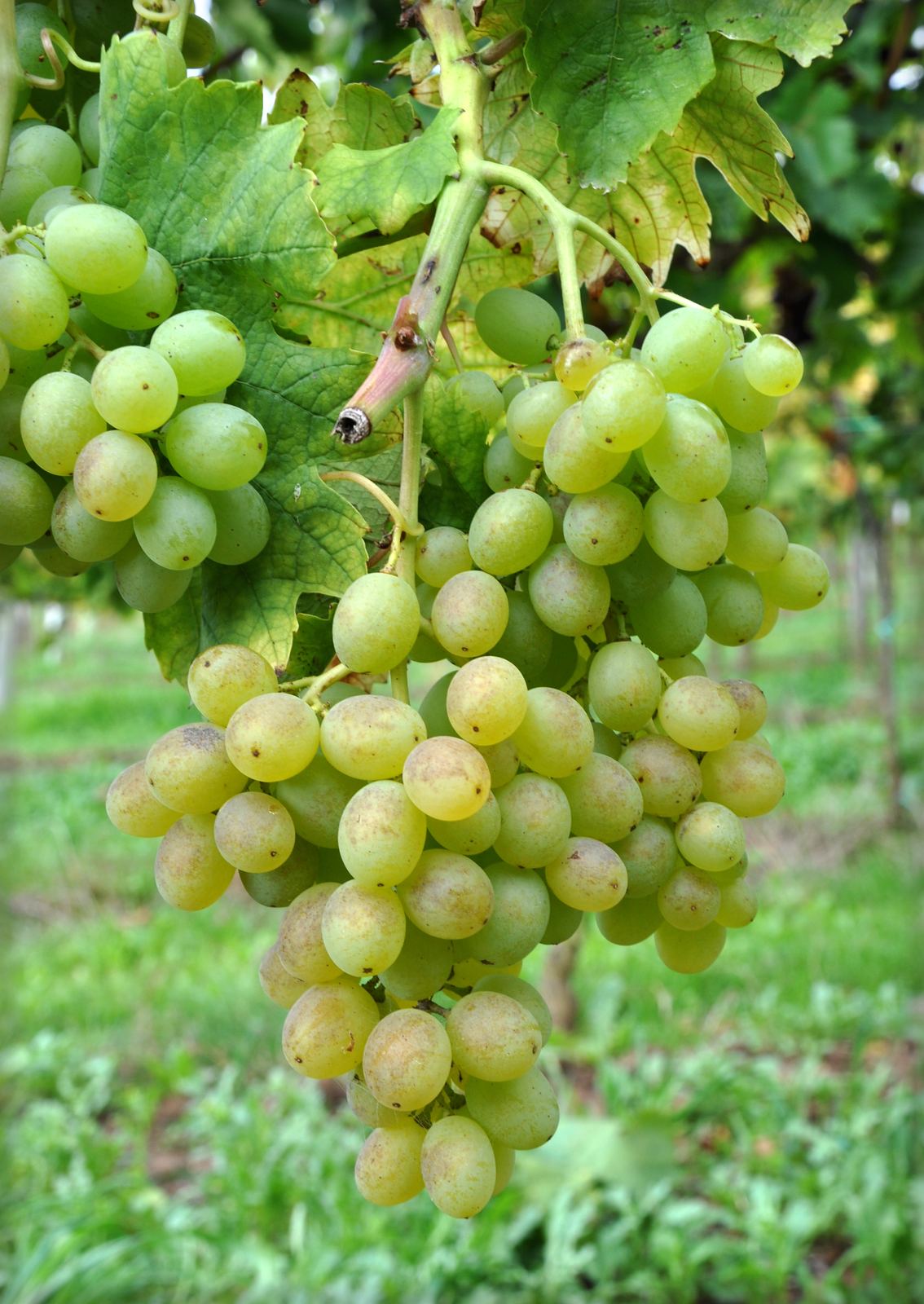
The bunch is large, 18-24 centimetres, moderately loose, truncated-pyramidal with one or two wings; the berry is large and ellipsoidal, with a thick, bloomy golden-yellow or amber skin, crisp flesh and neutral-tasting juice (National Register, Ansonica ampelographic description, 1964).
| Trait | What the Register description says |
|---|---|
| Leaf | pentagonal, medium or large, five-lobed, closed lyre-shaped petiole sinus |
| Flower | hermaphrodite, regular |
| Budbreak | second ten days of April in Tuscany; late March to early April in Sicily |
| Flowering and veraison | mid-May to early June; first to second ten days of August |
| Ripening | second period in Tuscany; second to third period in Sicily, depending on the area |
| Vigour and yield | excellent; abundant and steady crops |
| Training | medium-spread Guyot or "alcamese", or bush vine (alberello); short or mixed pruning |
| Diseases | in Tuscany good resistance to common pests, less to powdery mildew; in Sicily sensitive to downy and powdery mildew, very resistant to drought and high temperatures |
| Use | wine and table grape |
Source: National Register of Grapevine Varieties, Ansonica ampelographic description (N. Breviglieri, E. Casini, A. Mazzei, A. Zappalà, 1964).
Drought resistance explains where it grows: on the driest hills and islands. The Argentario disciplinare describes an area with about 630 millimetres of rain a year, 50-60 of them in summer, an average temperature of 16 °C, and a Giglio and a promontory made almost entirely of granite, where vines also climb terraces held up by dry-stone walls (Ansonica Costa dell'Argentario disciplinare, art. 9).
What does Inzolia wine taste like?
It is a straw-yellow white with a delicate, not very aromatic nose, built on softness and savouriness rather than acidity. The legal descriptions are these:
| Wine | Colour | Nose | Palate | Source |
|---|---|---|---|---|
| Sicilia Inzolia | straw yellow, more or less intense | delicate, pleasant | dry to off-dry, savoury, harmonious | Sicilia disciplinare, art. 6 |
| Sicilia Inzolia vendemmia tardiva | straw to golden, sometimes amber | delicate, sometimes floral, persistent | dry to sweet, sometimes with an almond finish | Sicilia disciplinare, art. 6 |
| Ansonica Costa dell'Argentario | straw yellow, more or less intense | characteristic, lightly fruity | dry, soft, lively and harmonious | disciplinare, art. 6 |
| Elba Ansonica Passito | straw to amber | ethereal, intense | medium-sweet to sweet | Elba disciplinare, art. 6 |
The Argentario disciplinare adds that the wine has fairly low acidity, with a minimum of 4.5 g/l, and fairly high alcohol (art. 9). In the Sicilia DOC, Inzolia has the same minimum acidity, 4.5 g/l, as Grillo and Catarratto (Sicilia disciplinare, art. 6).
Which DOCs allow Ansonica, and under what rules?
The National Register lists 22 DOCs: Alcamo, Ansonica Costa dell'Argentario, Bianco di Pitigliano, Bivongi, Contessa Entellina, Delia Nivolelli, Elba, Erice, Mamertino di Milazzo or Mamertino, Maremma Toscana, Marsala, Menfi, Monreale, Parrina, Riesi, Salaparuta, Sambuca di Sicilia, Santa Margherita di Belice, Sciacca, Sicilia, Val di Cornia and Vittoria. There are 38 IGTs, including Terre Siciliane, Toscana, Costa Toscana and Calabria (National Register, variety 013).
These are the main DOCs that put the variety on the label. All of them require at least 85 percent Ansonica in the vineyard.
| DOC and type | Name on the label | Area | Maximum grapes per hectare | Minimum total alcohol | Source |
|---|---|---|---|---|---|
| Sicilia Inzolia | Inzolia or synonyms | the whole Region of Sicily | 13 t | 11.50% | art. 3, 4 and 6 |
| Sicilia Inzolia superiore | Inzolia or synonyms | as above | 10 t | 12.00% | art. 4 and 6 |
| Sicilia Inzolia riserva | Inzolia or synonyms | as above | 13 t | 12.50% | art. 4 and 6 |
| Sicilia Inzolia vendemmia tardiva | Inzolia or synonyms | as above | 8 t | 13.00%, at least 11.00% actual | art. 4 and 6 |
| Menfi Inzolia | Inzolia | Menfi and parts of Sciacca, Sambuca di Sicilia (Agrigento) and Castelvetrano (Trapani) | 12 t | 11.50% | art. 3, 4 and 6 |
| Contessa Entellina Ansonica | Ansonica | municipality of Contessa Entellina (Palermo) | 12 t | 11.50% | art. 3, 4 and 6 |
| Sambuca di Sicilia | Ansonica or Inzolia or Insolia | municipality of Sambuca di Sicilia (Agrigento) | 12 t | 11.00% | art. 3, 4 and 6 |
| Santa Margherita di Belice Ansonica | Ansonica | Santa Margherita di Belice and Montevago (Agrigento) | 12 t | 10.50% | art. 3, 4 and 6 |
| Sciacca Inzolia | Inzolia | Sciacca and Caltabellotta (Agrigento) | 12 t | 10.50% | art. 3, 4 and 6 |
| Vittoria | Ansonica or Inzolia or Insolia | municipalities in the provinces of Ragusa, Caltanissetta and Catania | 10 t | 11.50% | art. 3, 4 and 6 |
| Ansonica Costa dell'Argentario | Ansonica | Isola del Giglio, Monte Argentario and parts of Manciano, Orbetello and Capalbio (Grosseto) | 11 t | 11.50% | art. 3, 4 and 6 |
| Elba Ansonica | Ansonica | the municipalities of the island of Elba | 9 t | 11.50% | art. 3, 4 and 6 |
| Elba Ansonica Passito | Ansonica | as above | 7 t | 16.00%, at least 12.00% actual | art. 4 and 6 |
| Maremma Toscana Ansonica | Ansonica | province of Grosseto | 12 t | 11.00% | art. 3, 4 and 6 |
| Val di Cornia Ansonica | Ansonica | municipalities in the provinces of Livorno and Pisa | 10 t | 11.50% | art. 3, 4 and 6 |
Sources: the disciplinari of the DOCs listed, texts of the Italian Ministry of Agriculture. The maximum grape-to-wine yield is 70 percent for dry whites in all these DOCs; it falls to 60 percent for Sicilia Inzolia vendemmia tardiva and to 35 percent, measured on fresh grapes, for Elba Ansonica Passito.
Three of these rules matter to a buyer:
- Riserva. In the Sicilia DOC, riserva ageing runs from 1 November of the harvest year (Sicilia disciplinare, art. 5); Italian law requires at least one year of ageing for the riserva mention on white designation-of-origin wines (Law 238/2016, art. 31, paragraph 2).
- Superiore. A lower yield, 10 tonnes instead of 13, and half a degree more alcohol (Sicilia disciplinare, art. 4 and 6). There is no "Sicilia Inzolia spumante" or "passito" type: Inzolia enters the DOC's white sparkling wine only as part of a blend (Sicilia disciplinare, art. 1 and 2).
- Passito. On Elba the grapes for Ansonica Passito are dried for at least ten days, in the open air or in suitable rooms, until they reach at least 30 percent sugar (Elba disciplinare, art. 5). How the technique works is explained in appassimento.
Which wines use Inzolia as a blending grape?
In Sicily, Inzolia is above all a blending grape, and several disciplinari give it a specific share.
| Wine | Share of Ansonica or Inzolia | Source |
|---|---|---|
| Sicilia bianco | at least 50% together with Catarratto, Grillo, Grecanico, Chardonnay, Viognier and Sauvignon | Sicilia disciplinare, art. 2 |
| Marsala oro and ambra | permitted with Grillo, Catarratto and Damaschino; in Marsala rubino white grapes may reach 30% | Marsala disciplinare, art. 2 |
| Mamertino Grillo-Ansonica or Grillo-Inzolia | 100% of the two grapes, at least 20% each | Mamertino disciplinare, art. 2 |
| Mamertino bianco | Grillo and Ansonica at least 35%, minimum 10% each, with Catarratto at least 45% | Mamertino disciplinare, art. 2 |
| Sciacca riserva Rayana | Catarratto lucido and Inzolia at least 80% | Sciacca disciplinare, art. 2 |
| Santa Margherita di Belice bianco | 30 to 50% | disciplinare, art. 2 |
| Contessa Entellina bianco and Sambuca di Sicilia bianco | at least 50% | disciplinari, art. 2 |
| Alcamo bianco and Monreale bianco | up to 40%, with Catarratto at least 60% | disciplinari, art. 2 |
| Elba Bianco | Ansonica and/or Vermentino 10 to 70% | Elba disciplinare, art. 2 |
| Parrina bianco | 30 to 50% | Parrina disciplinare, art. 2 |
| Bivongi bianco (Calabria) | Malvasia bianca and Ansonica 30 to 50% | Bivongi disciplinare, art. 2 |
Marsala is covered in Marsala DOC, Mamertino in Mamertino DOC.
Inzolia, Grillo and Catarratto compared
The three native whites of the Sicilia DOC follow similar rules; the differences are in the permitted types and the yield.
| Inzolia | Grillo | Catarratto | |
|---|---|---|---|
| Maximum grapes per hectare (basic type) | 13 t | 14 t | 13 t |
| Minimum total alcohol | 11.50% | 11.50% | 11.50% |
| Minimum non-reducing extract | 18.0 g/l | 19.0 g/l | 18.0 g/l |
| Types bearing the variety name | basic, superiore, riserva, vendemmia tardiva | also passito and spumante | also passito and spumante |
Source: Sicilia DOC disciplinare, art. 1, 4 and 6. Grillo's profile is in the Grillo guide.
Selling Inzolia and Ansonica abroad: what to check
The sources listed at the end of this page publish no export statistics for the variety alone: Consortium and press figures cover the Sicilia DOC as a whole. The rules, on the other hand, are precise, and they are what an importer checks on the technical sheet (what that sheet should contain is explained in the wine technical sheet for importers).
- The name on the label. Inzolia, Insolia and Ansonica are official synonyms, but each disciplinare states which may be used. If the buyer is looking for "Insolia", a Sicilia DOC bottle can carry it; an Ansonica Costa dell'Argentario bottle cannot.
- Where it is bottled. The Sicilia DOC requires winemaking and bottling in Sicily, with individual authorisations for those who already bottled elsewhere (Sicilia disciplinare, art. 5). Elba requires bottling on the island, because shipping bulk wine by sea can alter its quality (Elba disciplinare, art. 5). For a buyer's private label, this constraint matters.
- The vintage. It is compulsory in the Sicilia DOC, except for sparkling wines (art. 7), and in Ansonica Costa dell'Argentario (art. 7).
- The container. Ansonica Costa dell'Argentario also allows bag-in-box, a plastic bladder inside a cardboard box; the "vigna" mention, however, only glass up to 3 litres with a flush-fitting natural cork (disciplinare, art. 8).
- The declared style. The Sicilia DOC allows Inzolia "from dry to off-dry" (art. 6): the sheet should state which of the two is on offer.
- DOC or IGP. Wine that does not meet the DOC rules can be released as Terre Siciliane IGP, which allows Sicily's permitted varieties, Ansonica included, on the label (Terre Siciliane IGP disciplinare, art. 1 and 2, annex 1): the differences are in Terre Siciliane IGP.
The wineries of the production areas are covered in exporting wine from Agrigento, from the province of Trapani, from Palermo and from Grosseto; markets are listed in wine importers by country.
Frequently asked questions
Are Inzolia and Ansonica the same grape?
Yes. The National Register of Grapevine Varieties lists the variety as Ansonica B. and gives Inzolia and Insolia as official synonyms (variety 013). In Sicily the usual names are Inzolia or Insolia, in Tuscany Ansonica.
What does Inzolia wine taste like?
Straw yellow, with a delicate and pleasant nose and a savoury, harmonious palate, from dry to off-dry under the Sicilia DOC rules (art. 6). On the Tuscan coast Ansonica is described as dry, soft and lightly fruity, with fairly low acidity (Ansonica Costa dell'Argentario disciplinare, art. 6 and 9).
Where is the Inzolia grape grown?
The Sicilia DOC allows it across the whole island; the DOCs that carry it on the label under its own name lie in the provinces of Agrigento, Palermo, Trapani, Ragusa, Caltanissetta and Catania. In Tuscany the DOCs with Ansonica on the label cover the province of Grosseto, Elba, Giglio, the Argentario and the Val di Cornia. The National Register admits it in 22 DOCs and 38 IGTs.
How much alcohol must a Sicilia DOC Inzolia have?
At least 11.50 percent; 12.00 for the superiore, 12.50 for the riserva and 13.00 for the vendemmia tardiva, of which at least 11.00 must be actual alcohol (Sicilia disciplinare, art. 6).
Is Inzolia used in Marsala?
Yes: the Marsala disciplinare allows Ansonica, "locally called Inzolia", for Marsala oro and ambra together with Grillo, Catarratto and Damaschino (art. 2).
Can Ansonica be made as a passito?
Yes, under the Elba Ansonica Passito, Maremma Toscana Ansonica passito and Val di Cornia Ansonica passito DOCs. On Elba it needs at least 16 percent total alcohol, 12 of it actual (Elba disciplinare, art. 6).
Sources
- National Register of Grapevine Varieties, Ansonica B.: official synonyms, registration date, DOCs and IGTs where it is permitted
- National Register of Grapevine Varieties, Ansonica ampelographic description (Breviglieri, Casini, Mazzei, Zappalà, 1964)
- VIVC, Vitis International Variety Catalogue, Ansonica, variety 492
- Labra et al., "Phylogenetic analysis of grapevine cv. Ansonica growing on the island of Giglio", Vitis 38 (1999)
- DOC disciplinari (copies hosted by AIS, in Italian): Sicilia, Marsala, Menfi, Contessa Entellina, Sambuca di Sicilia, Santa Margherita di Belice, Sciacca, Vittoria, Alcamo, Mamertino, Ansonica Costa dell'Argentario, Elba, Maremma Toscana, Val di Cornia, Parrina
- Law no. 238 of 12 December 2016, art. 31: riserva and superiore mentions (Normattiva, in Italian)
- Arneis Grape: Roero Arneis DOCG and Langhe Arneis DOC
- Ancellotta: colour grape, Reggiano Rosso and Lambrusco
- Arneis Grape (Langhe and Roero): Profile and Export
- Aleatico grape: Elba DOCG, Gradoli, Puglia and the rules
- Barbera Grape: DOCG and DOC Rules, Minimums, Export
- Albarossa: Barbera × Chatus Cross and Piemonte DOC