Marsala: The Sicilian Fortified Wine Conquering Foreign Markets
Marsala wine, an oenological jewel of Sicily, boasts a centuries-old history deeply intertwined with international exports. From its origins in Marsala, in the province of Trapani, this fortified wine has won over global markets thanks to its uniqueness and adaptability. This article explores its historical roots, the designations that define its quality, and its market potential for Italian wineries, offering an essential guide for those wishing to export this excellence. Learn more: Federdoc — National Confederation of Italian Wine Protection Consortia.
How Was Marsala Wine Born and What Is Its Connection to Exports?
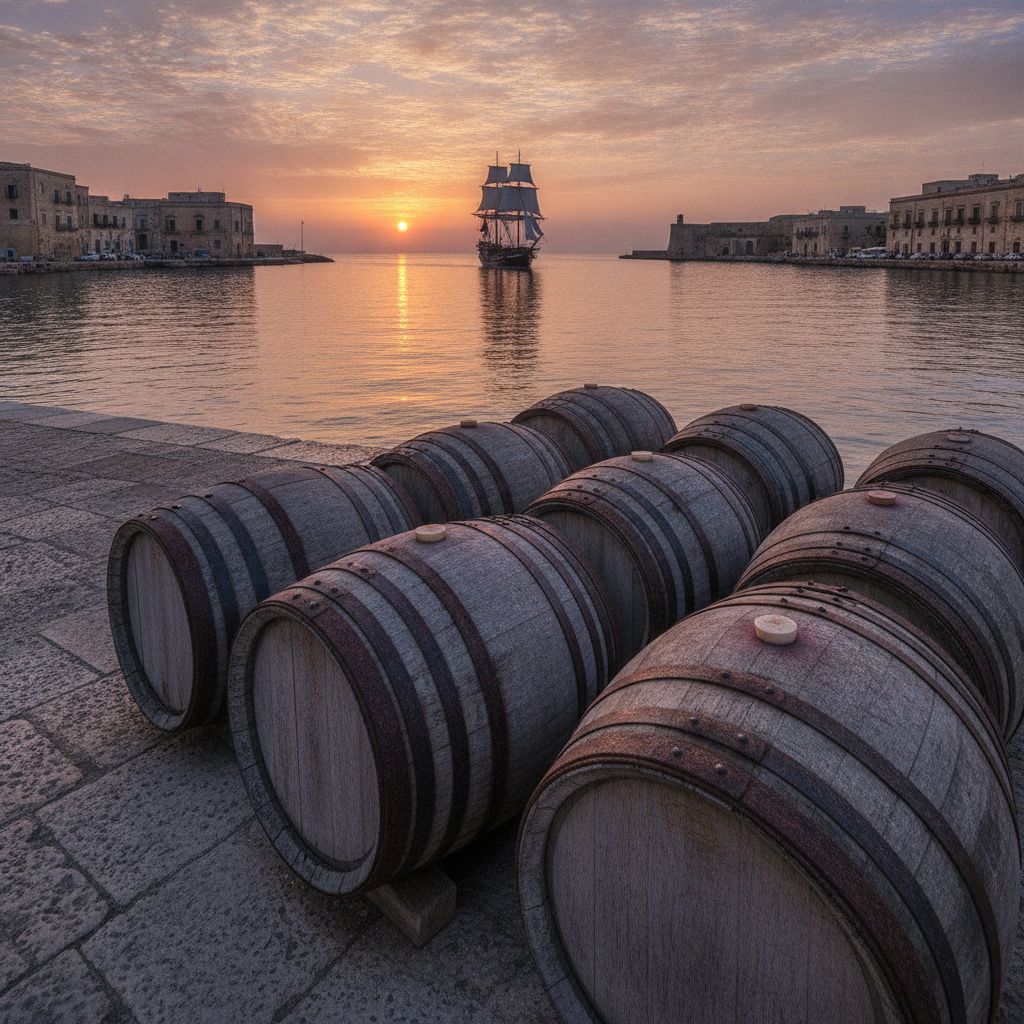
Marsala owes its birth to the encounter between Sicily and foreign markets, particularly the English one. In 1773, English merchant John Woodhouse discovered the potential of this wine, initiating its large-scale production and commercialization. This event marked the beginning of an era of prosperity, with the establishment of wine houses that contributed to making Marsala known worldwide.
What Are the Distinctive Characteristics of Marsala?
Marsala is a fortified wine, characterized by a color ranging from straw-yellow to intense amber. Its aroma intensifies with aging, while its flavor is warm, dry, and slightly tannic, with earthy and citrus notes. Its versatility makes it ideal for pure vinification, the preparation of Vermouth, and as a base for other DOC wines.
What Are the Designations and Mentions Governing Marsala?
The production of Marsala is regulated by precise specifications that include various mentions. "Vecchio" indicates the maturation conditions, while "Stravecchio" refers to wines with a minimum aging of 10 years for the "Vergine e/o Soleras" type. "Superiore" identifies high-quality wines with stricter requirements, and "Superiore Old Marsala" is linked to this type.
How Is Marsala Produced, and What Are Its Particular Typologies?
Traditionally, Marsala production includes the addition of "cotto" (cooked grape must) and "sifone" (fortified must), in addition to alcohol, to impart its characteristic taste and color. A unique typology is Marsala Perpetuo, a "pre-British" wine with an oxidative but not fortified character, which is continuously renewed.
Which Wineries Are Known for Marsala Production, and What Is Their Export Potential?
The Marsala territory hosts historic wineries and emerging realities that enhance this wine. Francesco Intorcia, with his company Francesco Intorcia Heritage, has relaunched historical vintages, including those with innovative aging processes such as in the sea. This approach combines tradition and innovation, which is crucial for maintaining interest in international markets.
How Does Marsala Position Itself in the International Context, and What Is Its Export Potential?
Marsala has a historical vocation for export, with studies dating back to the 19th century on the preferences of foreign markets. Its rich history, uniqueness, and quality are powerful sales arguments for Italian wineries. The Marsala wineries that are part of our Wines Export producer pool attest to the interest and potential of this territory for the international market.
Frequently Asked Questions
What are the main characteristics of Marsala wine for a foreign buyer?
Marsala is a Sicilian fortified wine with a color ranging from straw-yellow to amber, an aroma that intensifies with aging, and a warm, dry, and slightly tannic flavor with earthy and citrus notes.
How can I identify the quality of a Marsala wine based on the mentions on the label?
Mentions like "Vecchio" and "Stravecchio" indicate different periods of maturation and aging, with "Stravecchio" requiring a minimum of 10 years of aging for the "Vergine e/o Soleras" type. "Superiore" indicates wines of excellent qualitative standards.
Is Marsala only suitable for drinking on its own, or does it have other uses?
Its versatility makes it suitable for various oenological uses, from pure vinification to the preparation of Vermouth, and it can serve as a base for other DOC wines such as "Contea di Sclafani" and "Marsala."
Marsala wine represents an excellence of Italian oenology with strong export potential. Wineries that invest in its production and promotion have the opportunity to conquer new markets, offering a unique product that blends tradition, quality, and a strong connection to the Sicilian territory.