Morellino di Scansano DOCG explained: rules, zone, Sangiovese, Superiore and Riserva, release dates and export
Wines Export Editorial · Last updated:
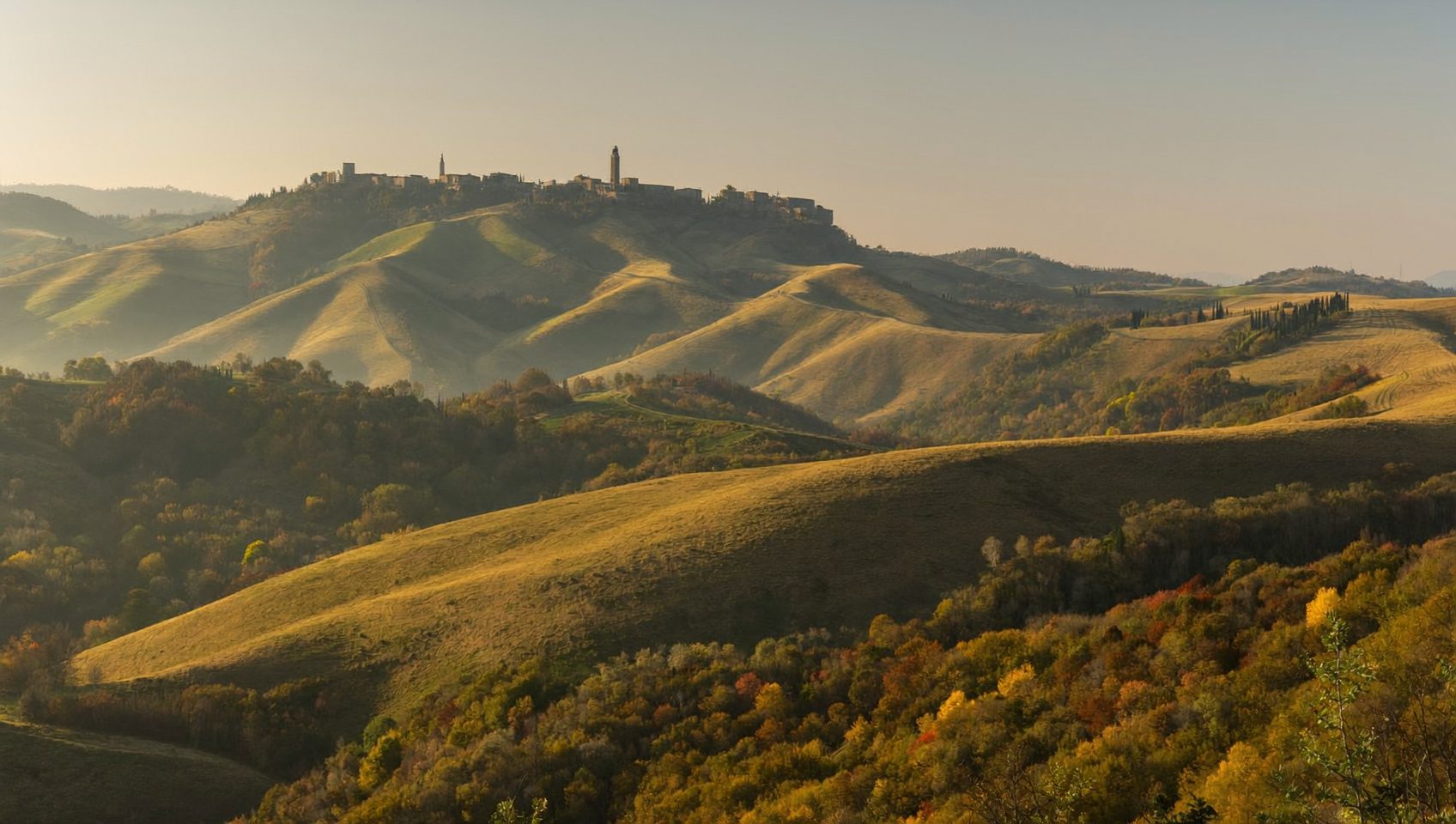
Morellino di Scansano DOCG is a red wine made with at least 85 percent Sangiovese in the hill country of the province of Grosseto, between the Ombrone and Albegna rivers. The zone covers the whole municipality of Scansano and part of Manciano, Magliano in Toscana, Grosseto, Campagnatico, Semproniano and Roccalbegna (Morellino di Scansano DOCG disciplinare, art. 2 and 3). There are three types: Morellino di Scansano, on sale from 1 March after the harvest; Superiore, with lower yields, at least 13 percent alcohol and release from 1 January of the second year; and Riserva, with at least 90 percent Sangiovese and two years of ageing, at least one of them in wooden barrels (disciplinare, art. 1, 2, 5 and 6). A DOC since 1978 and a DOCG since 2006, the rules were last amended by the decree of 28 January 2026 (Gazzetta Ufficiale n. 32, 9 February 2026), which introduced the Superiore mention. According to Consorzio figures the denomination has about 1,500 hectares of vineyard and 30 percent of production goes abroad (WineNews, 20 February 2026).
This page is the full guide to the denomination, including what a buyer abroad should check. The village that gives the wine its name is covered in Morellino DOCG and the wine of Scansano, the other wines of the province in exporting Grosseto wines, the grape in Sangiovese: biotypes, denominations and export rules and the regional picture in Tuscan wines for export.
What Morellino di Scansano is and where it comes from
Morellino di Scansano is the Sangiovese of the Maremma hills near the sea, sold under the name of the village of Scansano. The disciplinare does not use "Morellino" as the name of a grape: it refers only to Sangiovese (art. 2). According to the tradition reported by the Consorzio, the name comes from the bay horses called "morelli" that pulled the carriages of officials who moved to Scansano for the summer, and recalls the animals' strength and the colour of their coat (Consorzio Tutela Vino Morellino di Scansano, history page).
The disciplinare traces vines in the area back to the Etruscans, with pruning and harvesting tools found at the archaeological site of Ghiaccioforte. Medieval statutes of Scansano, Montorgiali and the Comunità del Cotone fined owners whose animals damaged the vines. In 1813 the mayor of Scansano reported to the deputy prefect of Grosseto that the area had produced 5,540 hectolitres of wine the year before, and since 1969 the village has held its grape festival, the Festa dell'Uva, in its medieval cellars (disciplinare, art. 10).
| Milestone | Act | Source |
|---|---|---|
| DOC | Presidential decree of 6 January 1978, Gazzetta Ufficiale n. 92, 4 April 1978 | heading of the disciplinare |
| DOCG | decree of 14 November 2006, Gazzetta Ufficiale n. 278, 29 November 2006 | heading of the disciplinare |
| "Toscana" allowed on the label | decree of 2 March 2021, Gazzetta Ufficiale n. 68, 19 March 2021 | 2021 disciplinare; gonews.it, 22 March 2021 |
| Superiore mention, new Riserva rules | decree of 28 January 2026, Gazzetta Ufficiale n. 32, 9 February 2026 | Gazzetta Ufficiale; consolidated disciplinare |
The denomination must carry the collective mark n. 736629, registered by the Consorzio on 15 December 1997, which the Consorzio must also supply to non-members on the same terms (disciplinare, art. 9). The control body is the one named in the list published by the Italian Ministry of Agriculture (art. 11).
The zone: Scansano and six municipalities between the Ombrone and the Albegna
Only one municipality lies entirely inside the zone; the other six are only partly included.
| Municipality | How much is in the zone | Source |
|---|---|---|
| Scansano | the whole municipal territory | art. 3 and 10 |
| Magliano in Toscana | a large part | art. 10 |
| Manciano, Grosseto, Campagnatico, Semproniano, Roccalbegna | a smaller part, inside the boundary described in the disciplinare | art. 3 and 10 |
The zone is a band of hills and foothills that slopes south towards the Albinia plain and west towards the Tyrrhenian coast and the Grosseto plain. The prevailing average altitude is 250 metres, falling to 30-40 metres in the lowest areas, with a maximum of 566. The climate is hot and dry: an average temperature of about 15 °C (7 in winter, 24 in summer), roughly 620 mm of rain a year concentrated between November and April, very dry springs and summers, and recurring drought as the main limiting factor. Sandstone of the macigno or pietraforte type prevails in the west, with silt-loam or sandy-loam soils; calcareous and clay-schist formations prevail in the east, with clay-loam, alkaline soils. Soils are generally shallow, with rock sometimes at the surface, and vineyards face mainly east-south-east (disciplinare, art. 10).
Only well-exposed hillside land is eligible, never the valley floor; the permitted training systems are spalliera (vertical trellis), alberello (bush vine) and similar; vineyards planted after 14 November 2006 must have at least 4,000 vines per hectare; any forcing is banned and irrigation is allowed only in emergencies (disciplinare, art. 4).
The grape: Sangiovese at least 85 percent, 90 in the Riserva
The blend is calculated on the estate's vineyards, not on the single bottle.
| Type | Sangiovese | Other grapes | Source |
|---|---|---|---|
| Morellino di Scansano and Superiore | at least 85 percent | up to 15 percent of non-aromatic red grapes authorised in Tuscany | art. 2, para. 1 |
| Morellino di Scansano Riserva | at least 90 percent | up to 10 percent of the same grapes | art. 2, para. 2 |
Until 2026 the 85 percent minimum also applied to the Riserva (disciplinare as worded by the decree of 2 March 2021, art. 2). The grape and the other denominations that use it are covered in Sangiovese: biotypes, denominations and export rules.
The three types: requirements from the disciplinare
| Requirement | Morellino di Scansano | Superiore | Riserva | Source |
|---|---|---|---|---|
| Minimum Sangiovese | 85 percent | 85 percent | 90 percent | art. 2 |
| Maximum grape yield | 9 t/ha | 8 t/ha | 8 t/ha | art. 4 |
| Yield per vine | at most 3 kg | at most 3 kg | at most 3 kg | art. 4 |
| Grape-to-wine yield | 70 percent | 70 percent | 70 percent | art. 5 |
| Minimum natural alcohol of the grapes | 12.00 percent | 12.50 percent | 12.50 percent | art. 5 |
| Minimum total alcohol | 12.50 percent | 13.00 percent | 13.00 percent | art. 6 |
| Minimum total acidity | 4.50 g/l | 4.50 g/l | 4.50 g/l | art. 6 |
| Minimum non-reducing extract | 24.0 g/l | 24.0 g/l | 26.0 g/l | art. 6 |
| Ageing | no minimum | no minimum set | two years from 1 January after the harvest, at least one in wooden barrels | art. 5 |
| Release for sale | from 1 March of the year after the harvest | from 1 January of the second year after the harvest | after the two years of ageing | art. 5 |
| Screw cap | allowed up to 0.750 litres | allowed up to 0.750 litres | not allowed | art. 8 |
In abundant years the surplus grapes must be brought back within the yield limits, provided the total does not exceed them by more than 20 percent. If the wine yield goes above 70 percent but stays within 75, the excess loses the DOCG; above 75 the whole lot loses it (disciplinare, art. 4 and 5).
The Superiore has no wood requirement: what sets it apart is lower yields, more alcohol and longer time in the cellar before release (disciplinare, art. 10). For the Consorzio's president Bernardo Guicciardini Calamai it is an intermediate type many estates already made; the first harvest that can carry the mention is 2024, and the Consorzio expects it to reach 30 percent of production in the future, while the Riserva currently accounts for 4 percent (WineNews, 20 February 2026).
When it can be sold: release dates and early release
Each type has a minimum release date, and the date for the basic Morellino can be brought forward.
| 2025 harvest | Earliest date | Source |
|---|---|---|
| Morellino di Scansano | 1 March 2026, or up to two months earlier if the Region authorises early release | art. 5, para. 7 |
| Morellino di Scansano Superiore | 1 January 2027 | art. 5, para. 6 |
| Morellino di Scansano Riserva | 1 January 2028, at the end of two years of ageing counted from 1 January 2026 | art. 5, para. 5 |
Early release works like this: if particular climate or market conditions arise, the Tuscany Region, after consulting the professional organisations and at the documented request of the Consorzio, may allow the wine on sale before 1 March, by no more than two months, provided it already meets the characteristics set in art. 6 (disciplinare, art. 5, para. 7). The 2021 text had no such option: release was fixed at 1 March with no exceptions (disciplinare as worded by the decree of 2 March 2021, art. 5).
What changed with the 2026 decree
Technical sheets and price lists written before February 2026 need updating on five points.
| Rule | 2021 text | 2026 text |
|---|---|---|
| Types | Morellino di Scansano and Riserva | Morellino di Scansano, Superiore and Riserva |
| Sangiovese in the Riserva | at least 85 percent | at least 90 percent |
| Grape yield for the Riserva | 9 t/ha | 8 t/ha |
| Minimum natural alcohol of Riserva grapes | 12.00 percent | 12.50 percent |
| Release of the basic Morellino | 1 March after the harvest | 1 March, up to two months earlier with regional authorisation |
Sources: disciplinare as worded by the decree of 2 March 2021 (copy published by the Consorzio) and consolidated disciplinare after the decree of 28 January 2026, art. 1, 2, 4 and 5.
Labels, bottles and where the wine is made
Morellino's labelling rules are strict, and some surprise buyers used to other Tuscan denominations.
- No names of municipalities or places. Geographical references to municipalities, hamlets, areas or localities inside the zone may not be added to the denomination; names, company names and private brands are allowed if they are not laudatory or misleading (art. 7, para. 2).
- "Vigna" allowed, with conditions. The word must be followed by the place name, the wine must be made and stored separately, and the vineyard must appear in the harvest declaration, the cellar registers and the regional list (art. 7, para. 3).
- "Toscana" optional. It goes below the DOCG or PDO line, in smaller letters than "Morellino di Scansano" but in the same font, style, colour and intensity, on a uniform background (art. 7, para. 4). It has been allowed since the decree of 2 March 2021 (gonews.it, 22 March 2021).
- Vintage compulsory, and adjectives such as "extra", "fine", "scelto" or "selezionato" are banned (art. 7, para. 1 and 5).
- Bordeaux-style glass bottles only, up to 6 litres; 9, 12 and 15 litre formats only for promotional, non-commercial use. Crown caps are banned; screw caps only up to 0.750 litres and never on the Riserva (art. 8).
- Winemaking, ageing and bottling inside the zone. Exceptions remain for winemaking within 2,000 metres as the crow flies from the boundary, for estates that had made Morellino for at least five years before the decree of 23 July 2010, with Ministry authorisation, and individual authorisations for those who traditionally bottled outside the zone (art. 5, para. 2-4).
What it tastes like and how to serve it
The legal description: ruby red, turning garnet with age; ethereal, intense, pleasant and fine on the nose; dry, warm and slightly tannic on the palate; wood may be noticeable after ageing in wooden vessels (disciplinare, art. 6). The section on the link with the territory adds modest acidity and a broad, vinous nose recalling red berries; in the Riserva wood, spice and riper fruit become stronger and the finish lasts longer, while the Superiore has more alcohol and more cellar time before release (disciplinare, art. 10).
In 2023 the Consorzio's director, Alessio Durazzi, called it "Sangiovese by the sea" and advised serving the young Morellino at 10-12 degrees in summer, so that it reaches the glass at around 14, including with fish dishes (Il Sole 24 Ore, 5 June 2023).
Morellino, Maremma Toscana DOC, Chianti and Brunello compared
The same province has a broader DOC, Maremma Toscana, which covers the whole territory of Grosseto and can also produce a varietal Sangiovese. The rules side by side:
| Morellino di Scansano DOCG | Maremma Toscana DOC Sangiovese | Maremma Toscana DOC Rosso | |
|---|---|---|---|
| Zone | Scansano and part of six municipalities between the Ombrone and the Albegna | the whole province of Grosseto | the whole province of Grosseto |
| Grapes | Sangiovese at least 85 percent (90 in the Riserva) | Sangiovese at least 85 percent | Sangiovese, Cabernet, Merlot, Syrah and Ciliegiolo, alone or together, at least 60 percent |
| Maximum grape yield | 9 t/ha (8 for Superiore and Riserva) | 11 t/ha | 12 t/ha |
| Minimum natural alcohol of the grapes | 12.00 percent (12.50 for Superiore and Riserva) | 11.00 percent | 10.00 percent |
| Release for sale | 1 March after the harvest | 1 March after the harvest | 1 March after the harvest |
| Riserva | two years from 1 January, at least one in wooden barrels | not provided | 24 months from 1 November of the harvest year, at least 6 in wood, release from 1 November of the second year |
Sources: Morellino di Scansano DOCG disciplinare, art. 2-5; Maremma Toscana DOC disciplinare, art. 1-5.
For a buyer the difference is this: the DOCG ties the wine to a small zone and a majority of Sangiovese, while Maremma Toscana DOC is the umbrella for the whole province, with many grapes and styles.
Tuscany's other two major Sangiovese-based denominations lie inland: Chianti is covered in Chianti DOCG: sub-zones, Superiore, Riserva vs Chianti Classico, and Brunello in Brunello di Montalcino DOCG: rules, Riserva, vintages.
Selling Morellino abroad: what the data say
The most recent figures come from the Consorzio, as reported by the press at the February 2026 preview.
| Figure | Value | Source |
|---|---|---|
| Vineyard area | about 1,500 hectares, register closed for 10 years, 30 percent certified organic | WineNews, 20 February 2026 |
| Producers | 201 Consorzio members plus 168 non-member producers entitled to claim the denomination | WineNews, 20 February 2026 |
| Production | between 70,000 and 100,000 hectolitres a year, about 9 million bottles on average | Il Sole 24 Ore, 24 February 2026 |
| 2025 harvest | 75,000 quintals of grapes, against a potential of up to 100,000 | WineNews, 20 February 2026 |
| 2025 bottlings | up 4 percent on 2024 | WineNews, 20 February 2026 |
| Production value | more than 50 million euros | WineNews, 20 February 2026 |
| Share sold abroad | 30 percent of production | WineNews and Il Sole 24 Ore, February 2026 |
The shares are not all measured the same way: in 2023 the Consorzio put exports at 35 percent of sales and was targeting the United States, Switzerland and the United Kingdom (Il Sole 24 Ore, 5 June 2023), while a July 2026 report says the denomination still sells about 75 percent of its wine in Italy (Vinetur, 2 July 2026). In the United States the Consorzio says it has had little presence so far and intends to invest more, also relying on the "Toscana" name, which is better known abroad than many individual denominations (WineNews, 20 February 2026).
For a winery, the routes are the ones the Consorzio names. United States: wine importers in the United States and US wine importers: how to find them and what they need. Switzerland: wine importers in Switzerland and Italian wine suppliers in Switzerland. United Kingdom: wine importers in the United Kingdom. The full list is in wine importers by country, and the weight of the DOCG label in B2B deals in exporting DOCG wine.
Before sending a technical sheet to an importer, check five points: a Riserva made under the new rules has at least 90 percent Sangiovese and never a screw cap; the Superiore is not released before 1 January of the second year; no names of municipalities or hamlets in the zone appear on the label; "Toscana", if used, sits below the DOCG line in smaller letters; the bottle is a Bordeaux shape.
Recent vintages
| Vintage | What happened | Source |
|---|---|---|
| 2023 | extreme heat and long drought, violent spring rains on dry soils and downy mildew; lower production in Scansano too, unbalanced wines that time has partly evened out | WineNews, 20 February 2026 |
| 2024 | first harvest that can be claimed as Superiore | WineNews, 20 February 2026 |
| 2025 | lower yields after good winter and spring rain and a less scorching summer; healthy grapes, high quality according to the Consorzio | WineNews, 20 February 2026; Wine Industry Advisor, 23 September 2025 |
At the Florence preview in February 2026, 14 Morellino producers showed 21 wines, 5 of them Riserva, almost all barrel samples (WineNews, 20 February 2026).
Frequently asked questions
How much Sangiovese must Morellino di Scansano contain?
At least 85 percent in Morellino di Scansano and Superiore, at least 90 percent in the Riserva; the rest may come from non-aromatic red grapes authorised in Tuscany (Morellino di Scansano DOCG disciplinare, art. 2).
Which municipalities are in the Morellino di Scansano zone?
The whole municipality of Scansano and part of Magliano in Toscana, Manciano, Grosseto, Campagnatico, Semproniano and Roccalbegna, in the province of Grosseto, between the Ombrone and Albegna rivers (disciplinare, art. 3).
What is the difference between Morellino di Scansano Superiore and Riserva?
Superiore has a yield of 8 t/ha, at least 13 percent alcohol and is released from 1 January of the second year after the harvest, with no wood requirement. Riserva has the same yield and alcohol, but at least 90 percent Sangiovese, two years of ageing with at least one in wooden barrels, and may not use a screw cap (disciplinare, art. 2, 4, 5, 6 and 8).
When is Morellino di Scansano released?
From 1 March of the year after the harvest. At the documented request of the Consorzio, the Tuscany Region may bring release forward by up to two months if particular climate or market conditions arise and the wine already meets the legal requirements (disciplinare, art. 5).
Can "Toscana" appear on a Morellino label?
Yes, since the decree of 2 March 2021: it goes below the DOCG or PDO line, in smaller letters than the denomination name and in the same style (disciplinare, art. 7).
How much Morellino di Scansano is exported?
According to the Consorzio, 30 percent of production; the rest is sold in Italy (WineNews, 20 February 2026).
Sources
- Gazzetta Ufficiale n. 32, 9 February 2026, decree of 28 January 2026 approving the ordinary amendment to the Morellino di Scansano DOCG disciplinare
- Morellino di Scansano DOCG disciplinare, consolidated text after the decree of 28 January 2026 (Italian Ministry of Agriculture, annex A to the decree)
- Morellino di Scansano DOCG disciplinare as worded by the decree of 2 March 2021, Gazzetta Ufficiale n. 68, 19 March 2021 (copy published by the Consorzio)
- Maremma Toscana DOC disciplinare, consolidated text after the decree of 8 May 2023 (Italian Ministry of Agriculture)
- Consorzio Tutela Vino Morellino di Scansano, history
- WineNews, 20 February 2026, Chianti Lovers & Rosso Morellino 2026
- Il Sole 24 Ore, 24 February 2026, Morellino di Scansano Superiore arrives on the market
- Il Sole 24 Ore, 5 June 2023, Morellino di Scansano targets the US, Switzerland and the UK
- Vinetur, 2 July 2026, the Superiore tier in the DOCG rules
- gonews.it, 22 March 2021, "Toscana" goes on the label
- Wine Industry Advisor, 23 September 2025, the 2025 Morellino di Scansano harvest
Who produces Morellino di Scansano?
The towns where the wineries declaring Morellino di Scansano are concentrated, with a few names for each.
Magliano in Toscana (Toscana)
Fattoria di Magliano · Poggio Argentiera · Tenuta Agostinetto Manuel · Cantina LaSelva · Le Lupinaie
Scansano (Toscana)
Poggio Nibbiale · Tenuta le Rogge — L'Essenza Autentica della Maremma Toscana · Roccapesta · Società Agricola Erik Banti · Le Stadère
Grosseto (Toscana)
Mazzei · Frank & Serafico · New cantina Val delle rose · Fattoria Le Pupille · Podere Casina
Castellina in Chianti (Toscana)
Casa Vinicola Luigi Cecchi e Figli · Rocca delle Macie · Azienda Agraria Villa Cerna · Monte Guelfo
Manciano (Toscana)
Villa Acquaviva Wine Resort · Cantina 8380 · Azienda Agricola Tenuta Baccinello · Azienda Agricola Valditerme
Montalcino (Toscana)
Mocali · Fattoria dei Barbi · Poggio Nardone · Vadossi
Montespertoli (Toscana)
Belvedere Campòli · Cantina Sociale Colli Fiorentini · Tenuta Maiano – Vini Biologici e Olio EVO di Montespertoli, Chianti, Toscana · Tenuta Maiano
Orbetello (Toscana)
La Corsa · Tenuta I Cavallini - Produttori di vino nella Maremma toscana · Azienda Vitivinicola Ricci – Una storia di famiglia, di terra e di vino dal 1880
Where is Morellino di Scansano sold around the world?
Retailers and online shops with at least one Morellino di Scansano on their list, in the countries where we find the most, in order. A snapshot of the price lists read from the database on 23 November 2026: it changes every week.
The United States
Bottle of Italy · Servall Liquor · Mr.D Wine Merchant · OnlineLiquor.com · WineOnlineDelivery · WinesLine
Germany
VINELLO · WirWinzer GmbH · wein.cc · apfelwein-weltweit.de · Centro Italia Online-Shop · genaumeinwein.de
Italy
saywine.it · Tannico · Enoteca Rocchi Enoteche e Distribuzione · savinowineshop.com · enotecagambi.com · winekissyou.com
The Netherlands
Tannico · E-Winery · PerfecteWijn · Time to Wine · Vanouds de Zwaan · Vanouds de Zwaan Wijnimporteurs
The United Kingdom
Tannico · JEROBOAMS LIMITED · Blanco & Gomez Wine Merchants · Cellar Steals · clubvini.co.uk · Vinco Fine Wines
Switzerland
Tannico · DELEA Angelo SA · Tivinum Enoteca Minusio - Canetti SA Vini e Shop Online · Weinvogel SA · La Bottiglia AG | Weinhandlung Elgg · Cantina Divina Online Winery
Belgium
Tannico · NEST VINI & CICCHETTI · AVINA · Perfecte Wijn Belgium · DEWINE · Profijtwijn.be
Canada
Opimian · SWASO - Selected Wines and Spirits of Ontario · LCBO · Zyn · Canadian Liquor Store · SAQ
Names read from the Wines Export database (company registers, websites, customs data, retailers' price lists). No contacts on this page.
- Moscato d'Asti DOCG: Rules, Alcohol and 51 Municipalities
- Morellino: A Guide for Foreign Importers
- Moscato di Scanzo DOCG: Rules, History, Consorzio
- Vino Nobile di Montepulciano DOCG: Rules and Export Guide
- Vino Nobile di Montepulciano DOCG: Grapes, Riserva, Pieve
- Montepulciano d'Abruzzo DOC: Rules, Alcohol, Riserva