Importing Wine from Italy: How to Check the Winery, Which Documents Leave Italy (e-AD, MVV-E, e-SAD, Export with MRN), Incoterms and Certificates
Wines Export Editorial · Last updated:
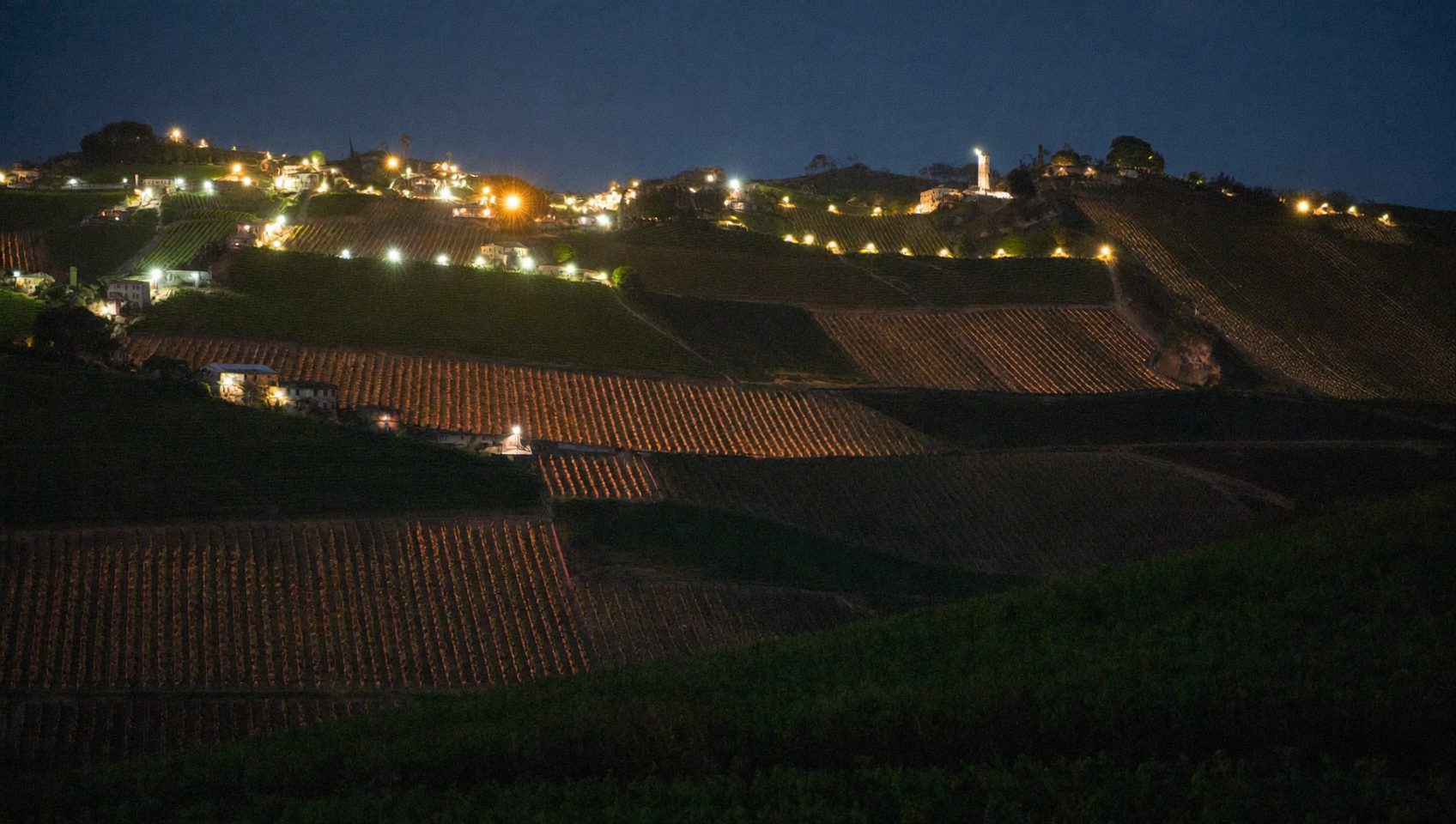
To buy wine from an Italian winery, an importer does four things: checks that the producer exists and holds the right tax status (Italian business register, VAT number in VIES, excise number in SEED), agrees on the document that will accompany the wine when it leaves Italy, sets the Incoterm that says who pays for transport and customs formalities, and asks for the certificates required by the customs authority of its own country. The rules for entering your country, meaning licences, excise duty and labelling, remain your responsibility and change from market to market: for the main markets they are collected in our country guides, listed further down.
This guide looks at the sale from the buyer's side. The winery reading from the other side will find the same route explained for the shipper in our guide to wine export documents.
Who does what between the winery and the importer?
The winery issues the departure documents; the importer checks the counterparty before paying and completes the formalities on arrival. The table splits the tasks for the most common cases.
| Step | Who does it | Document or register |
|---|---|---|
| Checking the selling company | Importer | Business register extract, VIES, SEED, EORI |
| Shipment to an EU country under excise duty suspension | Winery with a tax warehouse | e-AD in EMCS, with ARC code |
| Shipment to an EU country by a small producer | Winery without a tax warehouse | MVV-E validated by SIAN, with MVV code |
| Wine already duty-paid in Italy, sent to an EU operator | Certified consignor | EU e-SAD (e-DAS) |
| Receipt in an EU country | Importer (authorised warehousekeeper or registered consignee) | Report of receipt in EMCS within five working days |
| Exit from the European Union | Exporter or its customs agent | Export declaration, MRN, export accompanying document |
| Entry into the non-EU country | Importer | Licences, excise, duties and labelling of the country of arrival |
Sources: Directive (EU) 2020/262, Articles 18 and 24; Italian Customs Agency, export page and notice 569047/RU of 14 December 2022; Lazio Region, summary table of accompanying documents (August 2024).
How do you check an Italian winery before paying?
With four public registers you can search online, plus the product specification if you are buying a designation of origin. It takes a few minutes, and you should keep a printout of each check.
Business register. The Chambers of Commerce portal, registroimprese.it, offers a free search by company name and province, and from there you can obtain the company register extract (visura camerale), also available in English, and the filed financial statements. The extract tells you whether the company exists, who represents it, where its registered office is and which local units it has: it is the first check against someone posing as a winery without being one.
VAT number in VIES. If you are buying from an EU country, check the Italian VAT number in the European Commission's VIES system. The Commission warns that an "invalid" result may mean the number has not been activated for intra-EU transactions, that it cannot check or correct the data held by national administrations, and that you should keep a copy of the validation in case of a tax audit.
Excise number in SEED. SEED is the EU register of excise operators: it shows whether an excise number is valid and which product categories the operator may trade, and it also includes the certified consignors and consignees that move duty-paid goods. A winery shipping to you with an e-AD must appear as an authorised warehousekeeper; a small winery without a tax warehouse will not have a warehouse number and will ship with an MVV-E, as explained in our article on MVV and DAS for small producers.
EORI and REX, if you are outside the EU. An EORI number is mandatory for every customs operation in the EU, and the Commission provides a tool to check that it is valid. If you want a reduced duty under a trade agreement, ask whether the winery is a registered exporter in the REX system: registration can be checked on the Commission's REX website. How preferential origin works is covered in our guide to EUR.1 and REX for wine.
The product specification, if you are buying a designation. Some specifications require bottling inside the production area, which rules out buying that wine in bulk to bottle in your own country. Among others, the specification for Brunello di Montalcino DOCG requires it (Article 5, points 5.12 and 5.13), and so does that for Chianti Classico DOCG (Article 5, paragraphs 4 and 5). The rules of both designations are in our guides to Brunello di Montalcino and Chianti Classico; the hierarchy of the labels is in our guide to the DOCG, DOC and IGT pyramid.
The winery will run the same check on you: the method, seen from its side, is in how to verify a foreign importer. Before the first order, also ask for the technical sheet of each wine and for samples.
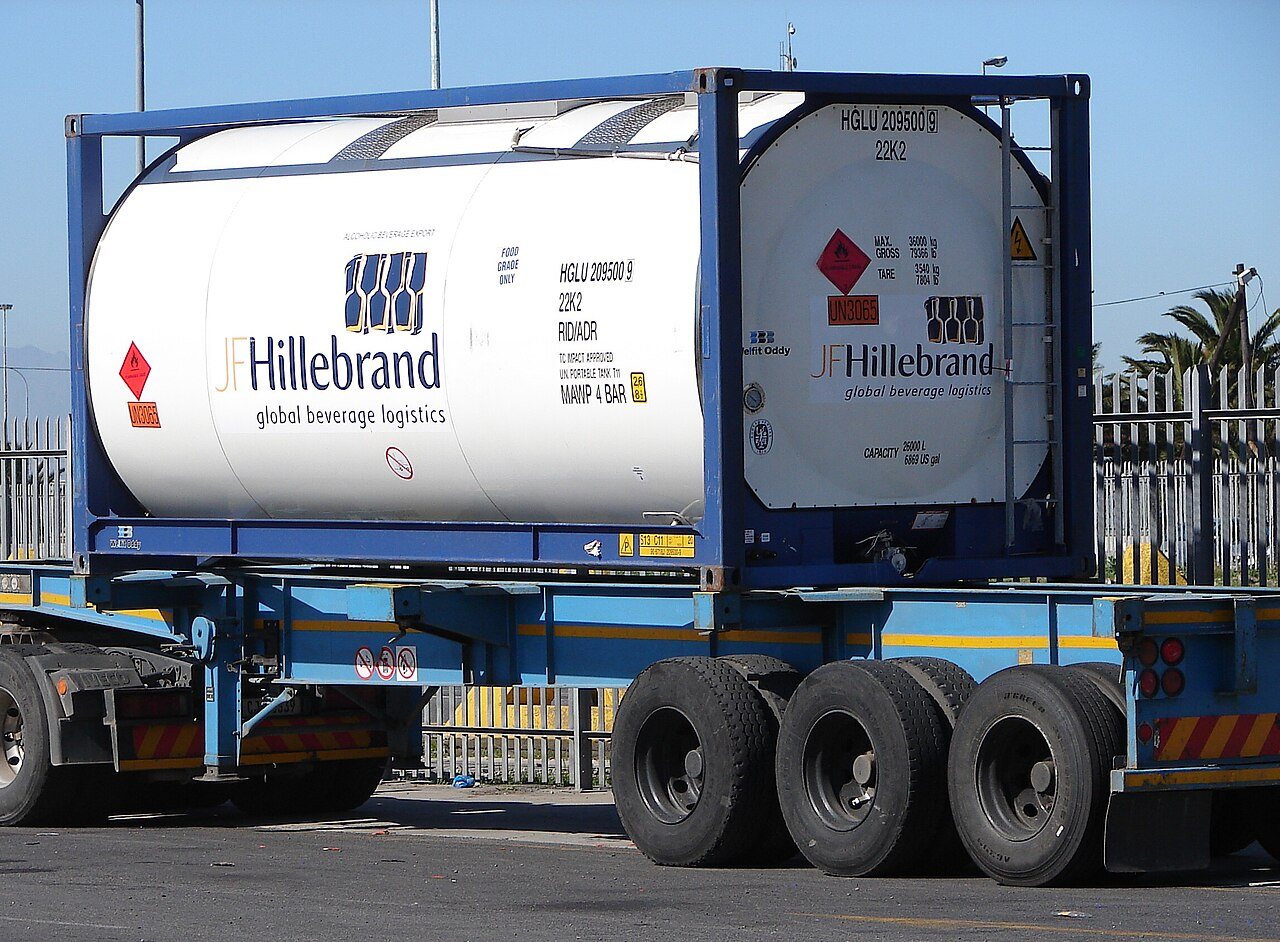
Which documents accompany the wine to an EU country?
It depends on who ships and on the tax status of the wine: an e-AD for wine under excise duty suspension from a tax warehouse, an MVV-E for wine from small producers, an e-SAD for wine already released for consumption in Italy. In all three cases you need a status that allows you to receive it.
e-AD. The electronic administrative document is issued by the consignor in EMCS, the EU system that monitors movements under duty suspension in real time. It can be received by an authorised warehousekeeper, who runs a tax warehouse, or by a registered consignee, who under Directive (EU) 2020/262 may not hold or dispatch goods under duty suspension; for those receiving only occasionally there is an authorisation limited to a specified quantity, a single consignor and a specified period (Article 18). On arrival the consignee submits the report of receipt in EMCS without delay and no later than five working days after the end of the movement (Article 24). The fields of the document are explained in how to complete the e-AD in EMCS.
MVV-E. Since 1 January 2021, small producers, and anyone shipping wine-sector products not subject to excise duty, must use the electronic MVV-E document when shipping to other Member States. It is validated by SIAN, the Italian agricultural information system, which assigns the MVV code, the QR code and the time stamp; the load travels with a printout of the MVV-E or with a commercial document showing the code. Only if SIAN is unavailable can a paper MVV be used under the fallback procedure, to be entered into the system within three working days of the start of transport (Lazio Region, summary table 2024). The consignee is the same as for the e-AD: a tax warehouse or a registered consignee.
e-SAD (e-DAS). Since 13 February 2023, the old paper simplified document (DAS) has been replaced by the electronic e-SAD for products already released for consumption in one Member State and shipped to another for commercial purposes. Only certified consignors and certified consignees, including occasional ones, registered in SEED can use it; the ARC code of an e-SAD has the letter P as its second-to-last character, and the certified consignee's report of receipt is the document that allows Italy to refund the excise duty to the consignor (Italian Customs Agency, notice 569047/RU of 14 December 2022). It concerns you if you buy from an Italian wholesaler that already holds the wine duty-paid, not from a winery with a tax warehouse.
| Who sells to you | Document | What you must be |
|---|---|---|
| Winery or warehouse with a tax warehouse | e-AD (EMCS) | Authorised warehousekeeper or registered consignee |
| Small producer without a tax warehouse | MVV-E (SIAN) | Authorised warehousekeeper or registered consignee |
| Wholesaler holding wine duty-paid in Italy | EU e-SAD (e-DAS) | Certified consignee |
Sources: Directive (EU) 2020/262; European Commission, EMCS page; Italian Customs Agency, notice 569047/RU; Lazio Region 2024.
A buyer selling to consumers, or a restaurant without an excise number, cannot use any of the three documents under suspension: an authorised intermediary is needed. Who pays your country's excise duty must be written into the contract, as our guide to Incoterms 2020 for wine explains.
What is needed to export the wine outside the European Union?
An export customs declaration lodged in Italy, which receives an MRN and closes with the electronic exit message. If the wine leaves under excise duty suspension, the e-AD travels with it and is linked to the declaration.
The Italian Customs Agency describes the route as follows. The exporter lodges the declaration electronically at the customs office of export, which is the office responsible for the place where the exporter is established or where the goods are packed or loaded. The EU's AES system exchanges data between the office of export and the office of exit; the operation is assigned an MRN (Movement Reference Number) and the goods leave with the export accompanying document (DAE). The office of exit, normally the one for the place where the goods leave the EU, checks the physical exit and sends the "exit results" message: if the outcome is positive, the "exit completed" message is proof that the goods have left the customs territory. Goods released for export must leave within 90 days of release, and the status of each operation can be checked by entering the MRN in the tracking section of the Agency's website.
For wine under excise duty suspension, since 13 February 2024 the e-AD with "destination type" 6 (export) must be referenced in the AES export declaration, which cross-checks it (Italian Customs Agency, notice 726277/RU of 5 December 2023). A small producer whose wine leaves through a customs office in another Member State uses the MVV-E instead (Lazio Region, summary table 2024).
Two practical consequences for the buyer. Ask the winery or its forwarder for the MRN: it lets you follow the shipment and know when the wine has left the EU. And do not ask for an ex-cellar price if you cannot handle the export declaration in Italy yourself: the reasons, including those linked to the winery's VAT, are in EXW in wine exports.
Which certificates should you ask for: origin, analysis, VI-1?
The ones your country's customs require, not the ones the winery happens to have ready. The certificate of origin and the certificate of analysis are the most common; the VI-1 is not needed by those importing into a non-EU country.
Certificate of origin. The non-preferential certificate of origin is issued by the Italian Chambers of Commerce and is normally requested for exports to countries outside the EU; for an EU country it can be issued only with a documented reason. Preferential origin, which reduces or removes duty in countries that have a free trade agreement with the EU, is instead certified by customs authorities with forms such as the EUR.1 (Bologna Chamber of Commerce, FAQ on certificates of origin), or declared by the exporter itself on the invoice under the REX system. According to the Commission, for shipments worth less than 6,000 euros the statement can be made without registering; above that, REX registration is required.
Certificate of analysis. There is no EU template: the parameters and the type of laboratory are decided by the country of arrival. One example: in the United States, TTB requires a natural wine certificate for wine, which can be issued by a government body of the producing country or replaced by a self-certification from the importer; countries with enological practices agreements may be exempt. Which countries require analyses, health or free-sale certificates, and with which parameters, is covered in our article on the VI-1 and the certificate of analysis.
VI-1. This is the document that accompanies wine-sector products imported into the European Union: it combines the certificate and the analysis report and attests that the product has the characteristics of a wine product under EU law (Delegated Regulation (EU) 2018/273, Article 20). It is needed by those bringing wine from a non-EU country into the EU, not by those buying Italian wine to take it to a non-EU country: if your customs do not require it, do not ask the winery for it.
Which Incoterm works best for buying Italian wine?
The one that matches what you can actually handle: if you cannot lodge an export declaration in Italy, avoid EXW and choose FCA or a "delivered" term. The International Chamber of Commerce's Incoterms 2020 are eleven three-letter terms, in force since 1 January 2020.
| Incoterm | What the winery does | What you do | When it fits |
|---|---|---|---|
| EXW, Ex Works | Makes the wine available at its premises, without loading it and without export clearance | Loading, transport, export formalities in Italy and import | Sales within the EU with your own carrier |
| FCA, Free Carrier | Delivers to the carrier you nominate and completes the export formalities | Main transport, insurance, import | The default choice for buyers who arrange transport themselves |
| CIP and CIF | Pays transport and insurance to the named place or port of destination | Import and unloading | When you want a price that includes freight |
| DAP | Delivers on the arriving vehicle at destination, ready for unloading | Unloading, import clearance, excise and taxes | When the winery has a trusted forwarder |
| DDP | Also clears the goods for import and pays the duties | Only receiving the goods | Rare: it requires the winery to operate for tax purposes in your country |
Sources: ICC, Incoterms 2020; ICC Academy, EXW or FCA; GOV.UK, Incoterms in customs valuation; trade.gov, Know your Incoterms.
Seven terms apply to any mode of transport (EXW, FCA, CPT, CIP, DAP, DPU, DDP), four only to sea and inland waterway transport (FAS, FOB, CFR, CIF). Under EXW the winery does not have to load the goods or clear them for export, and ICC Academy writes that the export formalities stay with the buyer, which can lead to complications for both parties; for this reason it recommends considering FCA when goods cross a border. The 2020 edition renamed the old DAT as DPU, Delivered at Place Unloaded, and raised the minimum insurance cover under CIP to Institute Cargo Clauses (A), while Clause (C) remains the default for CIF. Under DDP the seller also clears the goods for import and pays the duties on both sides.
Ask for the price list with the Incoterm written next to each price: an EXW price and a DAP price cannot be compared without adding transport, insurance and formalities to the first. How a winery builds that price list is in the EXW and FOB export price list; payment terms are in letter of credit, deposit and export payments, and contract clauses in the distribution contract checklist.
What does the importer have to do in its own country?
Obtain the licence or status its country requires to import alcohol, pay duties and excise on arrival or in an approved warehouse, and bring the label into line. The rules change in every market; three examples show the scale.
In the United States, TTB requires a federal importer's basic permit (form TTB F 5100.24), which presupposes a staffed business office in the United States; those without one work with an already licensed importer. Every label needs a COLA, which the importer must hold at the time of importation; FDA registration and prior notice for each shipment are required, and the states add their own rules (TTB, page updated 29 September 2026). In the United Kingdom, excise duty becomes due on arrival, unless the wine goes into an approved excise warehouse; since 1 February 2025 the APPA approval allows businesses to import and hold alcohol in duty suspension, and those wholesaling to other businesses may need AWRS approval, to be applied for at least 45 days before trading (GOV.UK, page updated 1 May 2025). In the European Union, you need the authorised warehousekeeper or registered consignee status described above, and excise duty is paid at the rates of the country of arrival.
Country guides:
| Country | Guide |
|---|---|
| United States | Wine importers and buyers in the USA: rules and duties |
| United Kingdom | Exporting wine to the United Kingdom |
| Canada | Provincial monopolies, agents and CETA in Canada |
| Germany | Wine distributors in Germany |
| Switzerland | Exporting wine to Switzerland |
| Sweden | Exporting wine to Sweden |
| Norway | Exporting wine to Norway |
| Japan | Zero duty and documents for Japan |
| China | Exporting wine to China |
| Australia | Exporting wine to Australia |
| Brazil | Wine importers in Brazil |
The full list of markets is in wine importers by country. For EU label rules, with ingredients and QR code, see our article on the EU wine label.
Frequently asked questions
How do I check that an Italian winery is genuine?
Look it up in the business register at registroimprese.it and download the company register extract, also available in English; check the VAT number in VIES and, if it ships with an e-AD, the excise number in SEED. Keep a printout of each check.
Who opens the e-AD, me or the winery?
The winery, or the tax warehouse shipping on its behalf, in EMCS. You must be an authorised warehousekeeper or a registered consignee and submit the report of receipt within five working days of the end of the movement.
Can a small winery without a tax warehouse ship wine to me in another EU country?
Yes, with the electronic MVV-E document validated by SIAN, mandatory for small producers since 1 January 2021. The consignee must still be a tax warehouse or a registered consignee.
Is the VI-1 needed to import Italian wine outside the EU?
No. The VI-1 is the document for wine-sector products imported into the EU from non-EU countries (Delegated Regulation (EU) 2018/273, Article 20). Outside the EU, what counts is the certificates your customs require, usually origin and analysis.
What is the MRN and why should I ask for it?
It is the number Italian customs assign to the export declaration. With the MRN you can follow the shipment on the Italian Customs Agency's website until the "exit completed" message, which proves the wine has left the EU.
Is it a good idea to buy EXW?
Only if you can handle the export declaration in Italy. Under EXW the export formalities stay with the buyer, and the ICC recommends considering FCA when goods cross a border.
Answer four questions about your winery: we will write back.
Sources
- Italian business register of the Chambers of Commerce (InfoCamere)
- Your Europe, Check a VAT number (VIES), last checked 18 June 2026
- European Commission, EMCS and the SEED register
- Your Europe, Paying excise duties, e-AD and EMCS, last checked 5 August 2026
- European Commission, EORI number
- European Commission, Access2Markets, REX system
- Directive (EU) 2020/262, Chapter IV, text as adopted (legislation.gov.uk copy)
- Italian Customs Agency, Export
- Italian Customs Agency, notice 569047/RU of 14 December 2022, EMCS phase 4.0 and e-SAD
- Italian Customs Agency, notice 726277/RU of 5 December 2023, EMCS phase 4.1 and export (FiscoeTasse copy)
- Lazio Region, summary table of accompanying documents for wine-sector products, August 2024
- Bologna Chamber of Commerce, FAQ on certificates of origin
- Delegated Regulation (EU) 2018/273, Article 20, text as adopted (legislation.gov.uk copy)
- Brunello di Montalcino DOCG specification and Chianti Classico DOCG specification (copies hosted by AIS)
- ICC, Incoterms 2020 and ICC Academy, Incoterms 2020: EXW or FCA
- GOV.UK, Incoterms in customs valuation and trade.gov, Know your Incoterms
- TTB, Importing bottled alcohol beverages into the United States
- GOV.UK, Import alcoholic products into the UK
- ICE Agency in Asia for Wine: Offices and Useful Services
- Hong Kong Wine Fair: Vinexpo Asia and HKTDC Wine & Spirits
- Wine importers in Belgium: excise, rules and channels
- Italian Wine Suppliers in Switzerland: Find and Vet Them
- Wine Importers in Canada: Who Buys and Under What Rules
- Italian Wine Suppliers in Sweden: How Importers Find Them