Dolcetto: the Piedmont grape, its synonyms, the Dogliani, Diano d'Alba and Ovada DOCGs, the single-variety and regional DOCs, the rules and export
Wines Export Editorial · Last updated:
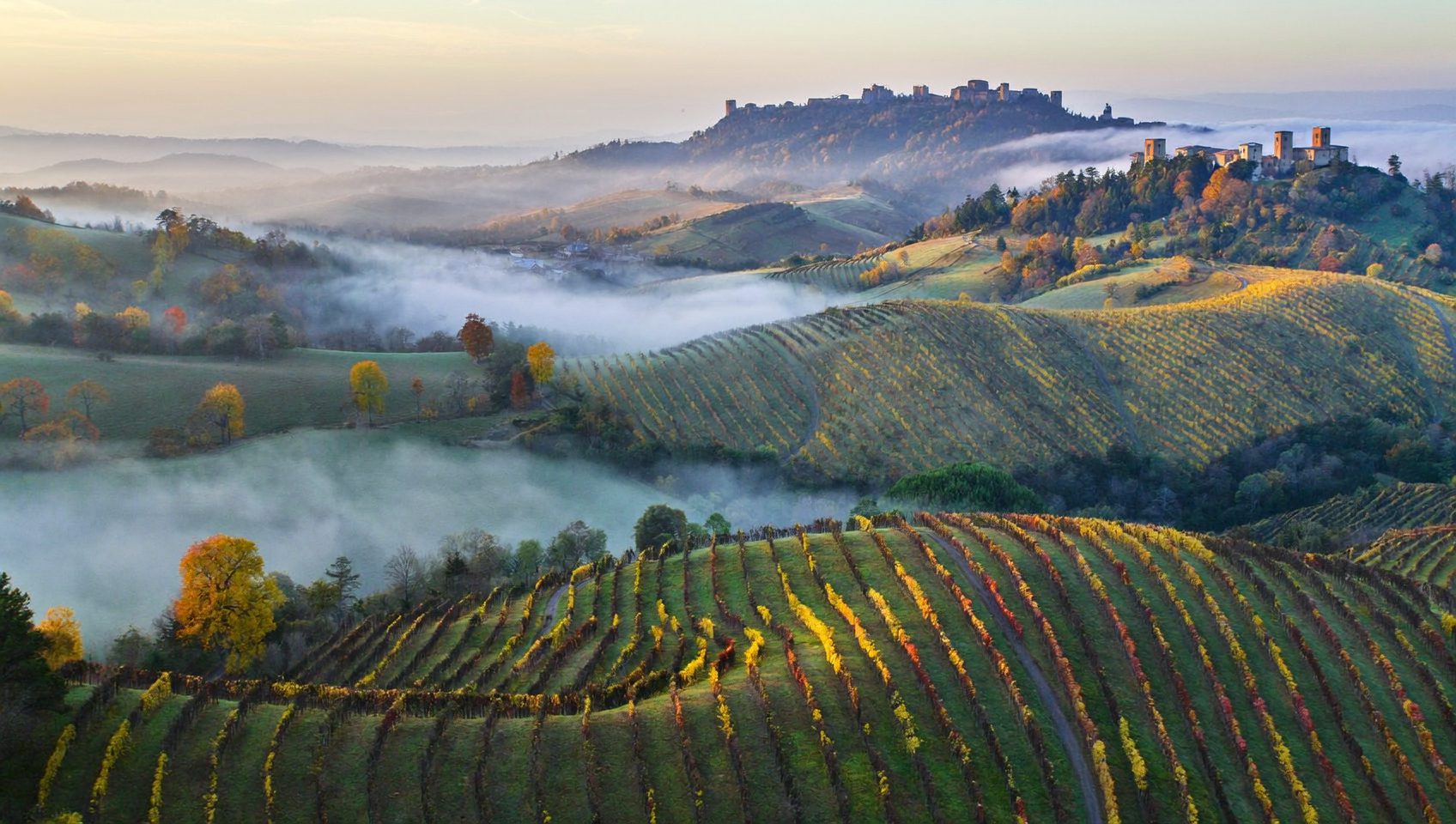
Dolcetto is a black-berried Piedmont grape, listed in Italy's National Register of Grape Varieties under code 73, and despite its name it makes dry red wines: "dolce" (sweet) refers to the pulp of the grape, not to the wine (National Register; Consorzio Barolo Barbaresco Alba Langhe e Dogliani). It must be used on its own in the three DOCGs Dogliani, Diano d'Alba and Ovada and in the DOCs Dolcetto d'Alba, Dolcetto d'Asti, Dolcetto d'Acqui and Dolcetto di Ovada, while the Dolcetto types of the Langhe, Monferrato, Piemonte, Colli Tortonesi and Pinerolese DOCs require at least 85 per cent (production rules, art. 2). In 2019, the year the Piedmont Region dedicated to Dolcetto, the grape had 12 Piedmont appellations, 3 DOCG and 9 DOC, and in the 2018/2019 season 3,136.73 hectares were claimed out of 3,845.64 eligible hectares (Regione Piemonte, Wine Registry data). In Liguria the same grape is called Ormeasco and makes the Pornassio or Ormeasco di Pornassio DOC.
This page is the complete guide to the grape and also covers what matters to those who buy or sell it abroad. The DOCG most closely tied to Dolcetto has its own page: Dogliani DOCG, and the village is covered in Dogliani wine. The other grapes and appellations of the same hills are in Nebbiolo, Barolo DOCG, Barbera, Barbera d'Asti DOCG, Freisa and Langhe DOC; the white wine of the Ovada area is in Gavi DOCG, and the regional picture in Piedmont wine.
What Dolcetto is and why the name does not mean "sweet"
Dolcetto is a dry red: the name comes from the sweetness of the grape. The Langhe Consorzio writes that the name derives from the particular sweetness of the pulp, while the wines are "exclusively dry", with modest acidity and a slightly bitter aftertaste; the Register describes the pulp as "very sweet in flavour" (Consorzio, Dolcetto page; National Register, ampelographic record). All the rules of the DOCGs and of the single-variety DOCs prescribe a "dry" taste, often "almondy" (production rules, art. 6).
There are two exceptions to know. Piemonte DOC Dolcetto may range "from dry to off-dry" (Piemonte DOC rules, art. 6), and in Liguria the Pornassio or Ormeasco di Pornassio DOC also provides for sweet Passito and Passito liquoroso wines (Pornassio DOC rules, art. 1 and 6).
The history is traced by the production rules and by public bodies. The Dolcetto d'Asti rules place the first record in the Asti area in the first decade of the sixteenth century, in a comedy by Giovan Giorgio Allione that mentions the "Dosset de Mongardin" (art. 9). The Langhe Consorzio cites a 1593 document in the Dogliani archives that names the grape (Consorzio, Dogliani DOCG page). According to CNR researcher Anna Schneider, quoted by the Piedmont Region, Dolcetto appears in documents from the turn of the sixteenth and seventeenth centuries as a traditional crop of southern Piedmont and western Liguria, with historical plantings also in the Oltrepò Pavese and in Sardinia (Regione Piemonte, 20 February 2019).
Synonyms and wrong names: what the National Register says
The Register entry draws on the 1962 monograph by Dalmasso, Dell'Olio and Ricco and separates true synonyms from wrong names.
| Name | Where it was used, according to the Register | Status |
|---|---|---|
| Ormeasca | Liguria on the border with the province of Cuneo, Ormea district | synonym |
| Uva d'Acqui, Acqui | San Colombano hills, Val Trebbia, Valle Scrivia | synonym |
| Uva del Monferrato | Genoa area | synonym |
| Bignona, Bignonina | some places in the Alessandria area | synonym |
| Uva di Ovada, Uva di Roccagrimalda | former Kingdom of Lombardy-Venetia | synonym |
| Dolsin, Dolsin raro, Dosset, Dolzino, Dolzin, Dolceto | distortions of the name | name variants |
| Nebbiolo, Nebbiolone | Alessandria area bordering Pavia and Genoa; Voghera area | wrong name |
| Douce noire, Corbeau, Cortese nero, Dolcetto di Cumiana, Dolciame, Dolcino delle Marche, Dolcignola | various | false synonyms |
Source: National Register of Grape Varieties, ampelographic record for Dolcetto (code 073). The Register also rejects old confusions with Refosco from Friuli and Piedirosso from Campania, and regards the so-called "white Dolcettos" as varieties unrelated to black Dolcetto.
Two alternative names are written into the production rules. The Pornassio or Ormeasco di Pornassio DOC speaks of the "Ormeasco or Dolcetto variety" (art. 2), and the Dolcetto di Ovada rules recall that the grape was called "Uva di Ovada" or, by naturalists, "Uva Ovadensis" (Dolcetto di Ovada DOC and Ovada DOCG rules, art. 9). For Ligurian Ormeasco the reference guide is exporting wine from Imperia.
How to recognise it in the vineyard
The Register description was made on a clone from Strevi, in the province of Alessandria, and checked in the typical areas of the provinces of Alessandria and Cuneo.
| Trait | National Register description |
|---|---|
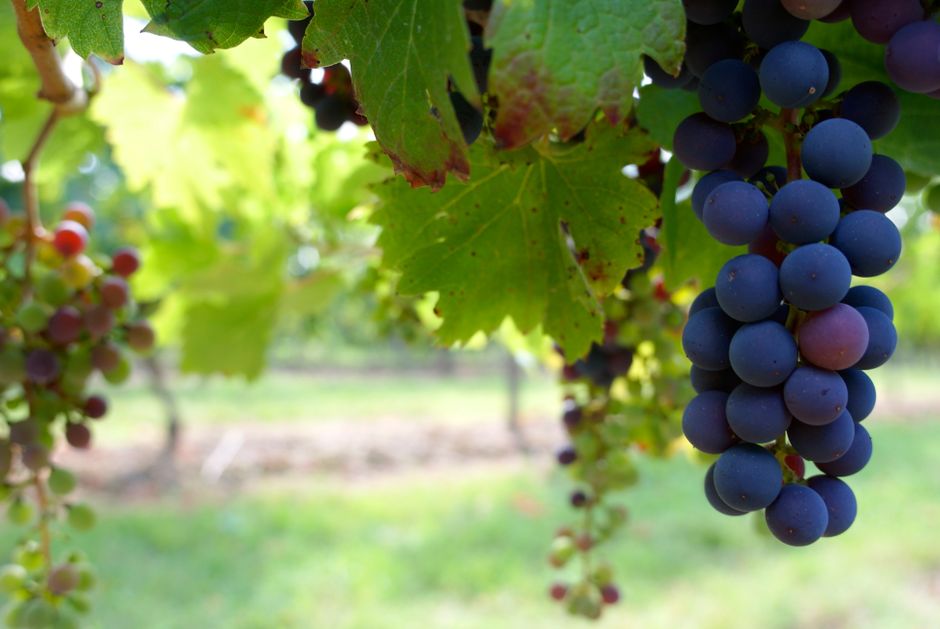
| Bunch | medium or larger, fairly loose, pyramidal, rather long (18-20 cm), with 1-2 wings; pedicels red when ripe |
| Berry | medium (12 mm), round; skin with plenty of bloom, blue-black, thin; juicy pulp, very sweet in flavour |
| Budbreak | rather early, first half of April |
| Flowering | rather early, end of May - first ten days of June |
| Véraison | first ten days of August |
| Ripening | end of 1st period - start of 2nd, second half of September |
| Vigour | medium, lower than Barbera: needs compact training such as Guyot with one fruiting cane of 6-8 buds |
| Yield | good and regular only in suitable sites; elsewhere irregular, with berries that easily drop when ripe |
| Resistance | less resistant than Barbera to fungal diseases and grape moths; more resistant to frost and hail |
The Langhe Consorzio adds that Dolcetto prefers calcareous-marly soils between 250 and 600 metres but also ripens above 700, and recommends Guyot pruning with a fruiting cane of 8-10 buds (Consorzio, Dolcetto page). The Dolcetto d'Asti rules explain that growers choose poor soils and exposures that are not too sunny, because the grape suffers from water stress (art. 9); the Dogliani rules note that it suffers from excessive heat and keeps its aromas only within a particular temperature balance (art. 9).
Which appellations use Dolcetto
The table shows the minimum share of Dolcetto each set of rules requires in the estate's vineyards.
| Appellation | Minimum Dolcetto | Source |
|---|---|---|
| Dogliani DOCG | 100% | rules, art. 2 |
| Dolcetto di Diano d'Alba or Diano d'Alba DOCG | 100% | rules, art. 2 |
| Dolcetto di Ovada Superiore or Ovada DOCG | 100% | rules, art. 2 |
| Dolcetto d'Alba DOC | 100% | rules, art. 2 |
| Dolcetto d'Asti DOC | 100% | rules, art. 2 |
| Dolcetto d'Acqui DOC | 100% | rules, art. 2 |
| Dolcetto di Ovada DOC | 100%, with up to 3% of other non-aromatic varieties present in the vineyard | rules, art. 2 |
| Pornassio or Ormeasco di Pornassio DOC (Liguria) | 95% Ormeasco or Dolcetto | rules, art. 2 |
| Langhe DOC Dolcetto, also Novello | 85% | rules, art. 2 |
| Monferrato DOC Dolcetto, also Novello | 85% | rules, art. 2 |
| Piemonte DOC Dolcetto, also frizzante | 85% | rules, art. 2 |
| Colli Tortonesi DOC Dolcetto, also Novello | 85% | rules, art. 2 |
| Pinerolese DOC Dolcetto | 85% | rules, art. 2 |
| Provincia di Pavia IGT Dolcetto | 85% | rules, art. 2 |
In other wines Dolcetto is a blending grape:
| Appellation | Role of Dolcetto | Source |
|---|---|---|
| Langhe DOC rosso passito | at least 85% of one of Barbera, Dolcetto and Nebbiolo | rules, art. 2 |
| Langhe DOC rosato | at least 60% of one of Barbera, Dolcetto and Nebbiolo | rules, art. 2 |
| Piemonte DOC rosso and rosato | among the grapes that together must reach at least 60% | rules, art. 2 |
| Monferrato DOC Chiaretto or Ciaret | among the grapes that together must reach at least 85% | rules, art. 2 |
| Colli Tortonesi DOC rosso, Chiaretto and Novello | among the permitted black grapes | rules, art. 2 |
| Valsusa DOC rosso | with Avanà, Barbera, Becuet and Neretta cuneese, at least 60% together | rules, art. 2 |
| Barbera del Monferrato DOC and Barbera del Monferrato Superiore DOCG | up to 15%, alone or with Freisa and Grignolino | rules, art. 2 |
| Golfo del Tigullio-Portofino DOC rosso and rosato (Liguria) | with Ciliegiolo at least 60% together | rules, art. 2 |
| Val Polcevera DOC reds and rosés (Liguria) | with Sangiovese and Ciliegiolo at least 60% together | rules, art. 2 |
The grapes Dolcetto is most often blended with have their own guides: Barbera, Freisa and Grignolino.
The three DOCGs: Dogliani, Diano d'Alba and Ovada
There are three Dolcetto DOCGs, all single-variety, and each has a Superiore type with compulsory ageing.
| Requirement | Dogliani | Dolcetto di Diano d'Alba or Diano d'Alba | Dolcetto di Ovada Superiore or Ovada |
|---|---|---|---|
| Area | 14 whole municipalities and 7 in part in the province of Cuneo, including Dogliani, Farigliano and Clavesana | the municipality of Diano d'Alba (CN) only | 22 municipalities around Ovada (AL), including Ovada, Rocca Grimalda and Molare |
| DOC since / DOCG since | 1974 / 2005 | 1974 / 2010 | 1972 as a type of the DOC / 2008 |
| Maximum grape yield | 8 t/ha; Superiore 7 t/ha | 8 t/ha | 7 t/ha; with "vigna" 6 t/ha |
| Minimum natural alcohol of the grapes | 11.5%; Superiore 13% | 11.5%; Superiore 12% | 12%; with "vigna" 12.5% |
| Minimum total alcohol at release | 12%; Superiore 13% | 12%; Superiore 12.5% | 12.5%; with "vigna" 13% |
| Grape-to-wine yield | 70%; Superiore 68% | 70% | 70% |
| Ageing | Superiore: 12 months from 15 October of the harvest year | Superiore: 10 months from 1 November of the harvest year | 12 months from 1 November of the harvest year; with "vigna" 20 months; Riserva at least 24 months |
| Release for consumption | Superiore: from 1 November of the year after the harvest | from 1 January of the year after the harvest; Superiore from 1 September | after ageing |
Source: Dogliani DOCG, Dolcetto di Diano d'Alba or Diano d'Alba DOCG and Dolcetto di Ovada Superiore or Ovada DOCG rules, headers and art. 3, 4, 5, 6 and 8. Minimum total acidity is 4.5 g/l in all three.
Dogliani. The rules allow vineyards up to 800 metres, exclude north-facing slopes for new plantings and require at least 4,000 vines per hectare; enrichment is not allowed for the Superiore (art. 4 and 5). Since the 2018 amendment the label may carry one of the additional geographical units in annex 1, namely the 21 municipalities of the zone and 55 hamlets or localities such as Arazza, Bricco Rosso or San Luigi; a municipality must be preceded by "del comune di", and the "vigna" mention is allowed only together with a geographical unit (art. 7 and annex 1). The Consorzio counts 76 geographical mentions made official in 2018. Bottles are dark glass up to 6 litres, plus the 9, 12 and 15 litre sizes (art. 8).
Diano d'Alba. The village sits on a hill at almost 500 metres south of Alba; vineyards may not exceed 550 metres, and new plantings need at least 3,500 vines per hectare (art. 4 and 9). The best sites are called sörì, "sunny place" in Piedmontese: there are 76, mapped since 1988, and the rules list them as additional geographical mentions, from Sorì Autin Grand to Sorì Vigna della Lepre; the mention goes below the appellation, in characters no larger (art. 7 and 9). The Superiore with "vigna" must be bottled in sizes below 5 litres (art. 8).
Ovada. The DOCG was created in 2008 from the Superiore type of the 1972 DOC and may be called simply "Ovada"; repeating the name Ovada on the label is forbidden (art. 7). Vineyards up to 600 metres, at least 4,000 vines per hectare, vinification and ageing within the zone, with a ministerial exemption for wineries in the provinces of Alessandria, Asti, Cuneo, Turin, Genoa and Savona that did so in the previous five years (art. 4 and 5). Bottles are Bordeaux, Burgundy or similar shapes, from 187 ml to 5 litres (art. 8).
The single-variety DOCs: Dolcetto d'Alba, d'Asti, d'Acqui and di Ovada
| Requirement | Dolcetto d'Alba | Dolcetto d'Asti | Dolcetto d'Acqui | Dolcetto di Ovada |
|---|---|---|---|---|
| Area | municipalities around Alba, some whole and others only on the right bank of the Tanaro, plus Coazzolo (AT) | 21 municipalities in southern Asti province and part of Calamandrana, Canelli and Nizza Monferrato | 23 municipalities around Acqui Terme (AL) | the same 22 municipalities as the Ovada DOCG (AL) |
| DOC since | 1974 | 1974 | 1972 | 1972 |
| Maximum grape yield | 9 t/ha; with "vigna" 8 | 8 t/ha | 8 t/ha | 8 t/ha |
| Minimum natural alcohol | 11%; Superiore 12% | 11%; Superiore 12% | 11%; Superiore 12% | 11% |
| Minimum total alcohol at release | 11.5%; Superiore 12.5% | 11.5%; Superiore 12.5% | 11.5%; Superiore 12.5% | 11.5% |
| Minimum total acidity | 4.5 g/l | 5.0 g/l | 5.0 g/l | 4.5 g/l |
| Superiore | 12 months from 1 November; on sale from 1 November of the year after the harvest | at least one year from 1 January after the harvest | at least one year from 1 January after the harvest | no such type |
Source: Dolcetto d'Alba, Dolcetto d'Asti, Dolcetto d'Acqui and Dolcetto di Ovada DOC rules, headers and art. 1, 3, 4, 5, 6 and 7. The maximum grape-to-wine yield is 70 per cent in all four.
Dolcetto d'Alba is vinified in the province of Cuneo and in Coazzolo, allows the "vigna" mention at full yield only for vineyards at least seven years old, bans the 2-litre bottle and may be downgraded to Langhe Dolcetto, or to Monferrato Dolcetto for grapes from Coazzolo (art. 4, 5 and 8). The rules split the zone into two belts: towards Barolo and Barbaresco the wines are more structured, from Alba towards the Belbo valley the Dolcettos are finer and lighter (art. 9). Dolcetto di Ovada DOC allows up to 15 per cent correction with wine of the same appellation, including from another vintage (art. 5).
The Dolcetto types of the wider DOCs
| Appellation | Area | Grape yield | Minimum natural alcohol | Minimum total alcohol | Ageing |
|---|---|---|---|---|---|
| Langhe Dolcetto, also Novello | municipalities in the province of Cuneo | 10 t/ha | 10% | 11% | none required |
| Monferrato Dolcetto, also Novello | municipalities in the provinces of Alessandria and Asti | 9 t/ha | 10.5% | 11% | none required |
| Piemonte Dolcetto, also frizzante | municipalities in the provinces of Alessandria, Asti and Cuneo listed in the rules | 11 t/ha | 10% | 11% | none required |
| Colli Tortonesi Dolcetto, also Novello | Tortona hills, province of Alessandria | 9 t/ha; with "vigna" 8 | 10%; with "vigna" 10.5% | 10.5% | none required |
| Pinerolese Dolcetto | municipalities in the provinces of Turin and Cuneo | 8 t/ha | 11.5% | 11.5% | none required |
Source: Langhe, Monferrato, Piemonte, Colli Tortonesi and Pinerolese DOC rules, art. 3, 4, 5 and 6. Pinerolese Dolcetto requires minimum acidity of 5.0 g/l, the others 4.5 g/l (art. 6). Langhe Dolcetto and Monferrato Dolcetto also serve as fallbacks: Diano d'Alba DOCG and Dolcetto d'Alba DOC may be reclassified as Langhe Dolcetto, the Ovada DOCG as Monferrato Dolcetto (rules, art. 4 and 5).
In the 2018/2019 season the Piedmont Region recorded 951.65 hectares claimed for Dolcetto d'Alba, 609.89 for Dogliani, 364.74 for Dolcetto di Ovada DOC, 327.91 for Monferrato Dolcetto, 205.70 for Langhe Dolcetto, 165.74 for Dolcetto d'Acqui, 157.30 for Piemonte Dolcetto, 155.34 for Diano d'Alba, 123.94 for Dolcetto d'Asti, 47.12 for the Ovada DOCG, 24.93 for Colli Tortonesi Dolcetto and 2.47 for Pinerolese Dolcetto (Regione Piemonte, Dolcetto production data, Wine Registry).
What the wine is like, according to the sources
The Langhe Consorzio describes two kinds of Dolcetto: fresh, easy-drinking wines for everyday meals, soft and good with many foods, or wines with body and structure that can age for up to six or seven years (Consorzio, Dolcetto page). The production rules describe the wine at release as follows:
- Dogliani: ruby red, fruity, dry, almondy, harmonious (art. 6).
- Diano d'Alba: ruby red, fruity, with a possible hint of wood, dry and almondy (art. 6).
- Ovada DOCG: ruby red tending to garnet, vinous, sometimes ethereal and with a hint of wood, dry, almondy or fruity (art. 6).
- Dolcetto d'Alba: ruby red with violet reflections, vinous nose with cherry and plum, dry, with modest acidity and a delicate bitter note (art. 6 and 9).
- Dolcetto d'Asti: bright ruby red, dry, velvety, with moderate acidity (art. 6).
- Dolcetto d'Acqui: deep ruby red tending to brick red with age, dry, soft, almondy or slightly bitter (art. 6).
What to check before buying or selling it abroad
We have not found official export data for Dolcetto alone, either from consortia or from public statistical sources, so we do not report any. The most recent public data we have read on its size are the Piedmont Region's figures for the 2018/2019 season: 3,136.73 hectares claimed across the 12 Piedmont appellations, 2,336 claims by wineries (one winery may claim several appellations) and a theoretical maximum of about 20.4 million bottles (Regione Piemonte, Wine Registry). This is a ceiling calculated from permitted yields, not actual production.
Points to verify in a price list or a technical sheet:
- The full appellation. "Dolcetto" on its own says nothing: Dogliani, Diano d'Alba and Ovada are DOCGs and may not show the word Dolcetto on the label, while Langhe, Monferrato and Piemonte Dolcetto allow up to 15 per cent of other grapes.
- Dry or off-dry. The DOCGs and the single-variety DOCs are dry by rule; Piemonte Dolcetto can be off-dry, and Ormeasco di Pornassio has sweet passito versions. On an export sheet it helps to write "dry red wine" next to the name.
- The Superiore. The rules change from one appellation to the next: 12 months from 15 October for Dogliani, 10 months from 1 November for Diano d'Alba, 12 months from 1 November for Ovada and Dolcetto d'Alba, one year from 1 January for Dolcetto d'Asti and d'Acqui.
- Geographical mentions. The sörì of Diano d'Alba and the additional geographical units of Dogliani are official names; a vineyard name without a geographical mention is not allowed on these two DOCGs.
- The vintage. It is compulsory on all the DOCGs and single-variety DOCs (rules, art. 7 and 8).
- Containers. Dogliani in dark glass up to 6 litres plus 9, 12 and 15; Ovada DOCG only in sizes from 187 ml to 5 litres; Dolcetto d'Alba and Diano d'Alba without the 2-litre size (rules, art. 8).
The provinces where Dolcetto grows are covered in exporting wine from Cuneo, exporting wine from Asti and exporting wine from Alessandria.
Frequently asked questions
Is Dolcetto a sweet wine?
No. The name comes from the sweetness of the grape pulp, but the rules of the DOCGs and single-variety DOCs prescribe a dry taste. The exceptions are Piemonte DOC Dolcetto, which may be off-dry, and the Passito of Ormeasco di Pornassio in Liguria (production rules, art. 6).
How much Dolcetto must a Dogliani or a Dolcetto d'Alba contain?
100 per cent in both, as in the Diano d'Alba and Ovada DOCGs and in the Dolcetto d'Asti, d'Acqui and di Ovada DOCs. The Dolcetto types of the Langhe, Monferrato, Piemonte, Colli Tortonesi and Pinerolese DOCs require at least 85 per cent (production rules, art. 2).
What is the difference between Dolcetto d'Alba and Dogliani?
Dolcetto d'Alba is a DOC from the municipalities around Alba, Dogliani a DOCG from 21 municipalities around Dogliani and Mondovì. Dogliani has lower yields (8 tonnes per hectare against 9) and higher minimum alcohol (12 per cent against 11.5), and its Superiore ages 12 months from 15 October (production rules, art. 3-6).
Is Dolcetto di Ovada a DOCG?
They are two appellations. Dolcetto di Ovada is a DOC from 1972; the DOCG, from 2008, is called Dolcetto di Ovada Superiore or simply Ovada, ages at least 12 months from 1 November of the harvest year and becomes Riserva with at least 24 months (production rules, headers and art. 5 and 8).
Does Dolcetto have other names?
Yes. The National Register lists Ormeasca, Uva d'Acqui, Uva del Monferrato, Bignona and Uva di Ovada; in Liguria the Pornassio rules use Ormeasco or Dolcetto. Calling it Nebbiolo or Nebbiolone, as was done in some areas, is an error according to the Register.
Where is Dolcetto grown outside Piedmont?
Mainly in Liguria, in the Pornassio or Ormeasco di Pornassio DOC in the province of Imperia and as a blending grape in the Golfo del Tigullio-Portofino and Val Polcevera DOCs. In Lombardy the Provincia di Pavia IGT provides for a Dolcetto type with at least 85 per cent of the grape (production rules, art. 2 and 3).
Sources
- National Register of Grape Varieties, ampelographic record for Dolcetto (code 073), from G. Dalmasso, G. Dell'Olio and P. Ricco, 1962
- Consorzio di tutela Barolo Barbaresco Alba Langhe e Dogliani, Dolcetto page and pages on Dogliani DOCG, Diano d'Alba DOCG and Dolcetto d'Alba DOC
- Regione Piemonte, 20 February 2019, 2019 Year of Dolcetto and Dolcetto production data, 2018/2019 season, Wine Registry
- Masaf, lists and production rules of Italian PDO and PGI wines: rules for Dogliani, Dolcetto di Diano d'Alba or Diano d'Alba, Dolcetto di Ovada Superiore or Ovada, Barbera del Monferrato Superiore (DOCG); Dolcetto d'Alba, Dolcetto d'Asti, Dolcetto d'Acqui, Dolcetto di Ovada, Langhe, Monferrato, Piemonte, Colli Tortonesi, Pinerolese, Valsusa, Barbera del Monferrato, Pornassio or Ormeasco di Pornassio, Golfo del Tigullio-Portofino, Val Polcevera (DOC); Provincia di Pavia (IGT)
- Production rules downloadable from the Consorzio: Dogliani DOCG, Dolcetto di Diano d'Alba or Diano d'Alba DOCG and Dolcetto d'Alba DOC
- Wine Closures for Export: Cork, Technical or Screw Cap
- Tannins in Wine: Origin, Astringency, Oak and Ageing
- Fiano di Avellino DOCG: rules, villages, Apianum, Riserva
- Wine Tannins: Grape vs Oak, Oenological Tannins, EU Rules
- Fortified Wine Production: Added Alcohol, EU Rules, Excise
- Sulfites in wine: legal limits by country and label rules