Verduzzo: Exploring the Potential of Italian Wine in the Global Market
Verduzzo, a native grape variety from Friuli-Venezia Giulia, offers Italian wineries a unique opportunity to stand out in international markets. With two distinct biotypes, Verde and Giallo (Ramandolo), this grape allows for the creation of fresh dry wines and complex sweet wines, capable of satisfying diverse foreign consumer preferences. Understanding its origins, ampelographic characteristics, and organoleptic profile is the first step towards developing an effective export strategy and enhancing this Italian winemaking treasure. In-depth information: MASAF — National Register of Vine Varieties.
What are the Origins and History of the Verduzzo Grape Variety?
The roots of Verduzzo are deeply embedded in the Friulian territory, where it is considered an indigenous grape of ancient origin. The first descriptions date back to 19th-century writings, attesting to its presence and diffusion in the region, closely linked to Refosco, another Friulian native.
Over the centuries, Verduzzo has evolved into two main clones, which today give rise to two distinct wine expressions:
- Verduzzo Verde: Primarily cultivated in the plains, this biotype is destined for the production of dry wines. Its cultivation is historically linked to areas such as those described by Pietro di Maniago in his "Catalogo delle viti del Regno Veneto."
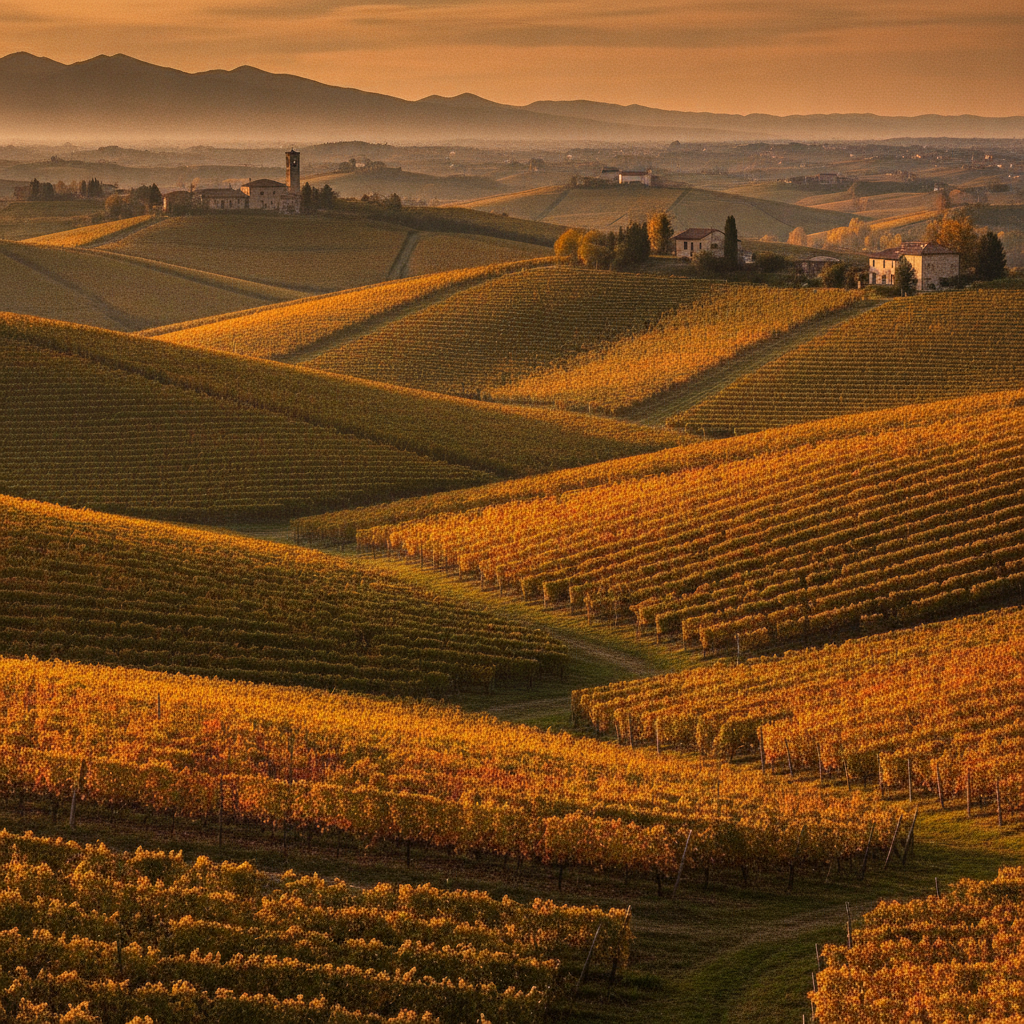
- Verduzzo Giallo (or di Ramandolo): Grown mainly on hillsides, in dedicated areas like Ramandolo, Nimis, Faedis, and Torlano, this clone gives rise to mellow and dessert wines. The Ramandolo area, in particular, has lent its name to a renowned wine, also recognized within the "Colli Orientali del Friuli" denomination.
Despite historical challenges, such as the arrival of pests, the introduction of new foreign varieties, and wartime conflicts, Verduzzo has maintained its importance, especially the yellow biotype, which continues to hold prominent positions in the most suitable areas.
What are the Ampelographic Characteristics of Verduzzo?
Verduzzo exhibits well-defined ampelographic characteristics. The bud tip is open, with the fourth leaf from the tip being green and devoid of down, holding a horizontal posture. The adult leaf is orbicular, whole, with a flat profile and V-shaped petiole sinuses with open lobes. The underside presents a slight pubescence, and the teeth are convex. The shoot has an irregular and flattened cross-section, with medium internodes and a hazelnut color. The buds are not very prominent.
The plant's vigor is excellent, with good and consistent production and moderate resistance to diseases. It requires medium planting densities.
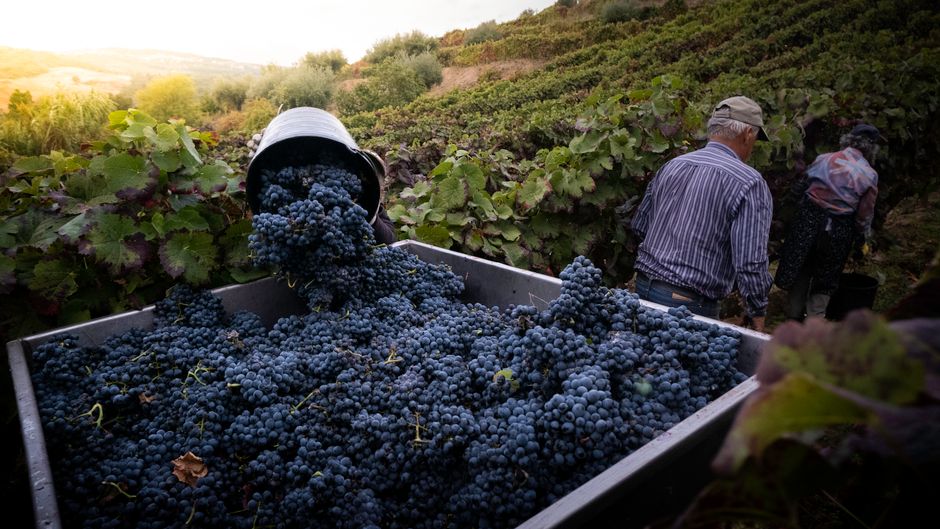
The bunch, in both the yellow and green varieties, is medium-small, about 12-14 cm long, with a short and robust pedicel. The shape is pyramidal, compact, often with two well-defined wings. The berry is small and spherical, with short pedicels and a noticeable rim. The skin is very tough, bloom-covered: light green in the green variety, and almost amber-gold in the yellow one, characterized by a black spot at the apex. The pulp is juicy, acidic, tannic, and fleshy, with three piriform and large pips.
The characteristics of the must highlight a good sugar potential, with typical values of 18.9 °Brix, an acidity of 7.2 g/l, and a pH of 3.59.
What is the Organoleptic Profile of Verduzzo Verde?
The wine produced from Verduzzo Verde presents a straw-yellow color, sometimes intense, with distinct greenish reflections. On the nose, it offers a broad and fresh aroma, with citrus notes reminiscent of apple, pear, apricot, and nectarine. The bouquet can evolve into sensations evoking wild flowers. On the palate, the taste is full, slightly acidic, and fruity, echoing the olfactory sensations.
Characteristics of the Dry Wine:
- Color: Straw yellow with greenish reflections.
- Aroma: Broad, fresh, citrusy, with hints of apple, pear, apricot, nectarine.
- Taste: Full, slightly acidic, fruity.
- Usage: Aperitif wine, to be paired with boiled fish dishes, omelets, eggs, light appetizers, and herb risottos.
- Serving Temperature: 8-10 °C.
What are the Characteristics of Verduzzo Giallo (Ramandolo)?
Verduzzo Giallo, especially that from the Ramandolo area, yields a wine with a deep yellow color, sometimes with onion-skin hues. On the nose, a broad aroma is perceived, with a distinct sensation of chestnut honey. The bouquet can also open up to notes of acacia flowers and wildflowers. On the palate, the wine is full, enveloping, mellow, pleasantly bitter, and delicately tannic. Its richness in sugars makes it balanced, with a long, full-bodied, soft, and velvety flavor.
Characteristics of the Sweet Wine (Ramandolo):
- Color: Deep yellow, with onion-skin or gold hues.
- Aroma: Broad, with a distinct sensation of chestnut honey, acacia flowers.
- Taste: Full, enveloping, mellow, pleasantly bitter, balanced, soft, and velvety.
- Usage: Excellent dessert wine.
- Serving Temperature: Suitable for dessert wines, typically served cooler than reds.
What is the Export Potential of the Verduzzo Grape Variety?
Verduzzo represents an interesting opportunity for Italian wine exports, thanks to its uniqueness, history, and the diversity of its styles.
Strengths for Export:
- Native Status and Territory: As an indigenous grape from Friuli-Venezia Giulia, Verduzzo carries a strong connection to its region, an element increasingly appreciated by international consumers seeking authenticity and typicity.
- Versatility: The ability to produce both elegant dry wines and complex sweet wines allows it to cover different market segments. Dry Verduzzo can attract consumers looking for fresh, aromatic whites, while Verduzzo Giallo/Ramandolo positions itself in the premium segment of dessert wines.
- Niche Potential: Although not among the most globally recognized grape varieties, this can be a competitive advantage. Wineries that can enhance and communicate the unique history and characteristics of Verduzzo will be able to stand out in saturated markets.
- Food Pairings: Verduzzo's versatility is also reflected in pairings. The dry version pairs well with fish and vegetable dishes, while the sweet version is ideal for ending a meal, appealing to international palates that appreciate after-dinner wines.
Considerations for Export:
- Communication and Storytelling: It is crucial to tell the story of Verduzzo, its Friulian origins, and the differences between its biotypes and production areas. This helps create an emotional connection with the consumer and justify a higher price positioning.
- Target Markets: Countries with a strong gastronomic culture and an interest in authentic European wines, such as Germany, Switzerland, and Austria, could be promising destinations. Emerging markets seeking novelty and quality might also be receptive. Italy already exports wine to markets like Germany, the United Kingdom, the United States, Canada, Japan, and Australia.
- Consistent Quality: Ensuring high-quality production, for both dry Verduzzo and Ramandolo, is fundamental for building a solid reputation in foreign markets. Research on export propensity highlights the importance of company characteristics and product quality.
Verduzzo, with its rich heritage and oenological potential, deserves a prominent place in the export offerings of Italian wineries aiming to highlight the diversity and authenticity of their native grape varieties.
Frequently Asked Questions About Verduzzo Export
What are the main differences between Verduzzo Verde and Verduzzo Giallo for export?
Verduzzo Verde is ideal for dry, fresh, and aromatic wines, suitable for aperitifs and light dishes. Verduzzo Giallo, or Ramandolo, produces sweet, mellow, and complex wines, perfect as dessert wines, with notes of honey and flowers. This duality allows for reaching different market segments.
Which international markets might be most receptive to Verduzzo?
Markets with a strong gastronomic culture and an interest in authentic European wines, such as Germany, Switzerland, and Austria, are potential destinations. Emerging markets looking for novelty and quality could also show interest in this native grape variety.
How can wineries add value to Verduzzo for export?
Value addition comes through effective communication that tells the story of the grape variety, its Friulian origins, and the peculiarities of its biotypes. Emphasizing the authenticity and typicity of the territory, combined with consistent product quality, will help stand out in foreign markets.