Trebbiano Toscano explained: which Trebbiano it is, official synonyms, vineyard, percentages in the disciplinari, Orvieto, Vin Santo, Trebbiano d'Abruzzo and export
Wines Export Editorial · Last updated:
Trebbiano Toscano is a white grape variety listed in Italy's National Register of Grape Varieties since 25 May 1970, under code 244, with three official synonyms: Procanico, Biancame and Ugni Blanc, the name it goes by in France (National Register of Grape Varieties, Trebbiano Toscano B. entry). It is the backbone of white wines such as Orvieto, Bianco di Pitigliano and Trebbiano d'Abruzzo, which allows it alongside Trebbiano Abruzzese, and it goes into the Tuscan Vin Santo wines and, at most 10 percent together with the other white grapes, into Chianti (Orvieto DOC, Bianco di Pitigliano DOC, Trebbiano d'Abruzzo DOC, Vin Santo del Chianti DOC and Chianti DOCG disciplinari, art. 2). According to ISTAT figures published by the Register, the area planted in Italy fell from 58,477 hectares in 1990 to 22,702 in 2010.
This page is the guide to the grape and to the denominations that use it, with the percentages taken from the production rules (disciplinari). A comparison of all the grapes called Trebbiano is in Trebbiano varieties: Toscano, Abruzzo, Romagnolo, Turbiana.
Which Trebbiano? Toscano, Abruzzese, Romagnolo, Spoletino and Turbiana
"Trebbiano" on its own does not name one grape. The Register and the disciplinari list several varieties with this name, and each denomination says which one it uses.
| Grape | Where it matters most | What the disciplinare says | Source |
|---|---|---|---|
| Trebbiano Toscano (Procanico) | Tuscany, Umbria, Lazio, Abruzzo | base of Orvieto with Grechetto, of Bianco di Pitigliano, of the Tuscan Vin Santo wines | disciplinari listed below, art. 2 |
| Trebbiano Abruzzese | Abruzzo | Trebbiano d'Abruzzo DOC: Trebbiano Abruzzese and/or Trebbiano Toscano at least 85 percent | Trebbiano d'Abruzzo disciplinare, art. 2 |
| Trebbiano Romagnolo | Romagna | Romagna Trebbiano DOC: Trebbiano Romagnolo at least 85 percent | Romagna DOC disciplinare, art. 2 |
| Trebbiano Spoletino | Umbria, around Spoleto | Spoleto Trebbiano Spoletino DOC: at least 85 percent | Spoleto DOC disciplinare, art. 2 |
| Trebbiano di Soave (Turbiana) | Lake Garda, Verona | Lugana DOC: Trebbiano di Soave, locally Turbiana or Trebbiano di Lugana, with no more than 10 percent of other grapes; in Soave DOC up to 30 percent together with Chardonnay | Lugana and Soave disciplinari, art. 2 |
| Trebbiano Giallo (Rossetto) | Lazio | Est! Est!! Est!!! di Montefiascone 5 to 40 percent; also allowed in Frascati | Est! Est!! Est!!! and Frascati disciplinari, art. 2 |
The Lugana disciplinare describes Turbiana as a close relative of Trebbiano di Soave and genetically akin to Verdicchio, though different from it in the vineyard and the cellar (Lugana DOC disciplinare, art. 9). The individual denominations are covered in Lugana DOC, Soave DOC and Verdicchio dei Castelli di Jesi and di Matelica. From here on this page deals only with Trebbiano Toscano.
What Trebbiano Toscano is: official name and synonyms
The official name is Trebbiano Toscano B., where B stands for white berry. The variety was admitted to the Register on 25 May 1970 (Gazzetta Ufficiale n. 149, 17 June 1970) at the proposal of the CRA-VIT research centre in Conegliano, and it has 25 registered clones, from the first in 1969 to the latest, VCR 454, in 2023 (National Register, Trebbiano Toscano B. entry).
| Name | Status in the Register or the disciplinare | Source |
|---|---|---|
| Procanico | official synonym; used as the local name in the Orvieto, Elba and Est! Est!! Est!!! disciplinari | Register; Orvieto, Elba, Est! Est!! Est!!! disciplinari, art. 2 |
| Biancame B. | official synonym; Biancame is also registered on its own, under code 025, and in turn points back to Trebbiano Toscano | Register, entries 244 and 025 |
| Ugni Blanc | official synonym allowed only for labelling wines exported or shipped to other EU member states; the name used in France | Register, entry 244 |
The ampelographic description published by the Register, written by Breviglieri and Casini in 1965, also records historic local names collected by ampelographers: Procanico and Brocanico around Siena, on Elba and around Grosseto, Albano in Arezzo, Biancone in Cortona, Santoro in Sinalunga, Bobiano or Bubbiano around Lucca, Trebbianone in Velletri. They are archive evidence, not names to put on a label.
The grape in the vineyard: what the ampelographic description says
Trebbiano Toscano is a vigorous, very productive grape that ripens late. These are the data in the Register's description, recorded in the University of Florence collection:
| Trait | Description |
|---|---|
| Vigour | high |
| Yield | very abundant and consistent, especially in selected clones |
| Bunch | large or medium-large, 18-25 cm long, elongated, with one or two wings, semi-compact or semi-loose |
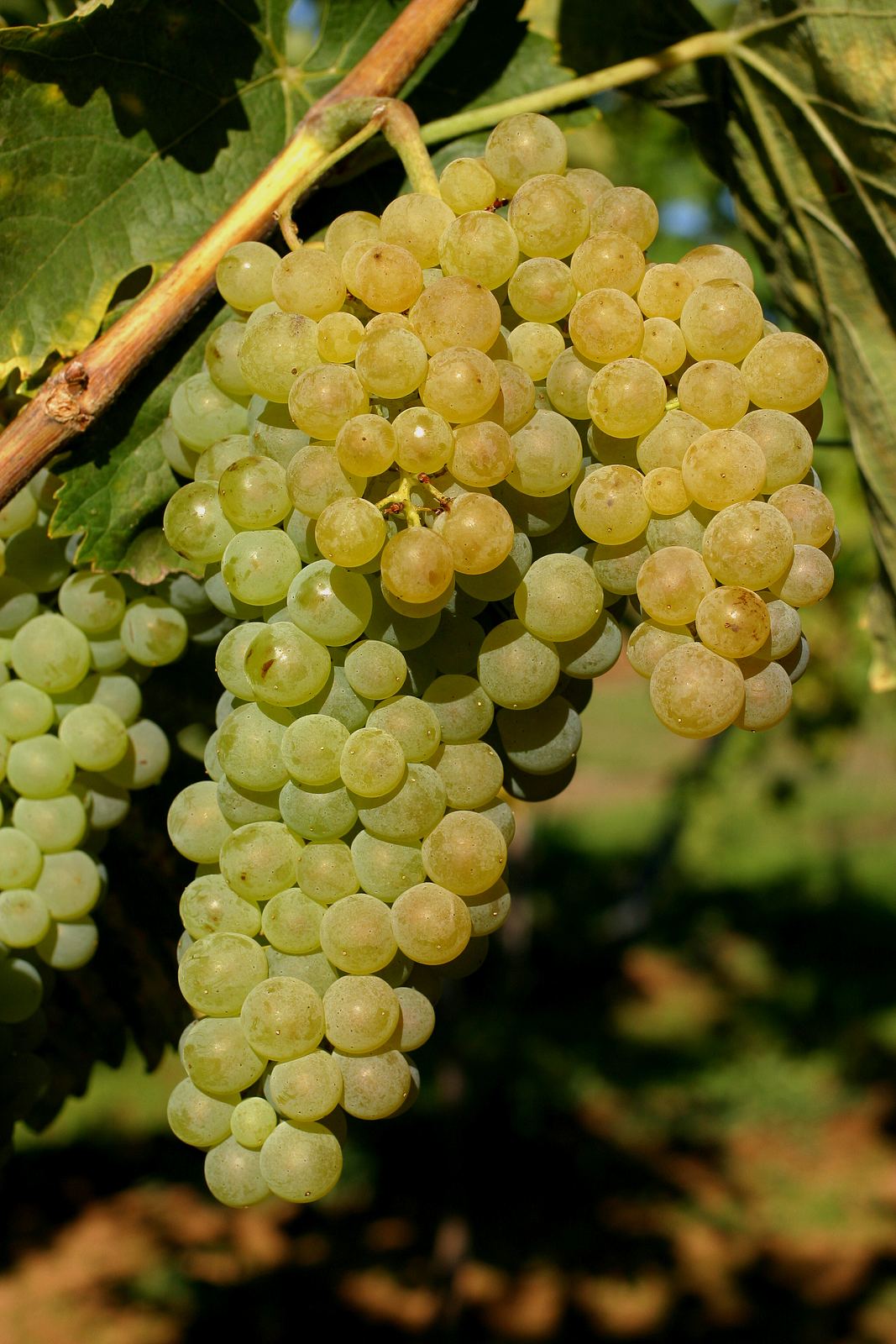
| Berry | medium, 13-15 mm across; yellow-green or yellow-reddish skin depending on the clone, tougher than that of Malvasia del Chianti; juicy flesh, neutral flavour |
| Budburst | from 25 April to early May, later than Sangiovese, Malvasia and Canaiolo |
| Flowering | last ten days of May, early June |
| Veraison | 25 August to 10 September |
| Ripening | first and second ten days of October |
| Disease | normal resistance to the common vine pests |
| Drying | the grapes keep fairly easily in the drying loft |
Source: National Register of Grape Varieties, ampelographic description of Trebbiano Toscano (N. Breviglieri and E. Casini, 1965).
The description ends on how the grape is used: it is one of the classic varieties that go into Chianti; alone or with Malvasia it makes good vin santo in Tuscany; with Malvasia and Canaiolo Bianco it makes good dry whites. How easily the grapes keep in the drying loft explains their role in dried-grape wines.
The planted area has been shrinking for thirty years. These are the ISTAT figures published by the Register:
| Year | Area in Italy |
|---|---|
| 1970 | 55,822 hectares |
| 1982 | 56,301 hectares |
| 1990 | 58,477 hectares |
| 2000 | 42,456 hectares |
| 2010 | 22,702 hectares |
Which wines it goes into: the percentages in the disciplinari
The Register lists Trebbiano Toscano as allowed in 3 DOCGs, 84 DOCs and 104 IGTs (consulted on 13 November 2026); the binding texts, however, are the disciplinari, which set how much of it there must be. Percentages are calculated on the estate's vineyards, not on the single bottle.
Wines where it is the main grape
| Denomination | Region | Trebbiano Toscano in the disciplinare | Source |
|---|---|---|---|
| Trebbiano d'Abruzzo DOC | Abruzzo | at least 85 percent, together with or instead of Trebbiano Abruzzese | art. 2 |
| Colli Martani Trebbiano DOC | Umbria | at least 85 percent | art. 2 |
| Elba Trebbiano (or Elba Procanico) DOC | Tuscany | at least 85 percent | art. 2 |
| Rubicone Trebbiano IGT | Emilia-Romagna | at least 85 percent, together with or instead of Trebbiano Romagnolo | art. 2 |
| Bianco di Pitigliano DOC, also Superiore, Spumante and Vin Santo | Tuscany | 40 to 100 percent | art. 2 |
| Bianco dell'Empolese DOC, Bianco and Vin Santo | Tuscany | at least 60 percent | art. 2 |
| Orvieto DOC | Umbria and Lazio | Trebbiano Toscano (Procanico) and Grechetto together at least 60 percent | art. 2 |
| Est! Est!! Est!!! di Montefiascone DOC | Lazio | 50 to 65 percent, with Trebbiano Giallo and Malvasia | art. 2 |
| Colli dell'Etruria Centrale Bianco DOC | Tuscany | at least 50 percent | art. 2 |
| Colli Martani Bianco DOC | Umbria | at least 50 percent | art. 2 |
Wines where it is one grape in the blend
| Denomination | Region | Trebbiano Toscano in the disciplinare | Source |
|---|---|---|---|
| Montecarlo DOC, Bianco and Vin Santo | Tuscany | 30 to 60 percent | art. 2 |
| Torgiano Bianco DOC | Umbria | 20 to 70 percent | art. 2 |
| Elba Bianco DOC | Tuscany | 10 to 70 percent | art. 2 |
| Valdichiana toscana Bianco DOC | Tuscany | at least 20 percent | art. 2 |
| Frascati DOC and Frascati Superiore DOCG | Lazio | up to 30 percent together with Bellone, Bombino Bianco, Greco Bianco and Trebbiano Giallo; Malvasia makes up at least 70 percent | art. 2 |
Vin Santo
| Denomination | Grapes | Source |
|---|---|---|
| Vin Santo di Carmignano DOC | Trebbiano Toscano and Malvasia Bianca Lunga, alone or together, at least 75 percent | art. 2 |
| Vin Santo del Chianti DOC | Trebbiano Toscano and Malvasia Bianca Lunga, alone or together, at least 70 percent | art. 2 |
| Vin Santo di Montepulciano DOC | Malvasia Bianca, Grechetto Bianco and Trebbiano Toscano, alone or together, at least 70 percent | art. 2 |
| Colli dell'Etruria Centrale Vin Santo DOC | Trebbiano Toscano and Malvasia Bianca Lunga, alone or together, at least 70 percent | art. 2 |
| Vin Santo del Chianti Classico DOC | Trebbiano Toscano, Malvasia Bianca Lunga and Malvasia Bianca di Candia, alone or together, at least 60 percent | art. 2 |
| Valdichiana toscana Vin Santo DOC | Trebbiano Toscano and the Malvasias, alone or together, at least 50 percent | art. 2 |
Red wines where it is allowed as a white grape
| Denomination | Rule on white grapes | Source |
|---|---|---|
| Chianti DOCG | white grapes, alone or together, no more than 10 percent; same ceiling in the Colli Senesi sub-zone | art. 2 |
| Carmignano DOCG | Trebbiano Toscano, Canaiolo Bianco and Malvasia del Chianti, alone or together, no more than 10 percent | art. 2 |
| Chianti Classico DOCG | only red grapes allowed alongside Sangiovese: no Trebbiano | art. 2 |
Sources: production rules of the denominations listed, texts of the Italian Ministry of Agriculture, article 2.
Orvieto: the best-known white based on Trebbiano Toscano
Orvieto is a white-only DOC straddling Umbria and Lazio. The grapes come from thirteen municipalities in the province of Terni, including Orvieto, Allerona, Baschi, Castel Viscardo, Ficulle and Porano, and five in the province of Viterbo: Castiglione in Teverina, Civitella d'Agliano, Graffignano, Lubriano and Bagnoregio (Orvieto DOC disciplinare, art. 3). The Classico sub-zone is the oldest area of origin, first delimited by a decree of 23 October 1931: the rock of Orvieto and its surroundings (art. 3 and 9).
| Requirement | Orvieto | Orvieto Superiore | Vendemmia tardiva | Muffa nobile | Source |
|---|---|---|---|---|---|
| Grapes | Trebbiano Toscano (Procanico) and Grechetto together at least 60 percent | as Orvieto | as Orvieto | as Orvieto | art. 2 |
| Maximum grape yield | 11 t/ha | 8 t/ha | 7 t/ha | 5 t/ha | art. 4 |
| Minimum total alcohol | 10.00 percent | 12.00 percent | 13.00 percent, of which at least 10.00 actual | 10.50 percent actual | art. 6 |
Orvieto, Classico included, may be dry (secco), off-dry (abboccato), medium-sweet (amabile) or sweet (dolce); the late-harvest type may be claimed only for Orvieto Superiore (art. 1). The disciplinare describes it as straw yellow of varying depth, with a delicate, pleasant nose and, in the dry version, a light bitterish finish (art. 6). Approved by presidential decree on 7 August 1971, the DOC was last amended by the ministerial decree of 24 June 2025 (Gazzetta Ufficiale n. 155, 7 July 2025). The grape that partners it is in Grechetto: export guide, the region in exporting wine from Umbria.
Vin Santo: why Trebbiano Toscano stands up to drying
Tuscan Vin Santo is made from grapes dried for a long time, and Trebbiano Toscano is, with Malvasia, its main grape. The Vin Santo del Chianti rules show how it works:
| Rule | Vin Santo del Chianti | Source |
|---|---|---|
| Drying | natural, in suitable rooms, until the grapes reach at least 26 percent sugar (27 for Occhio di Pernice and the sub-zones); ventilation allowed | art. 5 |
| Grape-to-wine yield | 35 percent, at most 38.5 hectolitres per hectare | art. 5 |
| Winemaking and ageing | in wooden casks (caratelli) of no more than 5 hectolitres, until 1 October of the third year after the harvest, the fourth for the Riserva | art. 5 |
| Release | not before 1 November of the third year after the harvest, the fourth for the Riserva | art. 5 |
| Minimum total alcohol | 15.50 percent, of which at least 13.00 actual | art. 6 |
| Style | dry, off-dry, medium-sweet or sweet; colour from straw yellow to gold to amber | art. 6 |
Source: Vin Santo del Chianti DOC disciplinare, approved by ministerial decree of 28 August 1997. The other Vin Santo denominations and the traditional term are covered in Vin Santo: production rules and foreign buyers; the other grape in Malvasia Bianca.
Trebbiano d'Abruzzo: where Toscano stands beside Abruzzese
Trebbiano d'Abruzzo DOC carries the Trebbiano name but allows two varieties: Trebbiano Abruzzese and/or Trebbiano Toscano for at least 85 percent, with no more than 15 percent of other non-aromatic white grapes (Trebbiano d'Abruzzo DOC disciplinare, art. 2). A Trebbiano d'Abruzzo label therefore does not tell which of the two varieties is in the wine: only the producer knows.
| Requirement | Trebbiano d'Abruzzo | Source |
|---|---|---|
| Maximum grape yield | 17 t/ha, minimum natural alcohol 10.50 percent | art. 4 |
| Grape-to-wine yield | 70 percent | art. 5 |
| Release | not before 1 January after the harvest | art. 5 |
| Minimum total alcohol | 11.50 percent | art. 6 |
| Sub-zones | Terre di Chieti, Terre Aquilane or Terre de L'Aquila, Colline Pescaresi, Colline Teramane, with Superiore and Riserva | art. 1 and annexes |
In the Terre di Chieti sub-zone the yield falls to 14 t/ha with a natural alcohol of 11.50 percent (Terre di Chieti annex, art. 4). Approved by presidential decree on 28 June 1972, the disciplinare was last amended by the ministerial decree of 19 January 2023. The region's red is in Montepulciano d'Abruzzo DOC, the regional overview in exporting wine from Abruzzo.
Chianti: from historic recipe grape to a capped share
The Chianti disciplinare credits Baron Bettino Ricasoli, in 1870, with defining the grape make-up of the wine, and names Trebbiano and Malvasia Lunga Toscana among the denomination's "historic white grapes" (Chianti DOCG disciplinare, art. 9). Today Chianti, a DOC since 1967 and a DOCG since 1984, requires at least 70 percent Sangiovese and caps all white grapes together at 10 percent (art. 2). Chianti Classico has dropped them: alongside Sangiovese, at 80 to 100 percent, it allows only red grapes (Chianti Classico DOCG disciplinare, art. 2). Carmignano keeps Trebbiano Toscano, Canaiolo Bianco and Malvasia del Chianti up to 10 percent (Carmignano DOCG disciplinare, art. 2).
The full rules are in Chianti DOCG: sub-zones, Superiore, Riserva and Classico and in Chianti Classico DOCG: zone, Sangiovese, Gran Selezione, UGA.
What wine Trebbiano Toscano makes
The Register describes a grape with juicy flesh and a neutral flavour (ampelographic description). The disciplinari of the wines where it dominates describe pale, dry whites:
| Wine | Description in the disciplinare | Source |
|---|---|---|
| Orvieto | straw yellow of varying depth; delicate, pleasant nose; dry with a light bitterish finish, or off-dry, medium-sweet or sweet | Orvieto disciplinare, art. 6 |
| Elba Trebbiano or Procanico | pale straw to straw yellow; delicate nose, more or less fruity; dry and harmonious | Elba disciplinare, art. 6 |
| Trebbiano d'Abruzzo | straw yellow of varying depth; intense and delicate nose; dry to off-dry, savoury, velvety, harmonious | Trebbiano d'Abruzzo disciplinare, art. 6 |
The neutral character of the grape explains why most disciplinari blend it with more aromatic or structured grapes such as Grechetto and Malvasia, and why in Vin Santo its value lies in how well it holds up during drying rather than in its aroma.
Selling Trebbiano Toscano wines abroad: what to put on the spec sheet
For an importer the grape name matters less than the denomination, but it has to be written in a way that can be checked. Five points to check before sending the technical sheet:
- The right name. In Italy the name is Trebbiano Toscano; Procanico is an official synonym and appears in the Orvieto, Elba and Est! Est!! Est!!! disciplinari. The Register allows Ugni Blanc only for labelling wines exported or shipped to other EU member states.
- Which Trebbiano. For a Trebbiano d'Abruzzo, state whether the vineyard holds Trebbiano Abruzzese, Toscano or both; a Lugana or a Soave contains no Trebbiano Toscano.
- The percentages. Give the real share of the grape and check that it fits article 2 of the disciplinare: for example at least 60 percent Trebbiano Toscano and Grechetto in Orvieto, at least 70 percent with Malvasia in Vin Santo del Chianti.
- White grapes in reds. In a Chianti the sheet must respect the 10 percent ceiling on white grapes; a Chianti Classico may contain none.
- Vin Santo timing. Release date and the Riserva term must match the denomination's rules, for example 1 November of the third year after the harvest for Vin Santo del Chianti.
Each Trebbiano Toscano region has its own guide: Tuscany, Umbria, Abruzzo, and for Frascati and Est! Est!! Est!!! the wines near Rome and Est! Est!! Est!!! di Montefiascone. The general picture for selling outside Italy is in how to export wine.
Frequently asked questions
Are Trebbiano Toscano and Ugni Blanc the same grape?
Yes. Italy's National Register of Grape Varieties gives Ugni Blanc as the variety's name in France and lists it among the official synonyms, allowed in Italy only for labelling wines exported or shipped to other EU member states.
What is Procanico?
It is an official synonym of Trebbiano Toscano. The Orvieto, Elba and Est! Est!! Est!!! disciplinari use it as the local name, and Elba has a wine type that may be called either Trebbiano or Procanico (Elba DOC disciplinare, art. 1 and 2).
Is Trebbiano d'Abruzzo made from Trebbiano Toscano?
It can be. The disciplinare requires at least 85 percent Trebbiano Abruzzese and/or Trebbiano Toscano, so the wine may come from either variety or from both (Trebbiano d'Abruzzo DOC disciplinare, art. 2).
How much Trebbiano Toscano is in Orvieto?
The disciplinare sets no share for Trebbiano alone: it requires Trebbiano Toscano (Procanico) and Grechetto together to make up at least 60 percent, with up to 40 percent of other white grapes authorised in Umbria and the province of Viterbo (Orvieto DOC disciplinare, art. 2).
Does Chianti contain Trebbiano?
Only a little, if any. Chianti DOCG allows white grapes up to 10 percent in total; Chianti Classico DOCG allows only red grapes alongside Sangiovese (Chianti and Chianti Classico DOCG disciplinari, art. 2).
What is the difference between Trebbiano Toscano and Turbiana?
They are different varieties. The Turbiana of Lugana is Trebbiano di Soave, which the Lugana disciplinare describes as genetically akin to Verdicchio (Lugana DOC disciplinare, art. 2 and 9); Trebbiano Toscano is another variety, with its own code in the Register.
Sources
- National Register of Grape Varieties, Trebbiano Toscano B. (code 244): official synonyms, clones, denominations, ISTAT area
- National Register of Grape Varieties, ampelographic description of Trebbiano Toscano (Breviglieri and Casini, 1965)
- National Register of Grape Varieties, Biancame B. (code 025)
- Production rules of Italian PDO and PGI wines, Ministry of Agriculture, Food Sovereignty and Forests: Orvieto DOC (last amended by DM 24 June 2025), Trebbiano d'Abruzzo DOC (DM 19 January 2023), Vin Santo del Chianti DOC, Vin Santo del Chianti Classico DOC (DM 22 March 2022), Vin Santo di Montepulciano DOC (DM 8 April 2020), Vin Santo di Carmignano DOC, Bianco di Pitigliano DOC, Bianco dell'Empolese DOC, Est! Est!! Est!!! di Montefiascone DOC (DM 26 October 2018), Elba DOC, Colli Martani DOC, Colli dell'Etruria Centrale DOC, Montecarlo DOC, Torgiano DOC, Valdichiana toscana DOC, Frascati DOC, Frascati Superiore DOCG, Chianti DOCG, Chianti Classico DOCG, Carmignano DOCG, Rubicone IGT, Romagna DOC, Spoleto DOC, Lugana DOC, Soave DOC
- Verdeca Grape: Locorotondo, Martina Franca, DOCs, Export
- Trebbiano Romagnolo: Romagna DOC, Rubicone and Rules
- Verduzzo Friulano: grape, DOCs, dry and sweet
- Traminer: Aromatico vs Gewürztraminer, Label and DOCs
- Vernaccia: 4 Registered Varieties and Their DOCs
- Tocai Friulano Wine: Grape Profile, Name Issue and Export