Vespolina: Valuing and Promoting the Italian Grape Variety Abroad
Vespolina, also known as Nespolina or Ughetta, is an indigenous Italian grape variety with significant export potential for wineries seeking differentiation. Its unique characteristics, rooted in Piedmont's winemaking history, offer a niche opportunity to conquer foreign markets. A thorough understanding of its ampelographic, enological, and historical peculiarities is fundamental to enhancing this grape variety and effectively positioning it internationally. This article explores its profile, cultivation needs, and its export value.
What are the origins and history of the Vespolina grape variety?
The origins of Vespolina are ancient and firmly rooted in Piedmont, with historical mentions attesting to its use for centuries. It was often vinified in blends with Nebbiolo and Bonarda to impart color, softness, and drinkability to wines, finding use in areas such as Gattinara, Ghemme, and Lessona.
Despite some phenotypic similarities to foreign grape varieties, modern research confirms its Italian specificity. Its ability to adapt to clayey and cold soils historically favored its diffusion in varied pedoclimatic contexts.
How does Vespolina present itself from an ampelographic perspective?
Vespolina is distinguished by a woolly bud apex with yellow or bronze hues. Young leaves are yellowish, while mature leaves are pentagonal or quinquelobate, medium to large in size, with an orbicular limb and variable sinuses.
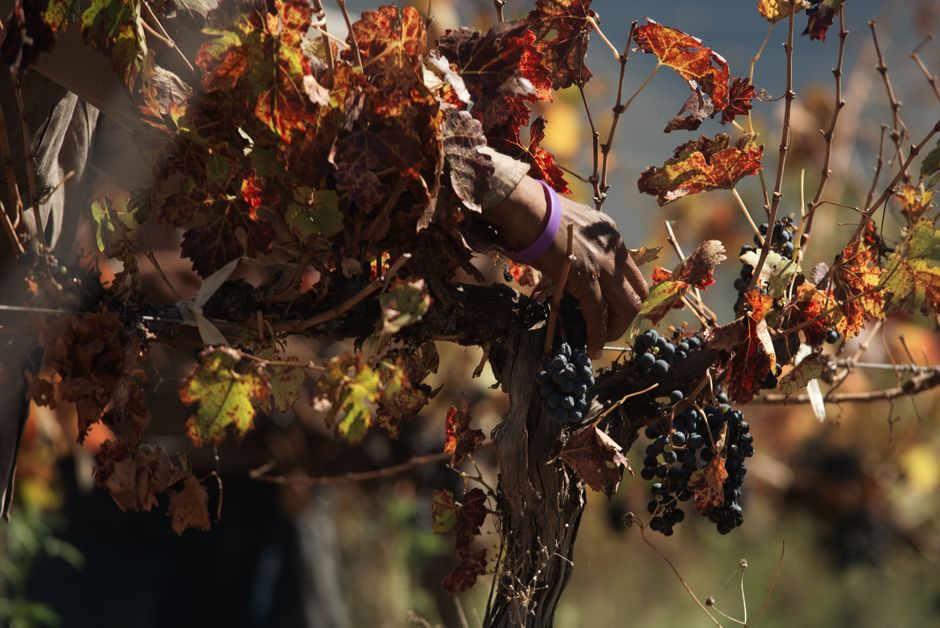
Mature bunches are medium-sized, compact or medium-compact, conical or cylindrical, often winged. The berries are medium-small, circular or flattened, with a thin, pruinose blue-black skin, and juicy, soft, non-colored pulp.

What are the environmental and cultivation needs of Vespolina?
Vespolina adapts well to clayey and cold soils but prefers fresh, fertile, and deep ones, also tolerating humid climates. It is sensitive to late frosts but benefits from sunny exposures.
It is preferably cultivated with short spurs, adapting to expanded training systems or trellises. Its vigor is medium-high, and irrigation can increase production, but at the expense of quality.
What is Vespolina's sensitivity to diseases and adverse conditions?
Vespolina shows susceptibility to downy mildew and powdery mildew, with moderate resistance to grey mold. It can be affected by phylloxera and, in cool climates, by shattering, berry abortion, and coulure.
Careful phytosanitary management and the choice of planting site are crucial to ensure vineyard health and the quality of grapes intended for export.
What are the enological characteristics of Vespolina wine?
Vespolina must typically presents medium-high sugar content (17-23%) and acidity between 6.2%o and 10.0%o. The resulting wine is usually red, from pale to more intense ruby, described as soft, velvety, harmonious, and sapid.
Potential alcohol content ranges between 12.7 and 13.9% ABV. The aroma is often varietal, not very pronounced, but can possess a peculiar scent.
Vespolina is versatile: it can yield fresh table wines, structured and age-worthy wines (historically in blends with Nebbiolo), fortified wines, or sparkling wines. This versatility makes it interesting for various international markets.
What is the export potential of the Vespolina grape variety for Italian wineries?
Vespolina offers a niche export opportunity due to its authenticity and strong connection to the Piedmontese territory. Its enological versatility allows for the creation of different wine types, adaptable to diverse market demands.
Its history and its use in blends with noble grape varieties like Nebbiolo provide a rich narrative basis for international marketing. To succeed, wineries will need to invest in promotion to educate buyers and consumers, define a clear positioning, and stand out from the competition through quality and uniqueness.
Frequently Asked Questions
How does Vespolina position itself in the international market compared to other Italian grape varieties?
Vespolina positions itself as a niche indigenous grape variety, offering authenticity and uniqueness compared to more widespread varieties. Its history and characteristics make it ideal for consumers seeking particular gastronomic experiences.
What are the most promising foreign markets for Vespolina?
Mature markets like Europe and North America, as well as emerging ones, are promising for Vespolina, especially among consumers who appreciate the diversity and authenticity of Italian wines.
What are the main challenges in exporting Vespolina wines?
The main challenges include the low global awareness of the grape variety, the need for a strong commitment to marketing and promotion, and the definition of a clear positioning in a competitive market.
Vespolina, with its fascinating history and unique characteristics, represents an interesting opportunity for Italian wineries aiming to expand their presence in international markets. A strategic approach focused on territorial narrative, varietal uniqueness, and final product quality can open new export perspectives.