Merlot: From Grapevine to Table, a Journey into Italian Taste
Merlot is a red-berry grape variety of significant global relevance, representing a strategic opportunity for Italian wineries focused on export. Its versatility, adaptability to different terroirs, and the production of wines with an appealing aromatic profile make it a preferred choice for international markets. This article explores the distinctive characteristics of Merlot, its history, ideal viticultural practices to enhance its potential, and the reasons for its growing success in foreign markets, providing concrete insights for Italian companies. Deep dive: MASAF — National Register of Vine Varieties.
Where does the Merlot grape originate from and how did it spread?
Merlot's origins are closely linked to the Bordeaux region in France, where it is considered one of the fundamental grape varieties. Its cultivation rapidly spread to other French regions and, subsequently, worldwide, thanks to its abundant production and the good quality of the resulting wine.
As early as 1903, Merlot was documented as being cultivated in several Italian regions, including Piedmont, Lombardy, Veneto, Friuli, Emilia, Tuscany, Lazio, and the South. This wide diffusion testifies to its remarkable adaptability and intrinsic value in the Italian wine landscape.
What are the ampelographic characteristics and potential of Merlot?
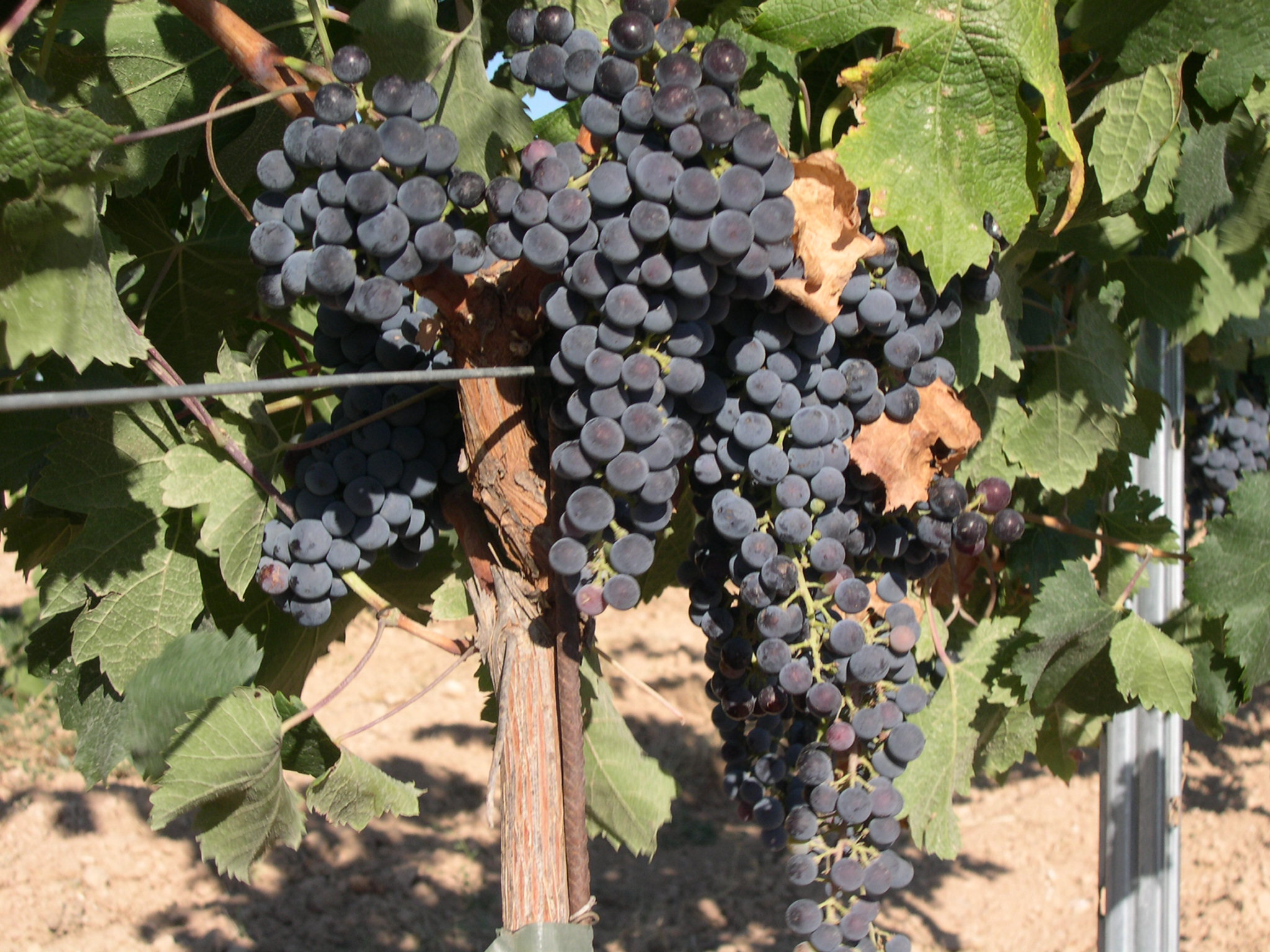
Merlot is distinguished by a cottony bud apex, adult pentagonal leaves, and variable-sized bunches with intense blue-black berries. From a viticultural perspective, it expresses high productive potential, but managing yields is crucial to obtain quality wines.
Limiting production to 90-100 quintals per hectare, while training the vine on trellises with medium-high density (approximately 4000 vines/hectare), is a recommended practice. The use of specific clones and the choice of harvest time are critical for evaluating phenolic and anthocyanic maturity, influencing the quality of color and extraction.
How does Merlot wine present itself and what are its characteristics?
Merlot wine can range from common table wines to excellent age-worthy wines, depending on the terroir and enological interpretations. A Merlot from the hills or "grave" is generally a full-bodied, robust, and richly colored wine.
Aroma and Flavor: In its youth, Merlot exhibits notes of raspberry and a slightly herbaceous touch. With aging, it gains complexity, developing a finer bouquet and a dry taste with a pleasant slightly bitter finish. Well-structured wines can evolve positively for several years.
Wine Characteristics: Wines produced from Merlot are typically full-bodied, with colors ranging from intense ruby red to brighter hues. The alcohol content can vary between 9% and 12% (or more), the net dry extract generally ranges from 21 to 26 g/l, with a total acidity between 4.5 and 7.0 g/l.
What is the export potential of Merlot for Italian wineries?
Merlot possesses global appeal that makes it particularly interesting for export, thanks to its fruity aromatic profile and smooth, accessible taste. Its popularity has grown exponentially in Asia, with a particular focus on China, where consumers prefer rounder, fruitier wines.
Italian wineries cultivating Merlot can leverage the "Made in Italy" reputation to offer wines that combine tradition with globally appreciated characteristics. Careful yield management and optimization of viticultural techniques can lead to Italian Merlot productions that successfully compete in international markets.
Food Pairings: Merlot lends itself to a wide range of pairings, accompanying roasted white and red meats, rabbit, and poultry. It is also a versatile table wine, suitable for less demanding dishes.
Frequently Asked Questions
-
What characteristics make Merlot attractive to foreign markets? Merlot is appreciated for its fruity aromatic profile and smooth, accessible taste, making it appealing to a wide range of international consumers.
-
In which emerging markets is Merlot experiencing particular success? In recent years, Merlot has seen an exponential increase in popularity in Asia, with a particular focus on China, where the demand for imported wines is rising.
-
What are the recommended viticultural practices for producing quality Merlot for export? It is recommended to carefully manage yields, limiting them to 90-100 quintals per hectare, and to train the vine on trellises with medium-high density. Clone selection and harvest timing are crucial.
The Merlot grape variety represents an excellent opportunity for Italian wineries looking to expand their presence in international markets. Its history, versatile characteristics, and growing global appeal make it a strategic investment. To fully capitalize on this potential, wineries should focus on producing high-quality Merlot, carefully managing yields and adopting viticultural and enological techniques that enhance its best characteristics.