Grapevine water stress: how it is measured, what it does to the grapes, what Italian production rules allow on irrigation and how the climate is changing
Wines Export Editorial · Last updated:
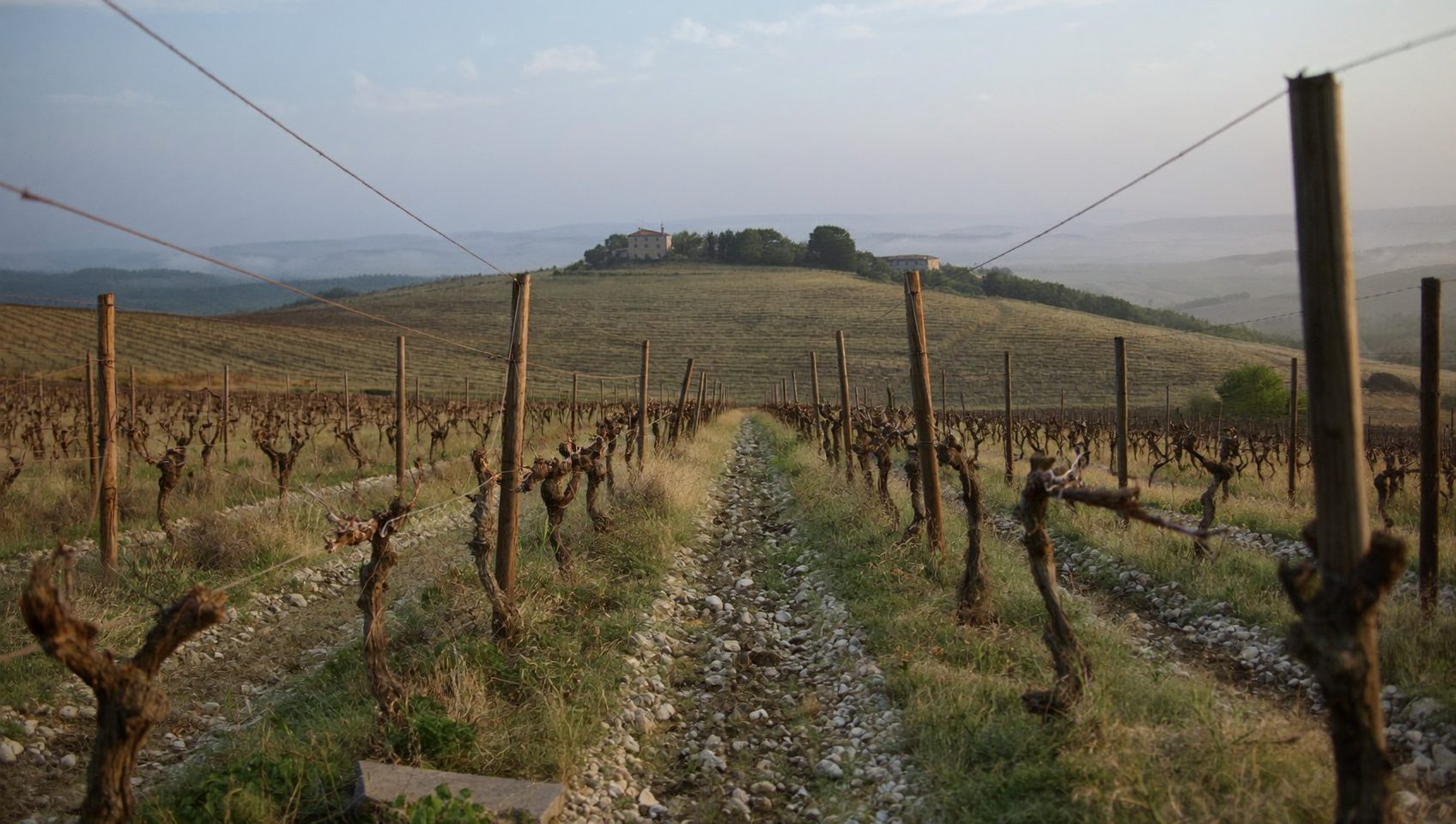
Grapevine water stress is the condition in which the vine loses more water through transpiration than its roots can take up from the soil, and it is measured mainly through water potential, the tension under which water rises from the roots to the leaves: in grapevines it usually ranges between −0.3 and −2.0 MPa (Gambetta et al., 2020). A mild or moderate deficit makes berries smaller and, in red grapes, tends to concentrate colour and some aromas; a severe one slows photosynthesis and cuts yield, and timing matters as much as intensity, because a deficit before veraison reduces berry size in a way that water given later cannot correct (Keller, 2026). In Italy most DOCG and DOC production rules ban forcing and allow only "emergency" irrigation (irrigazione di soccorso); some limit it to two applications before veraison, and Moscato di Scanzo DOCG bans it altogether (Masaf production rules, article 4). The climate is pushing the issue to the front: in 2025 Italy's mean temperature was 1.03 °C above the 1991-2020 average, and moderate to extreme drought kept weighing on central and southern Italy (SNPA, "Il clima in Italia nel 2025").
This page deals with water in the vineyard. When grapes are dried on purpose, on the vine or in drying lofts, the process is called appassimento: methods and rules are in grape drying (appassimento). Heat also damages wine after bottling, in transit: symptoms and thresholds are in heat-damaged ("cooked") wine. The season's work is in the vineyard management calendar, and which European appellations are most exposed to the changing climate in 1,085 European wine regions and their climate risk.
What is grapevine water stress?
It is the plant's response to insufficient water: the vine closes its stomata to avoid losing water, and in doing so reduces transpiration and photosynthesis. Up to a point this is a useful regulation; beyond it, it becomes damage.
Water rises through the vine under tension, from the roots to the leaves, where it evaporates through the stomata. By regulating its stomata and hydraulic conductance, the plant keeps its water potential somewhere between that of the soil and that of the air. According to the review by Gambetta and colleagues in the Journal of Experimental Botany, irrigated vineyards usually operate within a safe range, with stem water potential above −1.5 MPa, and even non-irrigated vineyards seldom go beyond these values. Growers who use deficit irrigation for premium red wines normally target a stem water potential between −1.2 and −1.4 MPa: enough to reduce stomatal conductance, transpiration, photosynthesis and ultimately yield. Below about −1.6 MPa, turgor loss and cavitation appear, that is air bubbles blocking the xylem vessels, leading to leaf shedding and, in extreme cases, vine death (Gambetta et al., 2020).
The vine has a defence of its own: leaves are more vulnerable to embolism than the trunk and canes, and act as a hydraulic fuse that protects the perennial organs (Gambetta et al., 2020). Nor do all varieties react the same way: the sensitivity of the stomata to water deficit varies along a continuum between genotypes.
A useful distinction comes from the technical review by Rienth, Laurent and Scholasch (IVES, 2023): a water deficit is a reduction in water use that does not harm yield and quality, while water stress is a reduction that does.
How is grapevine water stress measured?
With the pressure chamber, which reads the water potential of a leaf or of the stem; with carbon-13 analysis of the sugars in the must at the end of the season; with sap flow sensors; or, more roughly, by looking at the shoot tips.
| Method | What it measures | Limits |
|---|---|---|
| Observing shoot tips | loss of turgor in the tendrils and slower shoot growth, among the first visible signs | cannot be used after shoot growth ends or after topping; depends on the observer |
| Predawn leaf water potential | water status after the night, when leaf and soil should be in equilibrium | night-time transpiration can upset the equilibrium |
| Midday leaf water potential | the worst case of the day, on an exposed leaf | changes quickly with clouds and dry air |
| Stem water potential | leaf enclosed in an aluminium foil bag for 45-120 minutes before measurement, so it equilibrates with the stem | a spot measurement on a few vines |
| Carbon 13 (δ13C) on sugars in berries, must or wine | the water (and nitrogen) history of the season up to sampling | read after the fact, not useful for tomorrow's irrigation decision |
| Sap flow | the water moving through the trunk, continuously | sensors must be installed; the thermal dissipation probe method has placement errors |
Source: Rienth, Laurent, Scholasch, IVES Technical Reviews, March 2023.
The most widely used thresholds for reading the values come from Carbonneau (1998), Lovisolo (2010 and 2016) and van Leeuwen et al. (2009), summarised as follows in the same review:
| Water status | Predawn potential (MPa) | Midday leaf potential (MPa) | Stem potential (MPa) | δ13C (‰) |
|---|---|---|---|---|
| No water deficit | above −0.2 | above −0.9 | above −0.6 | below −26 |
| Mild deficit | −0.2 to −0.3 | −0.9 to −1.1 | −0.6 to −0.9 | −26 to −24.5 |
| Moderate deficit | −0.3 to −0.5 | −1.1 to −1.3 | −0.9 to −1.1 | −24.5 to −23 |
| Moderate deficit to light stress | −0.5 to −0.8 | −1.3 to −1.4 | −1.1 to −1.4 | −23 to −21.5 |
| Severe stress | below −0.8/−0.9 | below −1.4 | below −1.4 | above −21.5 |
Source: Rienth, Laurent, Scholasch, IVES Technical Reviews, 2023, table 1.
The authors warn that under strong drought or very dry air, the potential measured on a leaf can overestimate the vine's real stress, because leaves disconnect hydraulically before the rest of the plant. To decide on irrigation, plant measurements should be read together with weather data, in particular the vapour pressure deficit of the air.
What does water stress do to yield and berries?
It reduces berry size and yield, and the loss grows almost linearly with water potential: on average, 0.2 MPa less costs about 10 per cent of yield (Gambetta et al., 2020).
| Study cited in the review | Result |
|---|---|
| Grimes and Williams, 1990 | yield down 41 per cent for each MPa decrease in potential |
| Williams et al., 2010 | berry weight down 66 per cent for each MPa decrease |
| Mirás-Avalos and Intrigliolo, 2017 (meta-analysis) | berry weight down 50 per cent on average for each MPa, with differences between varieties |
Source: Gambetta et al., Journal of Experimental Botany 71(16), 2020.
In red grapes a smaller berry is often desirable: the skin, where anthocyanins and tannins accumulate, weighs more relative to the flesh. The loss of weight and yield is greater with a deficit before veraison (Gambetta et al., 2020). Keller, on the other hand, recommends avoiding stress before flowering, so as not to lose yield in the current year and the following one (Keller, 2026).
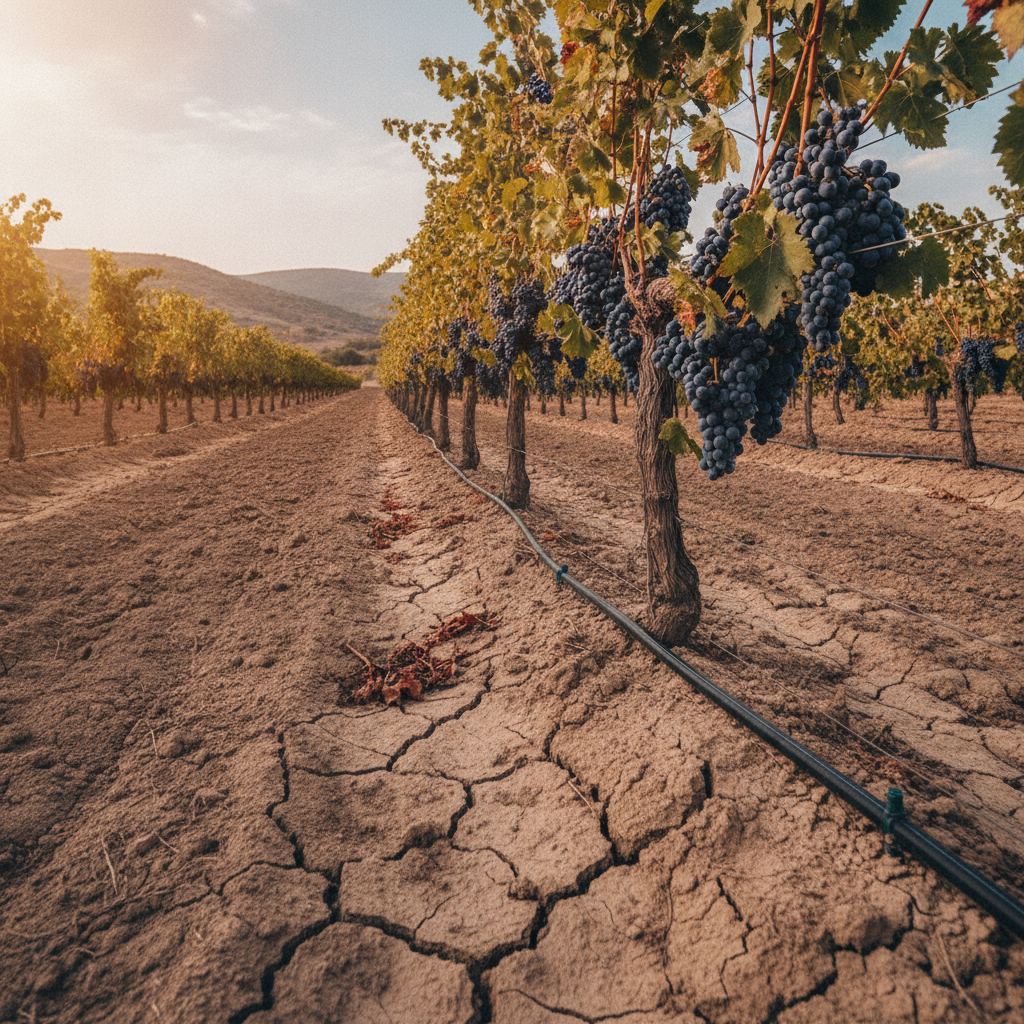
Why does timing matter: before or after veraison?
Because berry size is decided before veraison. In a synthesis published in 2026 in the American Journal of Enology and Viticulture, Markus Keller (Washington State University) writes that it is pre-veraison water deficit, not post-veraison deficit, that is associated with small berries: berry size at harvest follows irrigation before veraison, not after. Water during ripening mainly limits shrinkage and does not make up for earlier mistakes.
The same synthesis settles an old debate: over the past twenty years, studies have refuted the idea that the ripening berry becomes hydraulically isolated from the vine. At veraison, xylem flow reverses, and the surplus water brought in by the phloem along with sugars leaves the berry through transpiration and backflow towards the vine. For Gambetta and colleagues, post-veraison berries are in any case buffered against changes in the vine's water potential and largely insensitive to drought-induced shrivelling.
Rain and irrigation do not have the same effect. Drip or surface irrigation during ripening does not dilute grape composition; rain or overhead sprinkler irrigation, by contrast, can split berries, causing sugar leaching and dilution, or concentration if the berries then shrink in dry weather. The risk of skin softening and splitting increases above 10 degrees Brix (Keller, 2026).
What happens to sugars, acidity, colour and aromas?
Less than is often believed for sugars and acidity, more for colour and aromas. Gambetta and colleagues analysed 18 studies on Cabernet Sauvignon, Merlot, Syrah and Tempranillo, with moderate deficit (stem between −0.9 and −1.1 MPa) or severe deficit (between −1.1 and −1.4 MPa).
| Component | What was observed | Source |
|---|---|---|
| Sugars | with moderate deficit, a significant increase in 7 out of 19 experiments, 5 per cent on average; with severe deficit in 7 out of 18, by 7.8 per cent; no significant difference in the others | Gambetta et al., 2020 |
| Titratable acidity | an effect in 5 out of 15 cases (moderate) and 6 out of 15 (severe); in all but one it fell, by about 12 per cent | Gambetta et al., 2020 |
| Anthocyanins | generally higher, with more intense colour shifting towards blue, but not in every study | Gambetta et al., 2020 |
| Anthocyanins and timing | pre-veraison deficit raises them more than post-veraison deficit in Cabernet franc, Cabernet Sauvignon and Tempranillo; cutting water only during ripening gave Cabernet Sauvignon the least desirable anthocyanin and tannin profile | Keller, 2026 |
| Terpenes | increased in some white and red varieties, decreased in other studies | Gambetta et al., 2020 |
| C13-norisoprenoids | increased | Gambetta et al., 2020 |
| Methoxypyrazines (green notes) | lower 3-isobutyl-2-methoxypyrazine in Syrah wine | Gambetta et al., 2020 |
| Aromas and timing | pre-veraison deficit raised volatile compounds in Merlot and Sangiovese; in Riesling, a 0.2 MPa difference in pre-veraison midday leaf water potential changed the wine's aroma profile | Keller, 2026 |
Sugars accumulate fast in warm, dry weather, up to about one degree Brix per day in the first two weeks of ripening in Washington State; moderate or severe stress, however, reduces canopy photosynthesis and sugar transport to the berries (Keller, 2026). According to Gambetta's review, variety, the season's weather, and the intensity and timing of the deficit determine the precise effect: Merlot proved more sensitive than Cabernet Sauvignon.
What do Italian production rules say about irrigation?
Almost all of them address it in article 4, "Rules for viticulture", with a recurring formula: "All forcing practices are prohibited. Emergency irrigation is permitted." In the Masaf copies we read, about three in four DOCG and DOC production rules contain emergency irrigation; among IGP rules, only a minority regulate irrigation.
The general formula sets no volumes. Some texts explain its purpose: Collio DOC permits it "in particularly dry years", and Noto DOC describes it as a practice meant to ensure the vine's normal balance between growth and production. Maximum yields per hectare remain those of the production rules in any case.
| Appellation | What it provides (art. 4) |
|---|---|
| Franciacorta DOCG | emergency irrigation permitted; for vineyards in full production (from the fourth year) all irrigation is prohibited after veraison is complete; before that, water may be applied to replace actual evapotranspiration, with documented notice to the control body at least 48 hours in advance |
| Moscato di Scanzo DOCG | "all forcing and irrigation practices are prohibited" (text amended by ministerial decree of 24 June 2025) |
| Barolo DOCG, Barbaresco DOCG | all forcing practices prohibited; the text does not mention irrigation |
| Etna DOC | all forcing practices prohibited; the text does not mention irrigation |
| Brunello di Montalcino DOCG, Chianti Classico DOCG, Amarone della Valpolicella DOCG, Conegliano Valdobbiadene Prosecco DOCG | forcing prohibited, emergency irrigation permitted |
| Collio DOC | irrigation allowed as an emergency measure, up to veraison |
| Colli Piacentini DOC, Gutturnio DOC | emergency irrigation at most twice a year, before veraison |
| Botticino DOC, Capriano del Colle DOC | emergency irrigation no later than veraison, at most two applications a year |
| Carignano del Sulcis DOC | at most two applications in spring and summer, and in any case not after 15 August |
| Castelli Romani DOC | emergency irrigation allowed in particularly dry years |
Source: production rules published by the Italian Ministry of Agriculture (Masaf), article 4 of each text.
Among the DOCG production rules that do not mention irrigation, in our reading, are mainly appellations from Piedmont (Barolo, Barbaresco, Gattinara, Ghemme, Gavi, Dogliani) and Friuli (Ramandolo, Rosazzo); the Piemonte DOC rules, by contrast, permit emergency irrigation. A text that is silent should not be read as permission: before irrigating a vineyard registered under one of these appellations, it is wise to ask the consortium and the control body. Production rules change often, and the version in force on the Masaf website is the one that counts.
How much is the vine irrigated in Italy, and with which techniques?
Little compared with the total vineyard area, and still largely with inefficient techniques. According to CREA, Italy has about 225,000 hectares of irrigated vineyards, 9.5 per cent of total irrigated land (2.5 million hectares), and the vine's average water requirement is about 4,000 cubic metres per hectare per season, varying with the growing system and the variety (CREA-SIGRIAN, 7 July 2025).
| Irrigation technique in Italian vineyards | Share |
|---|---|
| Drip micro-irrigation | 21.5% |
| Sprinkler | 38% |
| Surface flow, lateral infiltration, flooding | 40.5% |
Source: CREA-SIGRIAN, "Viticoltura, irrigazione e cambiamenti climatici: infografica sul caso della Campania", 7 July 2025.
Regional differences are large: in Campania, according to CREA's analysis of the 2020 ISTAT agricultural census, only 1.17 per cent of vineyard area is irrigated, with targeted use growing mainly in Irpinia and Sannio (CREA-SIGRIAN, 2025).
How is the climate changing for the vine in Italy?
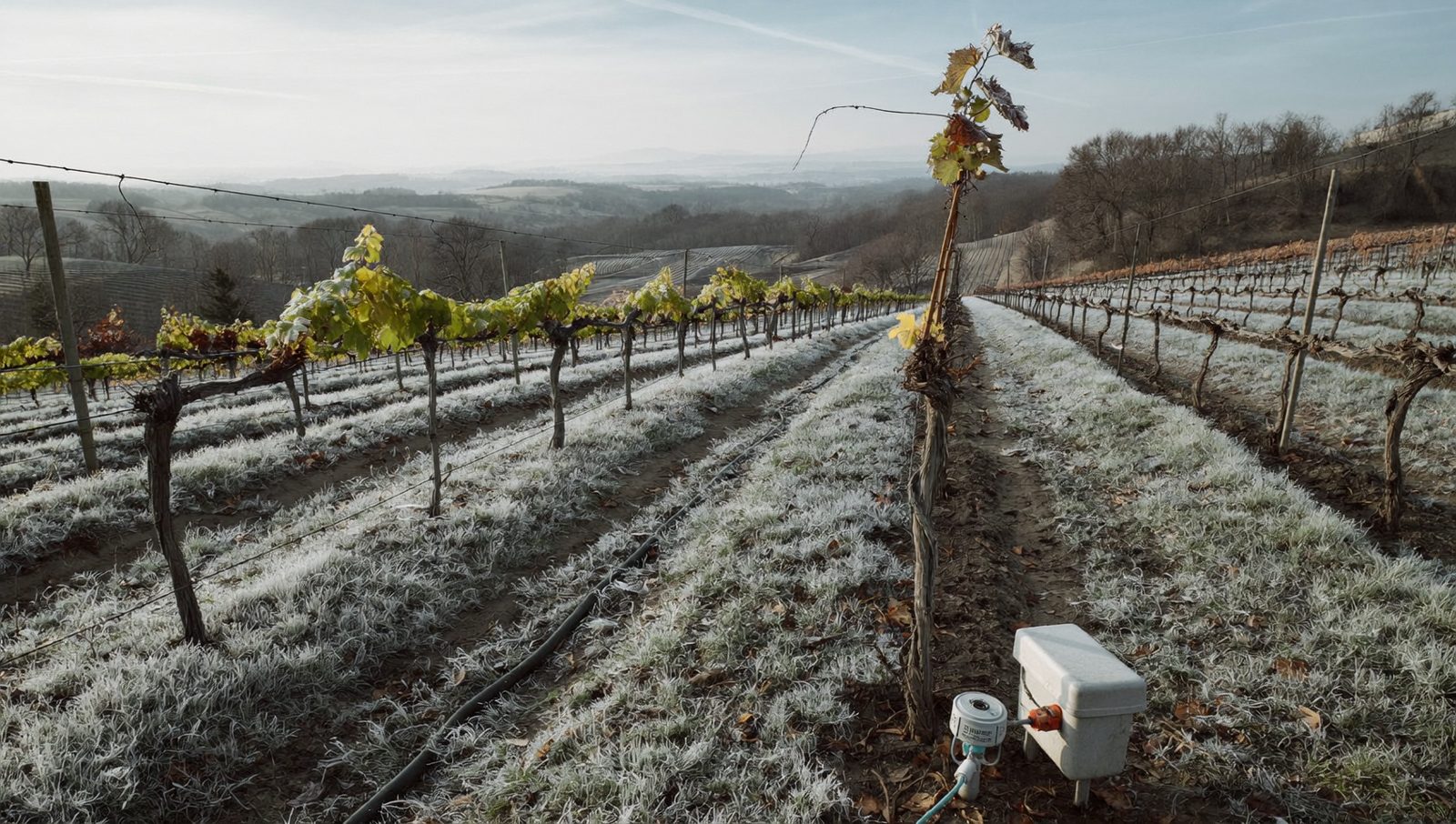
It is getting warmer almost every year, and drought is concentrated in central and southern Italy. The latest data come from the SNPA report "Il clima in Italia nel 2025", presented by ISPRA on 1 July 2026.
| Indicator, Italy 2025 | Value | Reference |
|---|---|---|
| Mean annual temperature anomaly | +1.03 °C | vs 1991-2020 |
| June | +3.23 °C, second-warmest June after 2003 | vs 1991-2020 |
| Summer | +1.46 °C, fourth-warmest since 1961 | vs 1991-2020 |
| Rainfall | North +7%, Centre around average, South and Islands −5% | vs 1991-2020 |
| Consecutive days without rain | 121 on the Ionian coast of Calabria, 118 in Sardinia, 116 in Sicily | 2025 maximum values |
| Available water resources | about 128 billion cubic metres, more than 7% below the long-term average and 19% below 2024 | declining trend from 1951 to 2025 |
Source: ISPRA, press release of 1 July 2026 on the SNPA report "Il clima in Italia nel 2025".
Since 2000, almost every year in Italy has had above-average temperatures, and in 2025 moderate to extreme drought continued to affect central and southern Italy, though less severely than in previous years; in Sicily water scarcity remained high all year (ISPRA, 2026).
Worldwide, the International Organisation of Vine and Wine (OIV) estimates 2025 production at 227 million hectolitres, just 0.6 per cent above the historically low 2024 level: climate events in both hemispheres produced the third consecutive low global vintage (OIV, May 2026). In Europe, the European Commission's Joint Research Centre (JRC) report on drought in August 2022 described severe drought in several regions since the start of the year, heatwaves from May, and summer crop yields reduced by water and heat stress (JRC, "Drought in Europe August 2022").
What can a winery do about water stress?
Measure before deciding, protect the period from flowering to veraison, and read the production rules before turning on the water. The sources cited lead to some practical points:
- Measure with one method, always the same way. Midday stem water potential with the pressure chamber is a direct and repeatable measurement; δ13C on the must at the end of the season shows after the fact how each vineyard fared (Rienth et al., 2023).
- Avoid stress before flowering and manage it before veraison. That is when yield and berry size are decided; after veraison, water limits shrinkage but does not undo the damage (Keller, 2026).
- Set a target for each wine. For an age-worthy red, a moderate deficit can concentrate colour and aromas; for an aromatic white, the effects on terpenes vary from variety to variety (Gambetta et al., 2020).
- Choose the technique. Drip and under-canopy irrigation do not dilute ripening grapes; overhead sprinkler irrigation does (Keller, 2026).
- Check article 4 of the production rules. Number of applications, cut-off date, prior notice: in Franciacorta, for example, the control body must be informed 48 hours in advance.
- Think about tomorrow's vineyard. Rootstocks and plant material matter for drought tolerance: why a rootstock comparison takes years is explained in how long a reliable rootstock trial lasts, and the return of massal selection in massal selection for resilient vineyards.
Frequently asked questions
What is emergency irrigation of the vine?
It is the irrigation that Italian production rules allow only to save the vine in a drought, not to increase production. The general formula sets no volumes; some rules limit it to two applications a year before veraison (for example Colli Piacentini and Gutturnio) or ban it after veraison (Franciacorta).
How is water stress measured in the vineyard?
With the pressure chamber, which measures leaf water potential before dawn or at midday, or stem water potential. Above −0.6 MPa of stem potential there is no deficit; below −1.4 MPa the stress is severe (Rienth et al., 2023). δ13C on must sugars tells the story of the season after the fact.
Does water stress improve wine quality?
A mild or moderate deficit can, especially in reds: smaller berries, more anthocyanins and more intense colour. Severe stress reduces photosynthesis, yield and often acidity, and the effects on sugars and aromas vary with variety and vintage (Gambetta et al., 2020).
When does water stress do the most damage?
Before flowering, because it puts the yield of that year and the next at risk, and before veraison, when berry size is decided. Water given after veraison limits shrinkage but does not recover lost size (Keller, 2026).
Can Barolo be irrigated?
The Barolo DOCG production rules, in the Masaf version we read, prohibit all forcing practices and do not mention irrigation, while Piemonte DOC permits emergency irrigation. Before irrigating it is wise to ask the consortium and the control body; the only explicit ban among the DOCG rules we read is that of Moscato di Scanzo.
Does rain before harvest have the same effect as irrigation?
No. Rain and overhead irrigation can split berries and dilute sugars; drip and surface irrigation do not dilute the composition of ripening grapes (Keller, 2026).
Sources
- Keller M., Vineyard irrigation: a balancing act with consequences, American Journal of Enology and Viticulture 77:0770005, 2026, open access
- Gambetta G.A. et al., The physiology of drought stress in grapevine: towards an integrative definition of drought tolerance, Journal of Experimental Botany 71(16):4658-4676, 2020, open access
- Rienth M., Laurent C., Scholasch T., Review of plant-based methods for assessing vine water status, IVES Technical Reviews, March 2023
- Italian Ministry of Agriculture (Masaf), production rules for PDO and PGI wines: Franciacorta, Moscato di Scanzo, Barolo, Barbaresco, Brunello di Montalcino, Chianti Classico, Amarone della Valpolicella, Conegliano Valdobbiadene Prosecco, Collio, Etna, Colli Piacentini, Gutturnio, Botticino, Capriano del Colle, Carignano del Sulcis, Castelli Romani, Noto, Piemonte (art. 4)
- CREA-SIGRIAN, Viticoltura, irrigazione e cambiamenti climatici: infografica sul caso della Campania, 7 July 2025
- ISPRA, press release of 1 July 2026 on the SNPA report "Il clima in Italia nel 2025"
- OIV, State of the world wine sector in 2025, press release, May 2026
- JRC, Drought in Europe August 2022, European Commission
Answer four questions about your winery: we will write back.
- Stuck Fermentation in Wine: Causes and How to Restart
- Export Sales Terms for Wine: Essential Clauses
- SO2 in the winery: dosing by stage, EU limits, alternatives
- Classic Method vs Charmat Sparkling Wine: Buyer Guide
- Supertuscan Wines: IGT Toscana vs Bolgheri DOC for Importers
- South Korea wine importers: who buys Italian wine and how